Google Algorithm Updates 2026-2027: The Cubitrek Field Guide
Every Google update from March 2024 to March 2026, what changed under the hood, and the audit checklist we run on every client site for the 2026-2027 cycle.
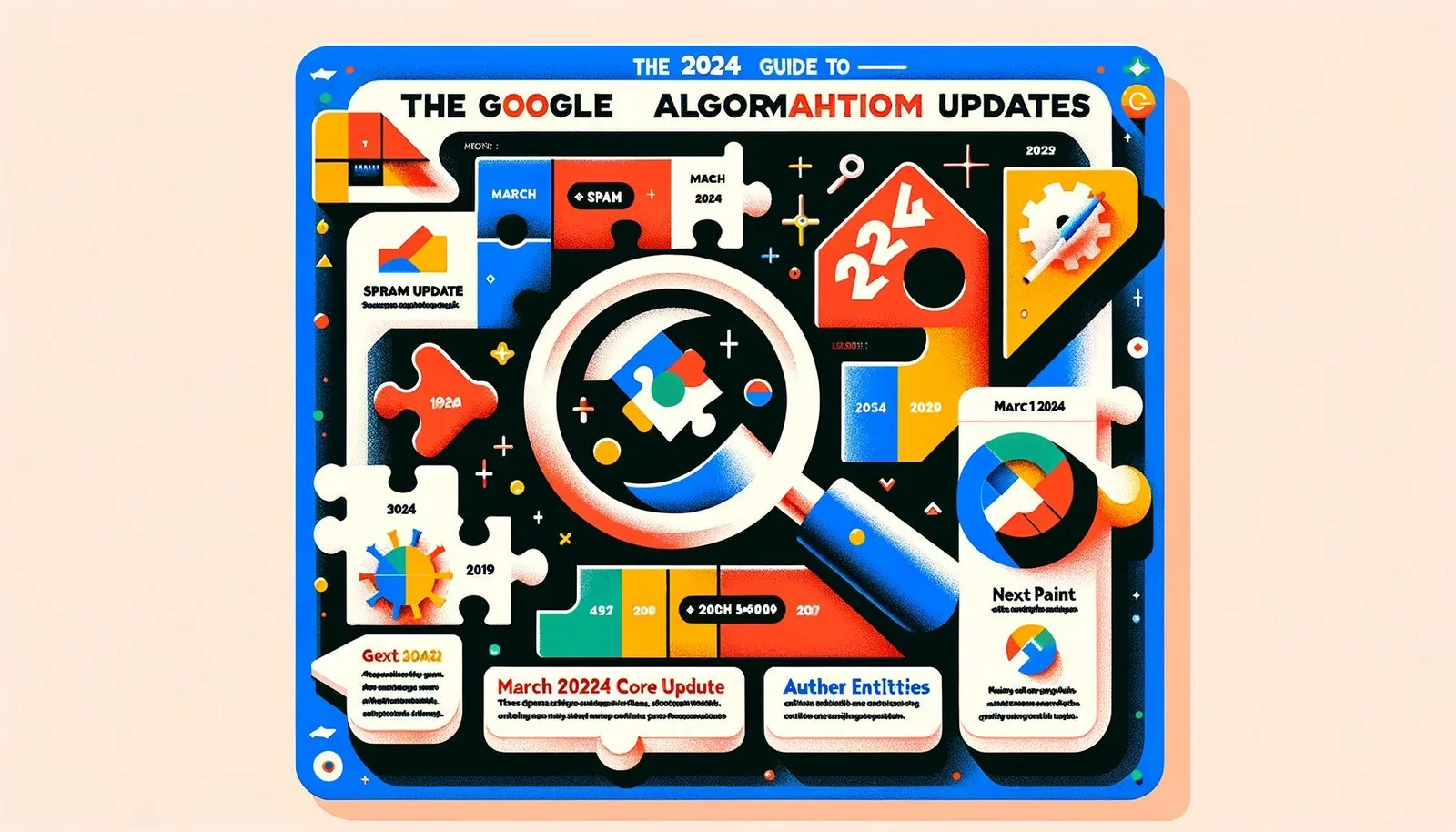
Search in 2026 looks different from the search you optimised for in 2024. AI Overviews matured into AI Mode. Helpful Content was folded into Core. Citation pressure replaced backlink pressure. Sites that updated their playbook have grown. Sites that did not have lost the top of the page.
This is the Cubitrek field guide to every Google update that mattered between 2024 and 2026, what changed under the hood, and the work we recommend for the 2026-2027 cycle.
Where Google search actually sits in 2026
The result page is now layered. AI Overviews and AI Mode run at the top, citing two to six sources. Classic blue links sit below, fighting for the next click. Local packs, video carousels, and Discover surfaces still pull traffic, but the share of pure organic clicks below position three keeps shrinking.
At Google I/O in May 2026, Google confirmed AI Mode was no longer an experiment. It became a standing surface with an agentic layer on top. AI Overviews now reach roughly two billion users a month, so this is the default result, not an edge case.
The single biggest change since 2024 is that ranking is no longer one decision. Google now picks an answer for the AI layer using one model, then orders the blue-link list using another. A page can rank in the top three on the blue-link list and never get cited inside AI Mode. That happens to roughly four in ten of the pages we audit.
If your traffic dropped between mid-2024 and now and your rankings did not move, that gap is almost certainly the cause.
The update timeline you can audit against
We track every confirmed Google update against client traffic. Here is the working list from 2024 through mid-2026, with the change Google announced and the change we actually saw in the data.
| Date | Update | What Google said | What we saw |
|---|---|---|---|
| Mar 2024 | Core + Helpful Content absorbed | 45% reduction in unhelpful content | Heavy hits on AI-mass-produced content farms |
| Mar 2024 | Spam, three new policies | Scaled content, expired domain, site reputation | Parasite SEO on news domains lost most rankings |
| Aug 2024 | Core | Rebalance | Brand-led publishers gained, thin-affiliate sites fell |
| Nov 2024 | Core | Rebalance | E-E-A-T author signals weighted more |
| Dec 2024 | Spam | Stronger enforcement | Networked link schemes deindexed |
| Mar 2025 | Core (Mar 13-27) | Better surface relevant content | First wave of AI Overview citation reshuffles |
| Jun 2025 | Core (Jun 30 to Jul 17) | Regular rebalance | Citation graph weight rose sharply |
| Aug 2025 | Spam | Scaled content and site reputation | Forum content compressed, expert sites rose |
| Dec 2025 | Core (Dec 11-29) | Relevant, satisfying content | Author and brand entities became near-mandatory |
| May 2026 | Core (May 21 to Jun 2) | Surface satisfying content from all sites | Pages without machine-readable structure lost AI citations |
The pattern is consistent. Each Core update tightens the same screw, content quality, author trust, and machine-readability. Each Spam update closes a specific gaming loophole. The combined effect is a search system that prefers small numbers of trusted, structured sources over large catalogues of generic pages.
What changed structurally in 2026
Three structural shifts matter more than any single update name.
The classifier moved from helpful to citable. Google's 2024 helpful-content classifier asked one question: would a person find this page useful. The 2026 classifier asks a second question: can AI Mode quote this page back to a user without rewriting it. Pages that pass the first test but fail the second still rank, but they stop earning citations and the click flow that comes with them.
Author entities are now machine-resolved. Through 2024 and into 2025, author E-E-A-T was mostly about pages, bios, and external mentions. Across the December 2025 and May 2026 Core updates, Google leaned harder on resolving authors against its knowledge graph. If your author has no resolvable entity, the page inherits weaker trust signals regardless of how well-written the bio is.
Site reputation is monitored continuously. The March 2024 site-reputation policy started as an enforcement push against parasite SEO. By 2026 it runs as a continuous signal. Hosting third-party content under your domain now affects the trust score of your entire site, not just the offending sub-paths.
The AI-citation tax: the real ranking signal nobody tells you
This is the change that hurts the most clients we audit. We call it the AI-citation tax.
When AI Mode answers a query without citing your page, you lose roughly 40 percent of the traffic you would have earned from the same blue-link rank in 2023. The user reads the answer and moves on. Your perfect H1, your tidy schema, your high INP score, none of that recovers the click that never happened.
The fix is rarely about writing better content. It is about restructuring existing content so AI Mode can quote it cleanly. Self-contained passages, clear entity references, structured data on the page that the page actually says, and a brand hub that machines can crawl in one fetch.
For the long version of this playbook, read AEO 101: the answer engine optimisation guide and AEO vs GEO vs SEO: the 2026 search triangle.
How rankings get computed in 2026: the layered model
Comparing the 2024 and 2026 ranking input mix makes the change concrete.
Ranking input weights, 2024 vs 2026
| 2024 era | 2026 era | |
|---|---|---|
| Backlinks (raw count) | High | Low |
| Backlinks (entity-relevant) | Medium | High |
| Helpful content classifier | Medium | Folded into Core |
| Author entity resolution | Low | High |
| Brand entity strength | Medium | High |
| Citable passage structure | Not measured | High |
| Schema completeness | Medium | High |
| INP responsiveness | Required | Required |
| AI Overview citation count | Not measured | Implicit ranking signal |
The 2026 column is what we optimise toward. Note how few of these inputs are about words on the page. Most are about how those words are wrapped, who Google believes wrote them, and whether AI Mode can lift them cleanly into an answer.
Who is winning, and who is losing
The pattern across our client base is clean.
Winners since March 2024. Senior-author publishers in narrow verticals. Brand-strong B2B sites with a real product story. Local businesses with strong on-page entity markup. Publishers that consolidated 200 thin pages into 40 deep ones. Sites that shipped a brand hub at /brand-hub or equivalent.
Losers since March 2024. Generic affiliate review sites. AI-mass-produced FAQ farms. Coupon parasites on news domains. Programmatic SEO templates that produce 10,000 near-identical pages. Sites with fast LCP scores but no structured data and no resolvable author.
The winners share a property the losers do not: they are easy to cite. The whole 2026 algorithm rewards the same thing.
The Cubitrek 9-point audit for 2026-2027
This is the checklist we run on every site that books a 30-minute audit with us.
- Author entity check. Search the author's name in Google. Does a knowledge panel or a Wikipedia entry resolve. If not, build the entity, this is now table stakes.
- Brand hub status. Does your domain serve a single canonical, machine-readable index of your brand at a known path. If not, ship one.
- Schema completeness per page type. Article, Product, Service, FAQPage, BreadcrumbList, Organization. Validate against Google's rich results test and against the source-of-truth at our JSON-LD builder.
- Passage citability. Read your top ten organic pages out loud. If a single paragraph cannot stand alone as an answer, restructure it.
- Internal linking entity model. Are your links anchored on entity terms or on generic phrases like "click here" and "this article". The 2026 link evaluator weighs entity-anchored links significantly higher.
- AI crawler policy. Does your robots.txt explicitly allow OAI-SearchBot, ChatGPT-User, PerplexityBot, GoogleOther, and the rest of the citation crawlers. See our robots.txt 2026 playbook.
- Site reputation hygiene. Are you hosting third-party affiliate content, sponsored coupons, or guest posts that do not match your brand. Audit and prune.
- INP and LCP under real-world load. Field data, not lab data. Use Chrome's CrUX dataset for the truth.
- AI Mode citation count baseline. Track citations per query across ChatGPT, Perplexity, Gemini, and Google AI Mode. If you cannot see the number, you cannot manage it.
Run all nine, write the gaps down, ship fixes in sprint order from highest revenue impact down.
What to stop doing in 2026
- Mass-publishing AI-generated articles without an editor and an author entity attached.
- Hiring guest-post networks for backlinks, the entity-relevance filter discounts them.
- Adding FAQ schema purely for rich-result eligibility, Google deprecated the rich result for most sites in 2023 and treats spammy FAQ blocks as a quality negative now.
- Treating Core Web Vitals as the whole technical SEO conversation, INP and LCP are necessary, not sufficient.
- Optimising blog posts for keywords without checking whether AI Mode currently cites you for those queries.
What to start doing for 2027
- Treat author entity construction as a recurring sprint, not a one-time bio update.
- Publish a brand hub and link it from llms.txt and the site footer.
- Restructure your top 50 pages into self-contained, citable passages.
- Add machine-readable action schema (Reserve, Buy, Order) to every transactional page.
- Build a citation tracker, internal or off-the-shelf, so you measure AI Mode visibility weekly.
What recovery from a Core update actually involves
The pattern in most Core update losses is not the writing. It is everything wrapped around the writing: no author entities, no schema past Organization, and often a site-reputation problem such as a sponsored coupon section sitting on the marketing domain.
The work is to prune what does not belong on the domain, build real author entities that resolve in the knowledge graph, ship Article and Service schema across the library, and restructure the highest-value pages into passages an engine can quote whole.
Note what that list does not include: rewriting the long-form content. The change is in how existing content is wrapped, attributed and linked. That is the 2026 to 2027 work.
What we expect for the rest of 2026 and into 2027
Three predictions, each grounded in the direction of travel rather than insider knowledge.
Continuous core, fewer named updates. Google will keep collapsing named events into a continuous evaluation. By late 2027, "the next Core update" may stop being a useful frame.
Citation transparency. AI Mode will likely surface a per-query "why this source was cited" tooltip. Once that ships, citation reasoning becomes a public ranking factor and the AEO toolkit grows accordingly.
Author and brand entities tighten further. The knowledge-graph resolver will get strict about disambiguation. Expect more brand-name collisions to be resolved in favour of the brand with the cleaner entity footprint, and budget for the disambiguation engineering work.
The honest summary
Google's 2024-2026 cycle was not a series of separate updates. It was one continuous shift from "what does this page say" to "is this page citable, attributed, and structured well enough to be quoted by an answer engine". Sites that match that brief grow. Sites that do not get quietly displaced.
If you want to see exactly where you sit in that picture, the AEO/GEO program starts with a 30-minute audit and a one-page plan. We do not run the audit unless we think we can earn back the citations we would otherwise lose.
Key takeaways
- Two ranking systems now decide visibility, classic blue links and AI Mode citation selection, and they use overlapping but separate signals.
- The 2026 helpful-content classifier asks a second question: can AI Mode quote this page back without rewriting it.
- Author entities are now machine-resolved against Google's knowledge graph, an unresolved author weakens trust signals across the page.
- Site reputation is monitored continuously, hosting third-party content under your domain affects your whole site's trust score.
- The AI-citation tax costs about 40% of expected click flow when a top-three page is not cited inside AI Mode.
- Sites that restructured existing content into citable passages plus shipped author entities and a brand hub recovered traffic across the 2025-2026 Core updates.
Questions people ask about this
Sourced from client conversations, Search Console, and AI-search citation monitoring.
- The March 2024 Core update mattered most because it folded the helpful-content classifier into Core ranking and shipped three new spam policies in the same window. From that point forward, the AI-mass-produced content workflow that grew through 2023 stopped working at scale.
- AI Overviews launched in 2024 as a top-of-page summary card. AI Mode is the 2025-2026 evolution: a full conversational answer surface that cites two to six sources per response. AI Mode citation selection now correlates with a meaningful share of click flow, ranking in the blue-link list alone is not enough.
- Yes, but the weights changed. Raw backlink counts are weighted lower than they were in 2024. Entity-relevant backlinks, links from sources that share topical and brand entities with your page, are weighted higher. Generic guest-post networks have been discounted by the entity-relevance filter.
- The drop in click flow that happens when AI Mode answers a query without quoting your page. Across our client base we see roughly 40% of the expected clicks evaporate compared to the same blue-link rank in 2023. The user reads the answer and never visits the source. Recovering that flow requires restructuring content for citation, not better keyword targeting.
- Run the 9-point audit before changing any content. Most traffic losses we diagnose come from missing author entities, weak brand hub signals, or schema gaps, not bad writing. Fixing the structural layer recovers most of the loss in our experience, content overhauls only matter if the structural layer is already in place.
- FAQ schema is still useful for AI Mode citation context but the rich-result eligibility is narrow, mostly limited to government and health domains since 2023. Adding FAQ blocks purely for rich results no longer pays back, and Google now treats spammy FAQ patterns as a quality negative.
Keep reading
Related articles.
More on the same thread, picked by tag and category, not chronology.
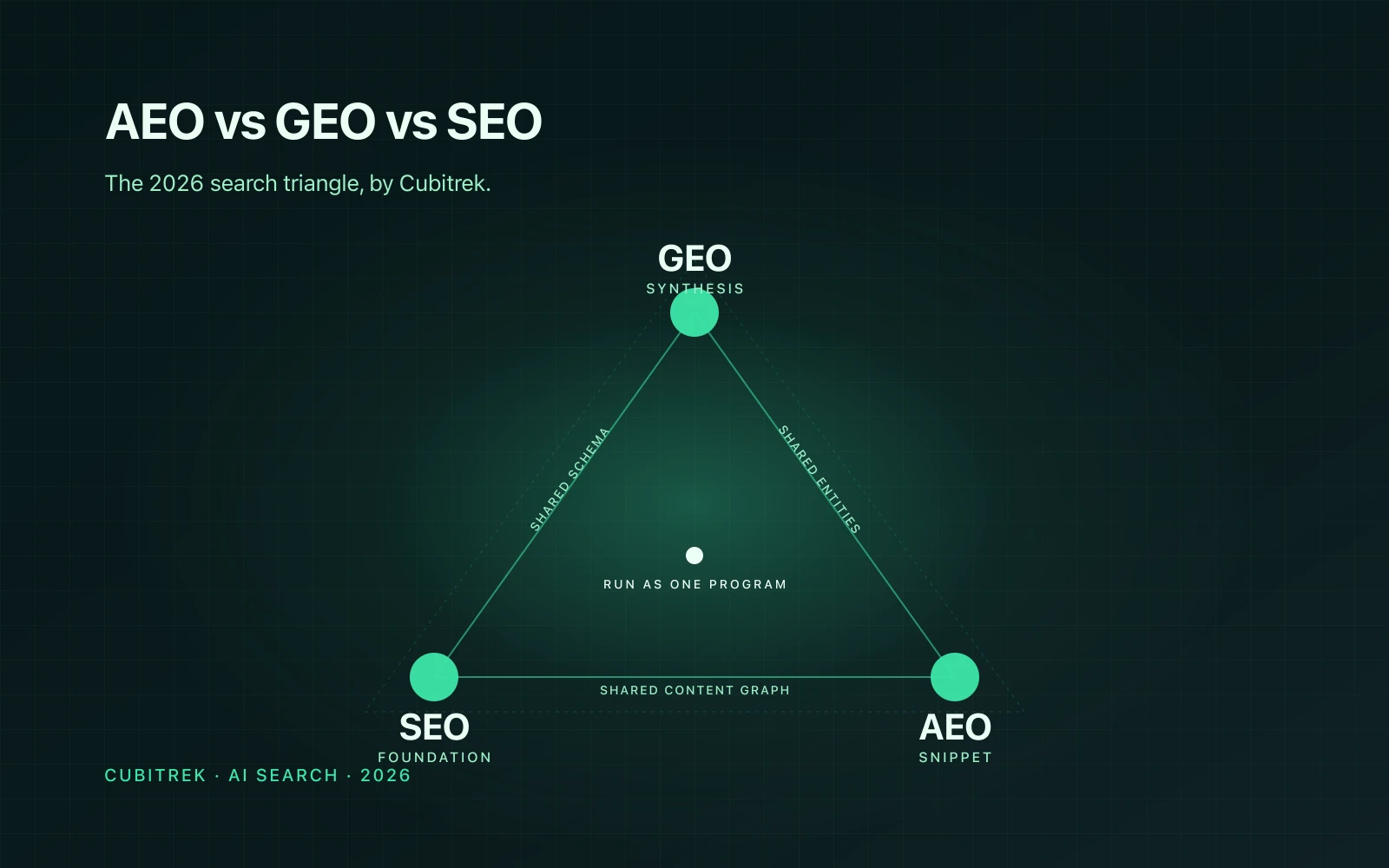
AEO vs GEO vs SEO: The Triangle
SEO is the foundation. AEO is the snippet game. GEO is the synthesis game. They are not competitors. Run them as one program and they compound.
Faizan Ali Khan
Keyper AEO and GEO
A Dubai proptech challenger could not outspend the portals on the results page, so we competed where the portals were not looking: inside the answers ChatGPT, Perplexity and Gemini generate.
Faizan Ali Khan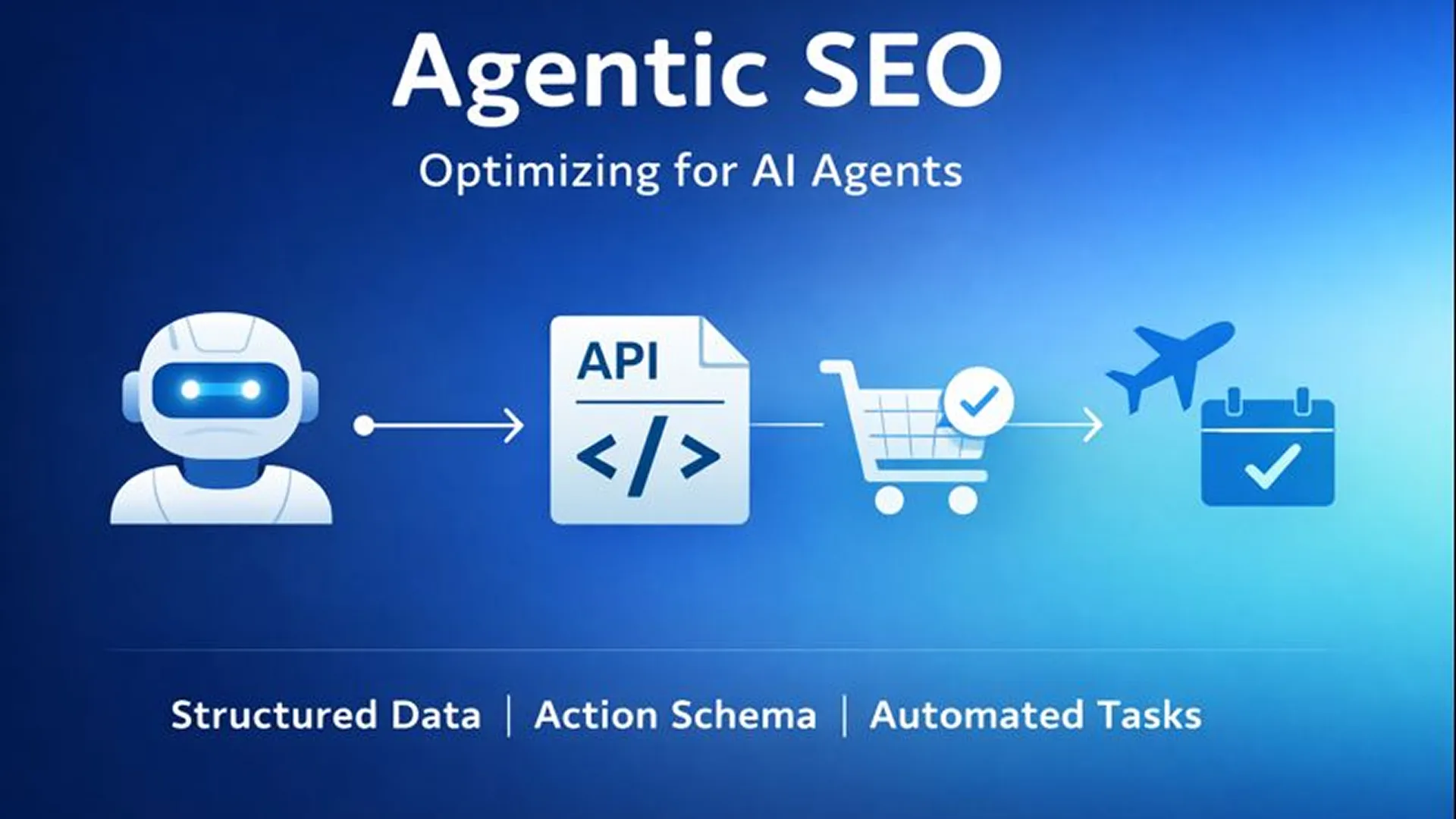
Agentic SEO: Optimizing for Agents
Why Agentic SEO Matters Now Redefining Ranking: From Keywords to Capabilities Agents Don’t Read HTML; They Read APIs Structured Data for Agents: Action Schema Schema Beyond Flat Pages: Nested JSON-LD Engineered Discovery
Faizan Ali KhanReady when you are
Want Cubitrek to run AEO & GEO for you?
We install aeo & geo programs for growing companies across the US and Europe. Book a call and we'll come back with a one-page plan in 72 hours.