

Disambiguation Engineering: Resolving Brand Name Collisions in LLMs
Stop AI from confusing your business with competitors. Learn how to use ‘SameAs’ schema and Citation Triangulation to secure your brand identity in LLMs.

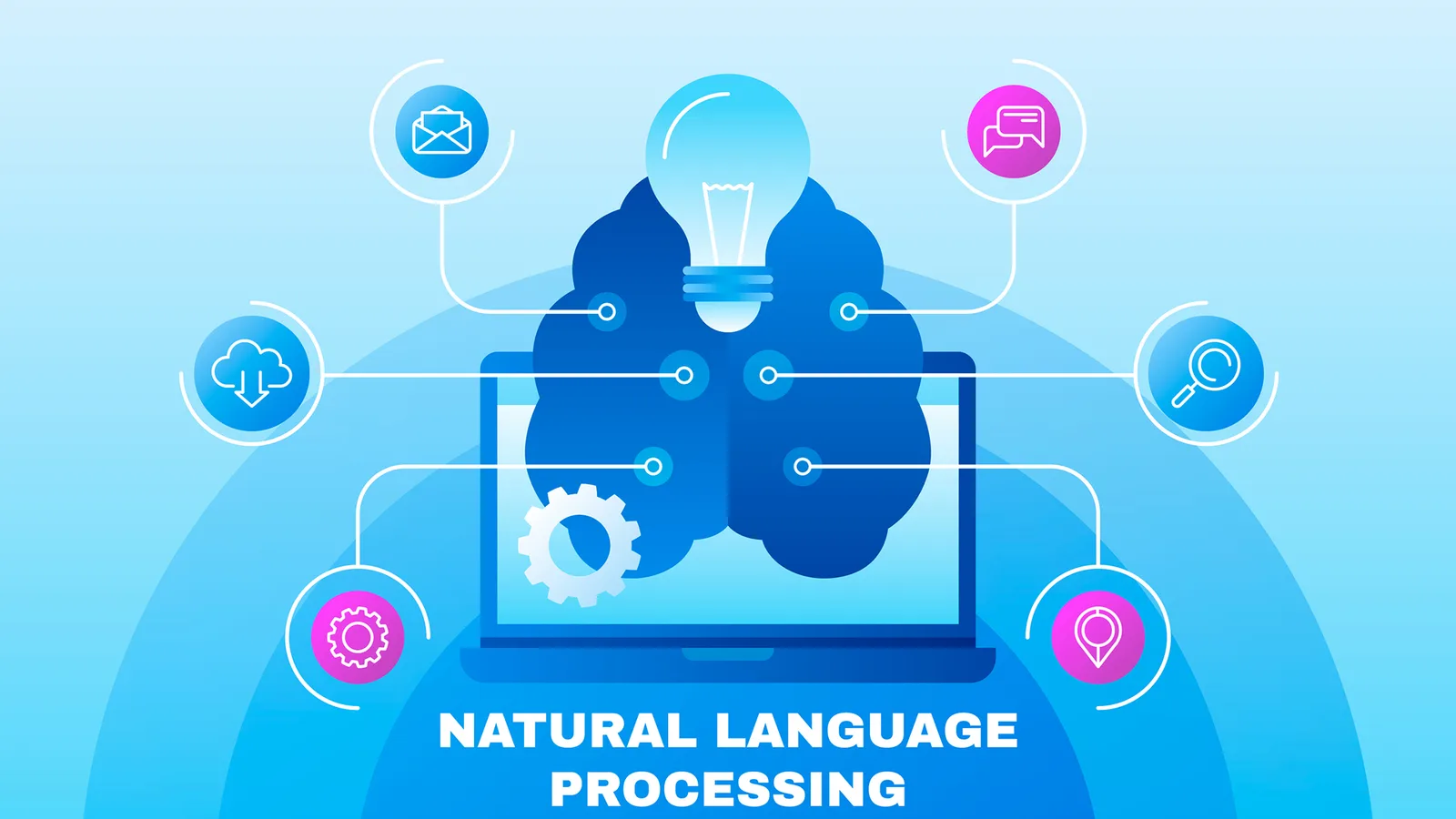
If you name your company "Xerox" or "Uber," large language models know who you are. The semantic weight of those tokens is absolute.
If you are one of 50,000 businesses operating as "Apex," "Summit," or "Pioneer," you face a different crisis in the age of AI search: identity erasure.
When a buyer asks ChatGPT "Tell me about Apex Solutions," the model can hallucinate features from a competitor in London, merge your history with a firm in Texas, or describe "apex" as the top of a pyramid.
This is not a marketing failure. It is a data-structure failure. The fix is a discipline we call disambiguation engineering.
Here is how to force an AI to separate your generic brand name from the noise, using the sameAs protocol and citation triangulation.
The disambiguation playbook
The Apex problem: why LLMs get confused
To an LLM, your brand name is a token, a sequence of characters. When a user queries a generic name, the AI predicts the next word by probability.
If your company is "Apex Logistics" (a small business) but "Apex Legends" (a video game) has billions of online mentions, the probabilistic weight tilts hard toward the game. The AI is not ignoring you. It is following the path of least semantic resistance.
That is why modern AI search depends on immutable entity identifiers and why anchoring brand truth via Wikidata is one of the most effective ways to stop name collisions at the Knowledge Graph layer.
To fix this, we do not just write more blog posts. We build a rigid entity definition that gives your brand a unique fingerprint, separate from the dictionary meaning and the other companies sharing the name.
The technical fix: the sameAs protocol
The most direct way to resolve name collisions is to speak the machine's language: schema markup.
LLMs and search engines rely on Knowledge Graphs to understand entities. You have to explicitly tell those graphs that your string of text ("Apex") maps to one specific entity in the real world.
We do this with the sameAs property inside your structured data (JSON-LD). It acts as a hard equals sign, linking your ambiguous website to unambiguous third-party databases.
Keeping those targets consistent everywhere an engine might read them is the part that slips. The Brand Hub holds one set of brand facts for AI engines to read, and our free schema JSON-LD builder generates the paste-ready block. At scale, this is reinforced by nested JSON-LD for entity disambiguation, so AI systems can walk explicit relationships instead of guessing through keyword matching.
How it works
Instead of hoping the AI guesses right, you inject code in your site head that effectively says:
"This entity 'Apex' is NOT the video game. It is the same entity found at this Crunchbase URL, this LinkedIn ID, and this Wikipedia entry."
Implementation logic:
- Identify authority nodes: find your profiles on high-authority databases (Wikidata, Crunchbase, D&B, official government registries).
- Map the schema: update your Organization schema to include the
sameAsarray.
{
  "@context": "https://schema.org",
  "@type": "Organization",
  "name": "Apex Logistics",
  "sameAs": [
    "https://www.crunchbase.com/organization/apex-your-specific-company",
    "https://www.linkedin.com/company/apex-your-specific-id",
    "https://www.wikidata.org/wiki/Q_Your_Entity_ID"
  ]
}
That code turns your brand from a fuzzy string into a resolved entity. The AI now has hard links it can verify, which collapses the hallucination rate.
The strategic fix: citation triangulation
Code matters. Context wins. Once you have defined who you are with schema, define what you are through citation triangulation.
LLMs decide truth through consensus. If your site says you offer "AI consulting" and nothing else on the web confirms it, the AI doubts the claim. If five other "Apex" companies also offer consulting, the AI gets confused.
When the same facts are reinforced across press, directories, and structured data, you build a personal authority layer that doubles as a Founder's Graph for authority verification that AI systems use to validate your entity.
Triangulation creates a closed loop of three distinct data points that reference each other, locking the entity in place.
The triangle
- The home node (your site): carries the canonical information and the
sameAslinks. - The external validator (a press release or news piece): a high-authority article that explicitly ties your brand name to a unique identifier (CEO name, specific location).
- Bad: "Apex announces new software." (ambiguous)
- Good: "Apex, the Seattle-based logistics firm led by Jane Doe, announces…" (disambiguated)
- The knowledge base (industry directory or wiki): a structured profile that cites both the home node and the external validator.
When all three points link with identical name, address, phone, and descriptors, you build a semantic gravity well. The LLM sees a consistent pattern that outweighs the generic noise of every other "Apex."
The business case: brand sovereignty
Disambiguation engineering is no longer optional for businesses with common names. It is a defensive strategy that locks in brand sovereignty.
If you do not define your entity, the AI defines it for you, often wrong. With sameAs protocols, citation triangulation, and a Brand Hub, your business moves from a statistical error to a verified entity.
The result? When a buyer asks an AI about you, they get your phone number, your history, and your services, not the competitor's.
Let's discuss it over a call.
Key takeaways
- The "Apex Problem": Why LLMs Get Confused
- The Technical Fix: Leveraging the SameAs Protocol
- The Strategic Fix: Citation Triangulation
- The Business Case: Brand Sovereignty
Keep reading
Related articles.
More on the same thread, picked by tag and category, not chronology.
AI SEO Services: The Real Work
An agency owner's account of what sits under the AI SEO label: the four kinds of work in a real engagement, which three are verifiable and which one is not, and the cases where you should not buy it at all.
Faizan Ali Khan
AI Video Labeling Rules in 2026
Europe's transparency rules and California's provenance rules both became enforceable on 2 August 2026. What applies in the EU, US, UAE and Pakistan, which videos actually attract penalties, and what it means for agencies and the companies that hire them.
 Samrina Khan
How to Choose an AEO Agency
The buyer's side of answer engine optimization: the four layers a real program covers, twelve questions with the answers that should worry you, what it costs, and the cases where hiring anyone is the wrong move.
Faizan Ali KhanReady when you are
Want Cubitrek to run AEO & GEO for you?
We install aeo & geo programs for growing companies across the US and Europe. Book a call and we'll come back with a one-page plan in 72 hours.