
Multi-Agent Systems: How to Orchestrate AI Agent Teams
Multi-agent systems coordinate specialized AI agents to handle complex workflows. Learn orchestration patterns, frameworks, and production best practices.

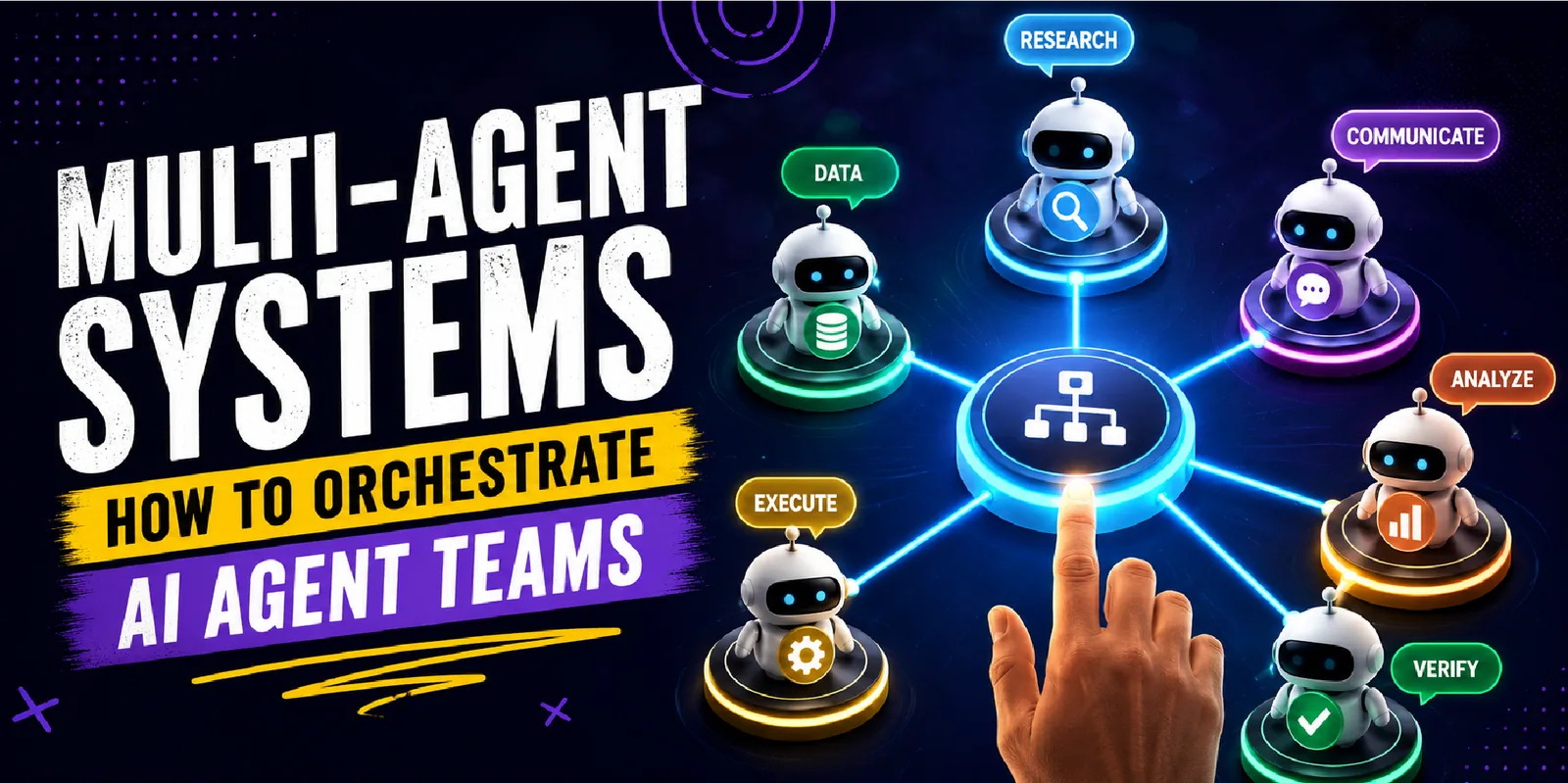
A multi-agent system (MAS) is an architecture where many specialized agents work together. They handle complex tasks that no single agent could pull off alone.
Instead of one giant agent that tries to do everything, you build a team. Each agent has its own expertise, tools, and responsibilities. You orchestrate their work through defined communication and coordination protocols.
Multi-agent systems mirror good human teams. Sales has prospecting, qualification, demos, and closing. Hospitals have intake nurses, diagnosticians, specialists, and pharmacists. A MAS might have a research agent, an analysis agent, a writing agent, and a review agent. Each is tuned for its role.
Why Single Agents Hit a Ceiling
Single agents break down on three things. Diverse expertise. Long execution chains. Parallel work.
- Context window saturation. Complex tasks fill the context window. The agent loses track of earlier info and gets inconsistent. Customer onboarding (account creation, KYC, product setup, training) easily exceeds what one agent holds.
- Tool overload. Performance degrades past 15 to 20 tools. One agent across sales, support, and billing would need 40+. It picks the wrong tool often. Multi-agent systems give each agent 5 to 10 focused tools.
- Specialization quality. An agent tuned for creative writing performs differently than one tuned for data analysis. Multi-agent systems let you tune each agent's prompt, model, temperature, and tools.
Orchestration Patterns
Sequential Pipeline
Agents run in order. Each passes output to the next. Best for linear workflows. Content creation: research, outline, draft, edit, publish. Document processing: extract, classify, validate, store.
Advantages: simple, easy to debug, deterministic. Limits: no parallelism. The slowest agent is the bottleneck. One failure blocks the pipeline.
Hierarchical (Supervisor Pattern)
A supervisor agent receives the task. It decomposes it, delegates to specialists, collects results, and synthesizes the output. It can re-delegate if a result is weak.
Best for complex tasks with variable sub-task makeup. Diverse customer requests. Multi-faceted research. This is the most popular production pattern in 2026.
Collaborative (Peer-to-Peer)
Agents talk directly to each other. They negotiate without a central supervisor. Best for creative work where multiple perspectives improve output. Brainstorming. Design review. Code review.
Limits: harder to control. Risk of infinite loops. Communication overhead grows fast as you add agents.
Competitive (Debate Pattern)
Multiple agents try the same task in parallel. A judge agent picks the best output. Best for tasks where quality is hard to verify. Code generation. Creative writing. Strategy recommendations.
Running 3 agents in parallel and keeping the best output significantly improves reliability.
Framework Support for Multi-Agent Systems
| Framework | Orchestration Style | Strengths | Best For |
|---|---|---|---|
| OpenClaw (Lobster) | Visual + code workflows | Built-in state, 13,700+ skills | Enterprise multi-agent automation |
| LangGraph | Graph-based state machines | Maximum flexibility, checkpointing | Custom complex orchestration |
| CrewAI | Role-based crews | Intuitive API, delegation | Role-decomposed workflows |
| AutoGen | Conversational agents | Natural language coordination | Research, dialogue-heavy tasks |
| Claude Agent SDK | Code-first orchestration | Deep Claude integration, tool use | Claude-native agent systems |
Designing Effective Multi-Agent Systems
Define clear agent boundaries. Each agent gets one area of responsibility, a focused toolset, and clear input/output contracts. Overlap causes conflicts.
Minimize inter-agent communication. Every message adds latency and risk of misunderstanding. Design for independent operation with clean handoffs. Avoid constant back-and-forth.
Implement shared state carefully. Agents need shared data: customer records, task status, accumulated findings. Concurrent edits cause race conditions. Use a centralized state store with versioning. Make agents read the latest state before acting.
Build observation and replay. Log every decision, message, and action. When a workflow fails, you need to trace which agent went wrong and why. Replay lets you rerun from any checkpoint.
Start with 2 to 3 agents and expand. Complexity grows super-linearly with agent count. Add agents only when a new specialist clearly improves performance.
Common Multi-Agent Anti-Patterns
The chatty system. Agents send dozens of messages back and forth. Tokens burn. Latency climbs. Outcomes do not improve. Fix it with clearer handoff contracts and more agent autonomy.
The infinite loop. Two agents keep delegating back to each other. No progress. Fix it with iteration limits, conversation caps, and deadlock detection that escalates to a human.
The single point of failure. A supervisor agent becomes a bottleneck. Every interaction routes through it. Fix it by letting specialists handle common cases on their own. The supervisor only takes exceptions.
Keep exploring
Key takeaways
- Why Single Agents Hit a Ceiling
- Do multi-agent systems cost more than single agents?
- Can different agents use different LLMs?
Questions people ask about this
Sourced from client conversations, Search Console, and AI-search citation monitoring.
- Yes, multi-agent systems use more LLM tokens because each agent processes context independently, and inter-agent communication adds overhead. Expect 2-4x the token cost of a single agent. However, the improved task completion rate and quality often justify the cost. Optimize by using cheaper models for simpler agent roles and routing only complex tasks to the multi-agent system.
- Yes, and they should. A supervisor agent might use Claude Opus for complex reasoning, while a data extraction agent uses Haiku for speed and cost efficiency, and a creative writing agent uses a model optimized for that task. Model routing is one of the primary advantages of multi-agent architecture.
Keep reading
Related articles.
More on the same thread, picked by tag and category, not chronology.
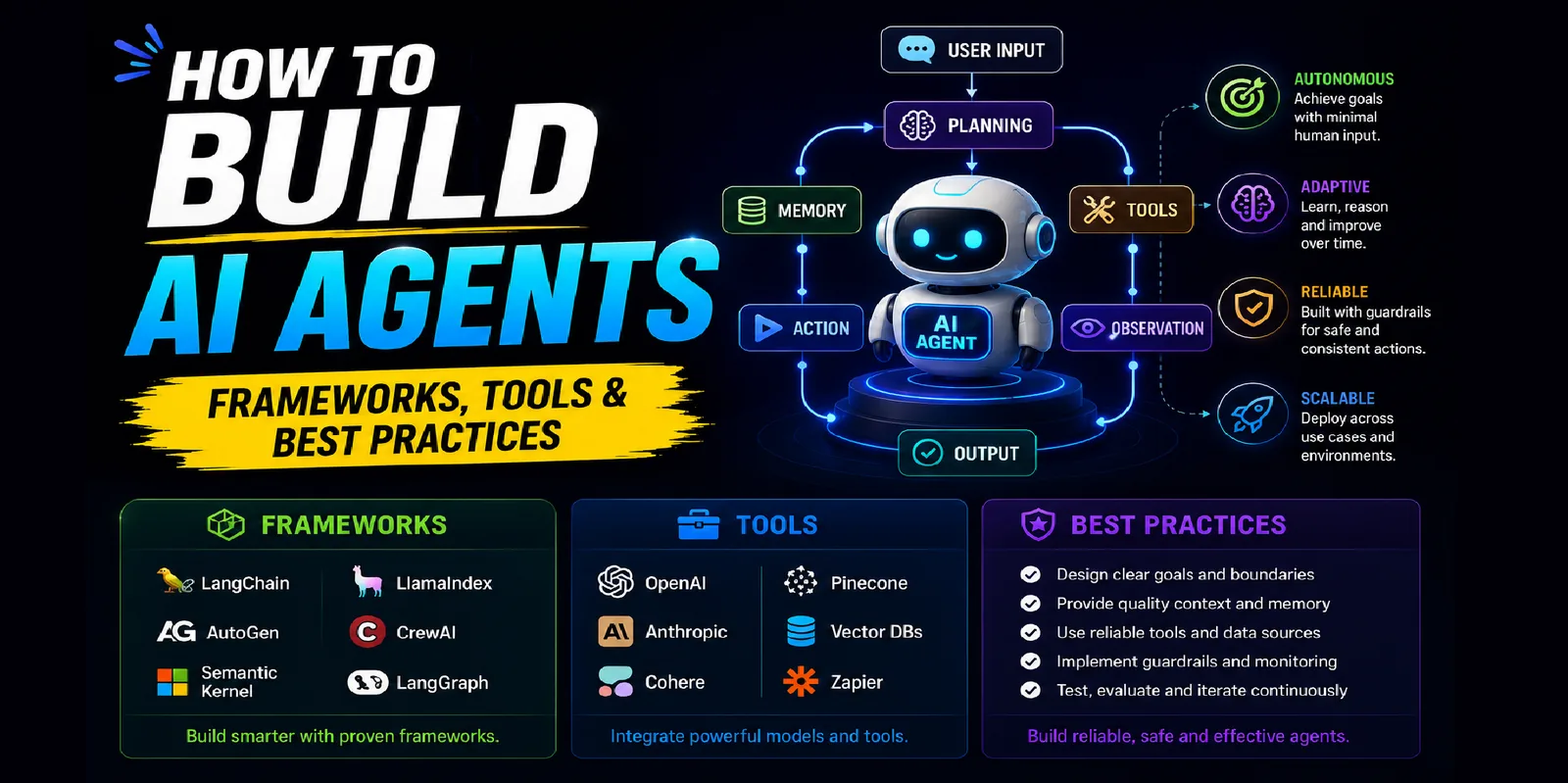
How to Build AI Agents: Frameworks, Tools & Best Practices
Step-by-step guide to building production AI agents. Compare frameworks, select tools, and follow best practices for reliable agent development in 2026.
Faizan Ali Khan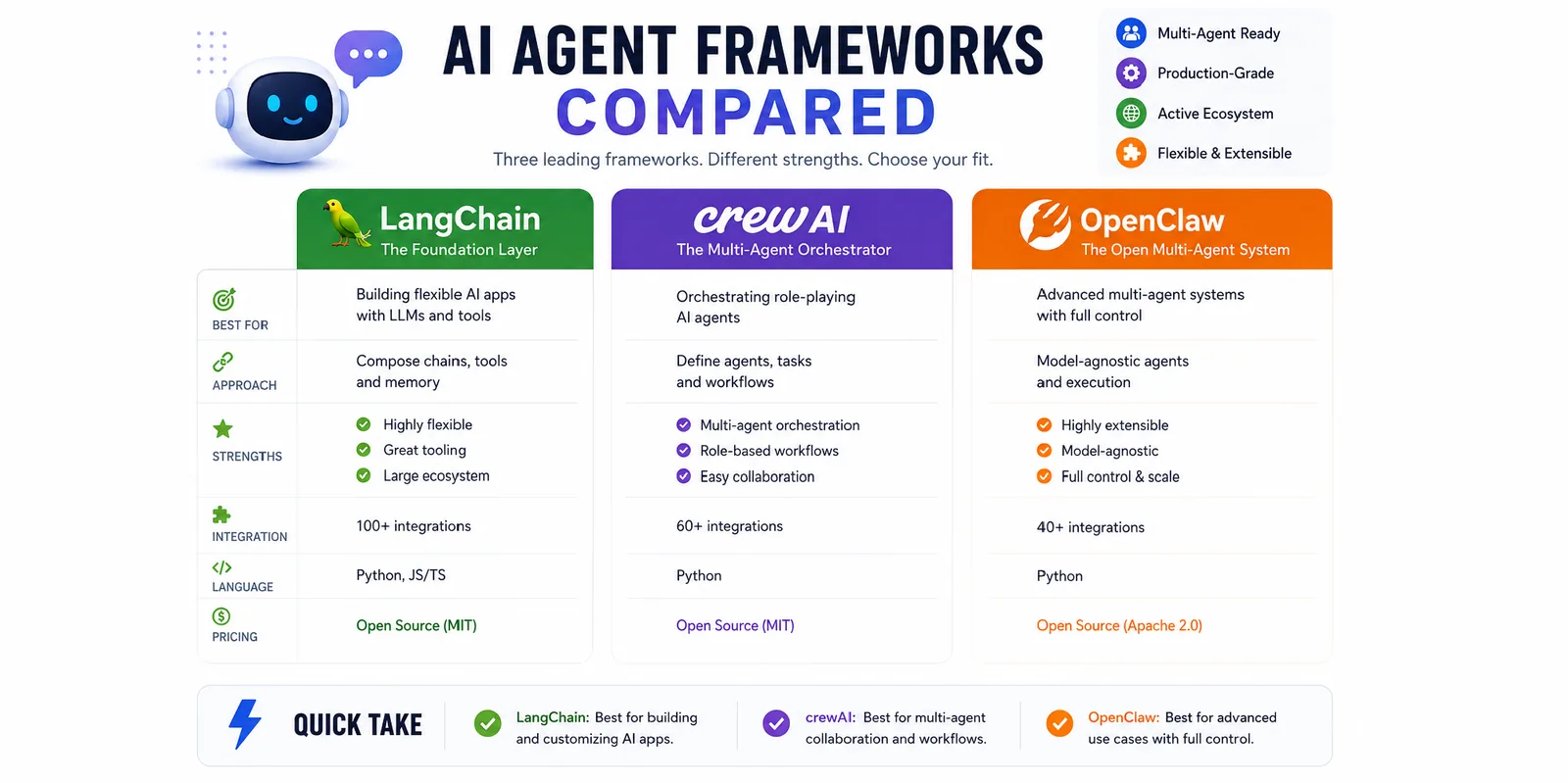
AI Agent Frameworks Compared: LangChain vs CrewAI vs OpenClaw
Detailed comparison of LangChain, CrewAI, and OpenClaw agent frameworks. Features, pricing, operating effort, and use case fit for enterprise AI agent development.
Faizan Ali Khan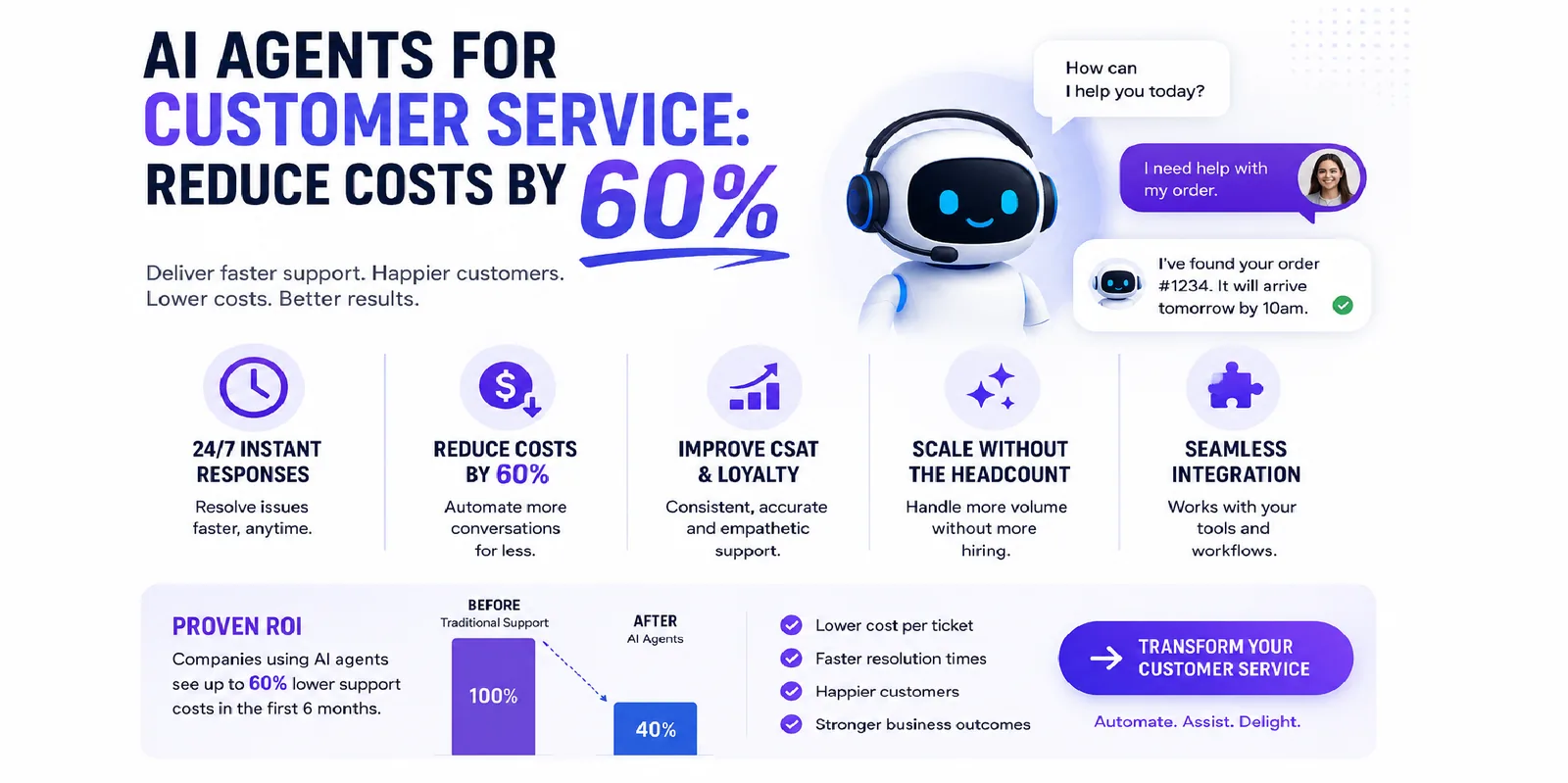
AI Agents for Customer Service: Reduce Costs by 60%
AI agents for customer service resolve 70%+ of tickets autonomously, cutting costs by 60%. Learn implementation strategies, real results, and best practices.
Faizan Ali KhanReady when you are
Want Cubitrek to run AI Agents for you?
We install ai agents programs for growing companies across the US and Europe. Book a call and we'll come back with a one-page plan in 72 hours.