How to Evaluate AI Agent Development Companies
Buyer's guide to evaluating AI agent development companies. Assessment criteria, red flags, questions to ask, and pricing benchmarks for 2026.

The AI agent dev market went from a few pioneers in 2024 to thousands of firms in 2026. Every consultancy and dev shop now claims "AI agent development."
Most are repackaged chatbot work or basic LLM integration. This guide gives you a framework to tell the difference.
Picking the wrong vendor sets your program back 6 to 12 months. It also breeds internal skepticism that hurts the next initiative. The stakes earn a real evaluation.
The eight-point evaluation framework
1. Technical depth vs. wrapper expertise
Many firms wrap an OpenAI or Anthropic API with a prompt and call it agent development. Real agent expertise covers:
- Multi-step reasoning architectures.
- Tool use and integration design.
- Memory and state management.
- Multi-agent orchestration.
- Error handling and recovery.
- Production reliability engineering.
Assessment. Ask the vendor to walk through their agent architecture. If they cannot articulate tool selection, error recovery, and state management, they are building chatbots.
2. Framework and platform expertise
Check depth across the leading frameworks:
- OpenClaw. Visual building, Lobster orchestration, ClawHub skills.
- LangChain / LangGraph. Graph-based orchestration, advanced state.
- CrewAI. Multi-agent role-based systems.
- Custom architectures. For specialized requirements.
A strong vendor recommends the framework that fits your use case. If they only know one, they will push you toward it whether it fits or not.
3. Production track record
Demos are easy. Production is hard. Ask:
- How many production agents do you have deployed?
- What is the uptime and reliability?
- What is the average kickoff-to-production timeline?
- Can you give 3+ reference customers we can call?
- What does post-launch support look like?
Red flag. If the vendor cannot give you 3 production references (not POCs), they have not solved reliability yet.
4. Industry and domain knowledge
The best agent work needs business process knowledge, not just tech. Ask if the vendor knows your industry, workflows, compliance, and edge cases.
A vendor with healthcare experience knows HIPAA, EHR integrations, clinical workflows, and patient safety. A generalist firm might ship a clean agent that fails on compliance.
5. Integration capabilities
Production agents have to live inside your stack. Check vendor experience with:
- Your CRM (Salesforce, HubSpot, Dynamics).
- Your communication tools (Slack, Teams, email).
- Your data systems (databases, warehouses, analytics).
- Your industry platforms (EHR, ERP, ATS).
- The Model Context Protocol (MCP) for future-proof integrations.
6. Security and compliance posture
Ask specifically:
- How do you handle customer data in the agent pipeline?
- What is your approach to prompt injection prevention?
- Do you support SOC 2, HIPAA, GDPR, or other frameworks?
- How do you handle access controls and audit logging?
- What is your stance on data residency and sovereignty?
For enterprise work, the vendor should show documented practices, not just claim "we take security seriously."
7. Pricing transparency and model
Benchmark vendor pricing against 2026 ranges:
| Engagement type | Typical range | Included | Watch out for |
|---|---|---|---|
| Discovery / assessment | $5K-15K | Process analysis, architecture rec | Should include a deliverable |
| Single agent (simple) | $15K-50K | One agent, 3-5 integrations, testing | Scope creep on integrations |
| Single agent (complex) | $50K-150K | Custom architecture, enterprise integrations | Undefined success criteria |
| Multi-agent system | $100K-500K | Multiple agents, orchestration, infra | Open-ended timelines |
| Ongoing support | $2K-10K/mo | Monitoring, optimization, updates | Token costs not included |
Red flag. Vendors who refuse a rough estimate without paid discovery are either padding hours or guessing.
8. Knowledge transfer and ownership
Critical questions:
- Will you own the code, prompts, and architecture?
- Can your team maintain and extend the agents after the engagement?
- Does the vendor provide docs and training?
- Are you locked into proprietary tools or platforms?
The best vendors build your capability, not your dependency. They plan knowledge transfer from day one and lean on open-source frameworks to avoid lock-in.
Questions to ask every vendor
For a broader introduction, read our AI agents business guide.
Run this list with every shortlist vendor:
- Walk me through your agent architecture for a similar use case.
- What framework do you recommend and why?
- How do you handle agent errors and edge cases in production?
- How do you test non-deterministic behavior?
- Show me monitoring dashboards from a real deployment.
- What does ongoing optimization look like after launch?
- How do you control cost as usage scales?
- What is your typical time to first production deployment?
Keep exploring
Key takeaways
- The Eight-Point Evaluation Framework
- Questions to Ask Every Vendor
- FAQ
- How do I evaluate vendor case studies?
Questions people ask about this
Sourced from client conversations, Search Console, and AI-search citation monitoring.
- Ask for specifics: what was the process automated, what was the volume, what was the accuracy/success rate, what was the ROI, and over what time period? Generic case studies ('we saved Company X 50% on costs') without specifics suggest marketing over substance. The best indicator is whether you can speak directly with the reference customer.
Keep reading
Related articles.
More on the same thread, picked by tag and category, not chronology.
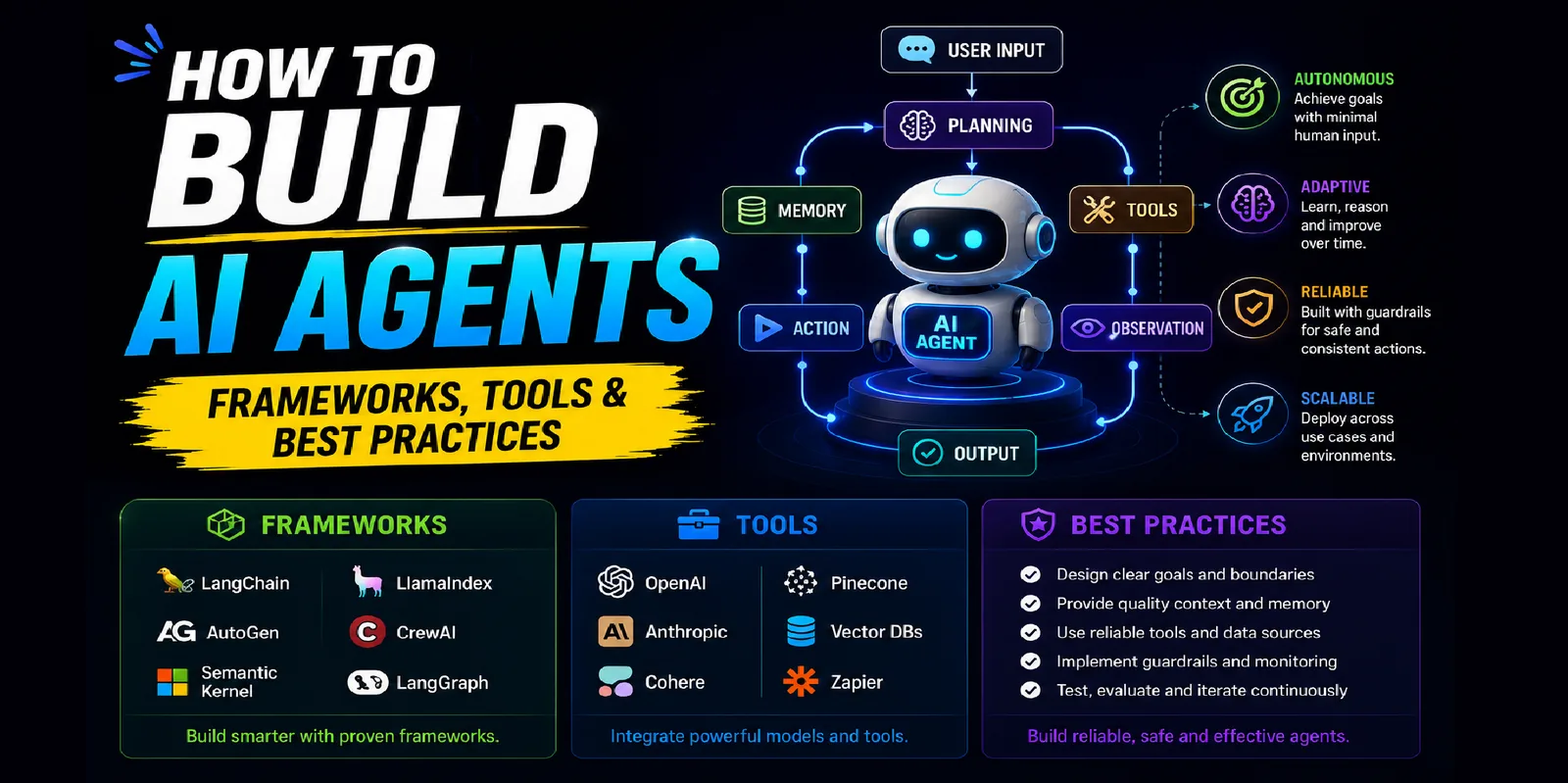
How to Build AI Agents: Frameworks, Tools & Best Practices
Step-by-step guide to building production AI agents. Compare frameworks, select tools, and follow best practices for reliable agent development in 2026.
Faizan Ali Khan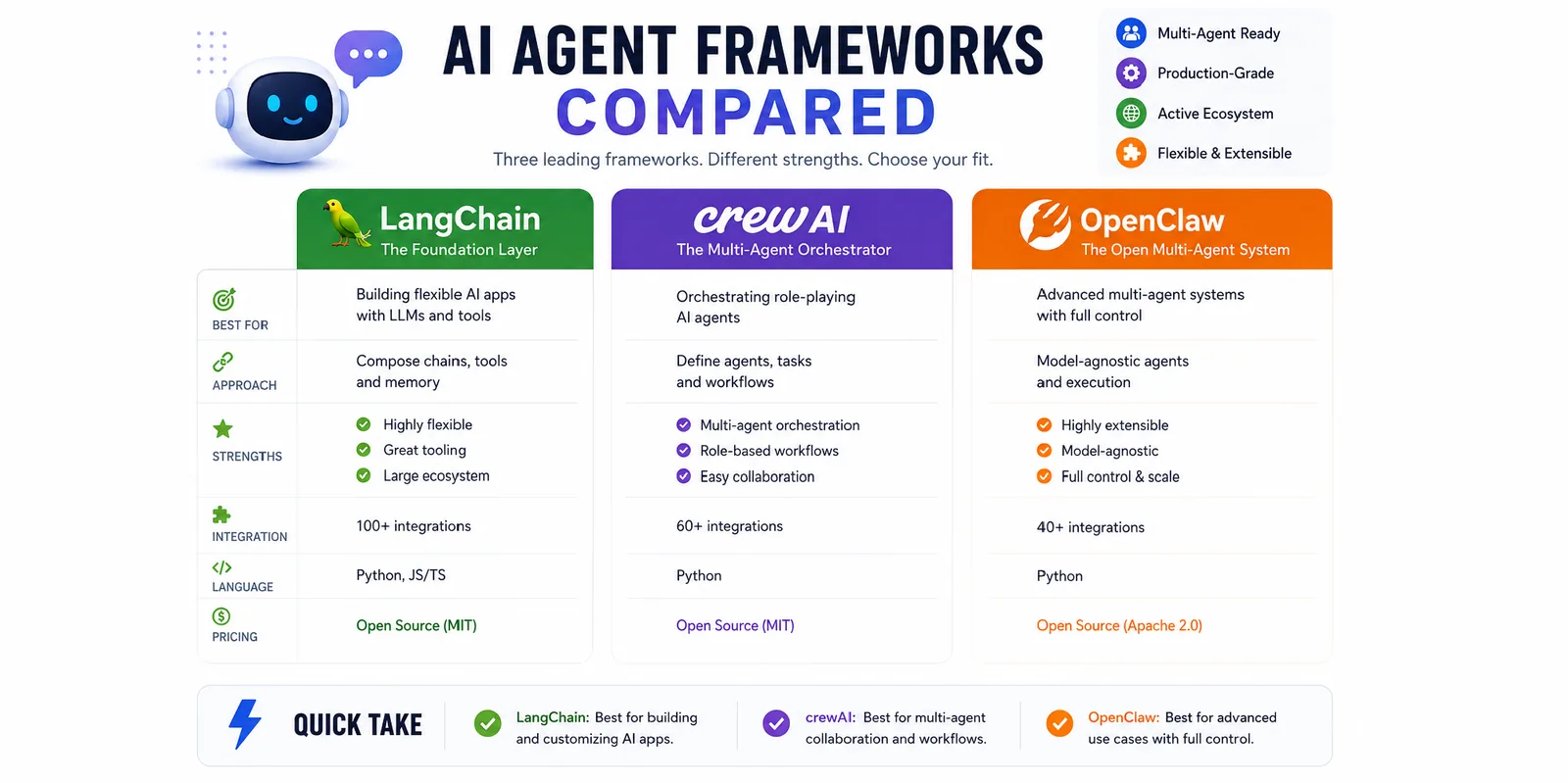
AI Agent Frameworks Compared: LangChain vs CrewAI vs OpenClaw
Detailed comparison of LangChain, CrewAI, and OpenClaw agent frameworks. Features, pricing, operating effort, and use case fit for enterprise AI agent development.
Faizan Ali Khan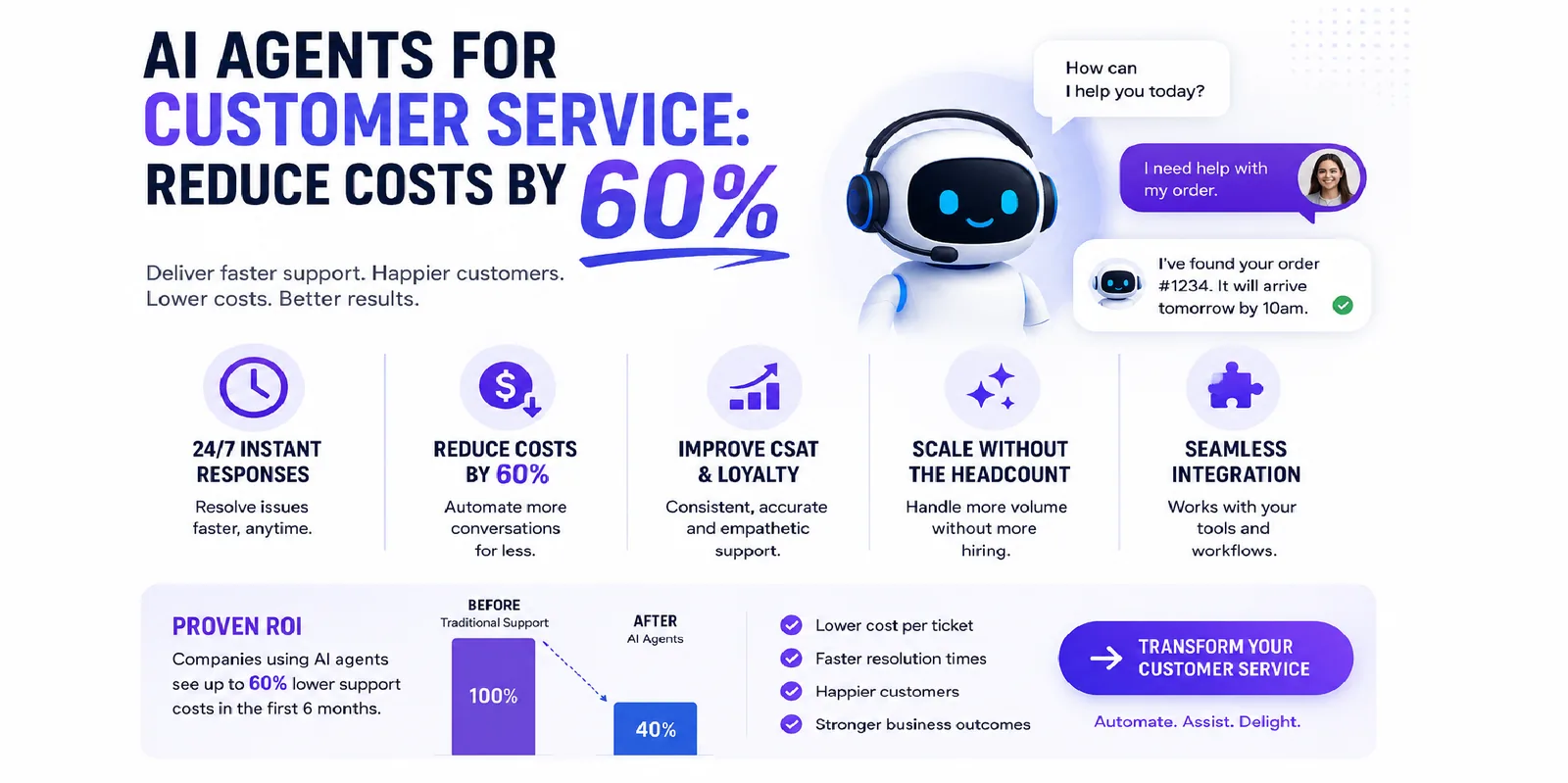
AI Agents for Customer Service: Reduce Costs by 60%
AI agents for customer service resolve 70%+ of tickets autonomously, cutting costs by 60%. Learn implementation strategies, real results, and best practices.
Faizan Ali KhanReady when you are
Want Cubitrek to run AI Agents for you?
We install ai agents programs for growing companies across the US and Europe. Book a call and we'll come back with a one-page plan in 72 hours.