

AI Agents vs Chatbots vs RPA: Understanding the Differences
AI agents, chatbots, and RPA serve different automation needs. Understand the key differences in capabilities, costs, and use cases to choose the right technology.

RPA clicks buttons. Chatbots answer questions. AI agents reason about a goal and take action across systems.
Buyers mix these up all the time. The wrong pick burns budget and stalls the program. This guide draws clean lines between the three.
Head-to-head comparison
| Dimension | RPA | Chatbots | AI Agents |
|---|---|---|---|
| Intelligence | None (rule-based) | Limited (intent matching) | High (LLM reasoning) |
| Decision making | Predefined rules | Decision trees | Dynamic reasoning |
| Adaptability | None (breaks if UI changes) | Limited (predefined intents) | High (handles novel inputs) |
| Task scope | Single-system, repetitive | Conversational only | Multi-system, multi-step |
| Tool usage | Screen scraping, clicks | API calls (basic) | Any tool via API/MCP |
| Learning | None | Limited (intent training) | Continuous (from outcomes) |
| Maintenance | High (brittle to changes) | Moderate (intent updates) | Low (self-adapting) |
| Setup cost | $20K-100K per bot | $5K-50K | $10K-100K per agent |
| Cost per task | $0.10-0.50 | $0.01-0.05 | $0.01-0.15 |
| Best for | Data entry, file transfers | FAQ, simple routing | Complex workflows, decisions |
RPA: automating the keyboard and mouse
For a broader introduction, read our AI agents business guide.
RPA records and replays human actions. It clicks buttons, fills forms, and copies data between systems.
It works well when the process never changes. Think invoice data moving from email to accounting software. Or employee records syncing between two HR tools.
The catch is brittleness. RPA bots talk to user interfaces, not APIs. A renamed field or moved button breaks the bot.
Mature RPA programs spend 30 to 50% of their budget on maintenance. That fragility makes RPA a poor fit for any process with variability.
Chatbots: automating conversations
Chatbots automate conversations. They match user messages to intents and run a script.
Older bots used rules. Newer ones wrap an LLM for smoother phrasing. Either way, they react to one turn at a time.
Chatbots are good for:
- Answering FAQs from a knowledge base.
- Routing requests to the right team.
- Collecting structured info like lead forms.
- Basic self-service like order tracking.
They fail when the user needs something that spans systems or requires real judgment.
AI agents: automating cognitive work
An AI agent gets a goal, breaks it into steps, gathers context, decides, and acts. It is automating the thinking, not just the keyboard or the chat window.
Agents adapt. When something unexpected shows up, the agent reasons about alternatives instead of crashing.
That is why agents fit work that needs judgment, context, and coordination across systems. The kind of work that used to need a human.
When to use each technology
Use RPA when
- The process is fully structured with no variation.
- Tasks copy data between systems with fixed formats.
- No judgment or decisions are required.
- The interfaces are stable.
- Volume justifies setup and maintenance (1,000+ transactions per month).
Use chatbots when
- The interaction is query and response.
- Questions have factual, simple answers.
- Scope stays inside info retrieval and routing.
- You want to deflect simple tickets from human support.
- Budget is tight and no autonomous actions are needed.
Use AI agents when
- The process needs judgment, reasoning, or context.
- Tasks span multiple systems with coordinated actions.
- Exceptions and variations break rigid rules.
- You need autonomy beyond answering questions.
- Inputs are unstructured (emails, docs, conversations).
The lines are blurring
Agents are absorbing both categories. They can converse like chatbots and act like RPA, with reasoning on top.
Big vendors know it. UiPath, Automation Anywhere, and Blue Prism are bolting on agent features. Intercom, Zendesk, and Drift are moving to agentic architectures.
For new investments, default to AI agents. Pick a chatbot only if the use case is genuinely simple. Pick RPA only if the system has no API and the UI never changes.
Keep exploring
Key takeaways
- Head-to-Head Comparison
- RPA: Automating the Keyboard and Mouse
- Chatbots: Automating Conversations
- AI Agents: Automating Cognitive Work
- Can AI agents and RPA work together?
- Are AI agents more expensive than chatbots?
Questions people ask about this
Sourced from client conversations, Search Console, and AI-search citation monitoring.
- Yes. A common pattern is using an AI agent as the 'brain' that orchestrates RPA bots as 'hands.' The agent handles reasoning, decision-making, and exception handling, while RPA bots execute the structured interface interactions. This hybrid approach reuses your existing RPA investments and adds intelligence on top. OpenClaw and UiPath both support this integration pattern.
- Per interaction, an agent usually costs more than a scripted chatbot because it makes several model calls. The comparison changes once you count outcomes: chatbots escalate a larger share of conversations to a human, while agents resolve more end to end, so cost per resolved issue can favour the agent for anything beyond simple FAQ handling. The honest way to settle it is to run both against a sample of your own tickets and compare cost per resolution on your numbers.
Keep reading
Related articles.
More on the same thread, picked by tag and category, not chronology.
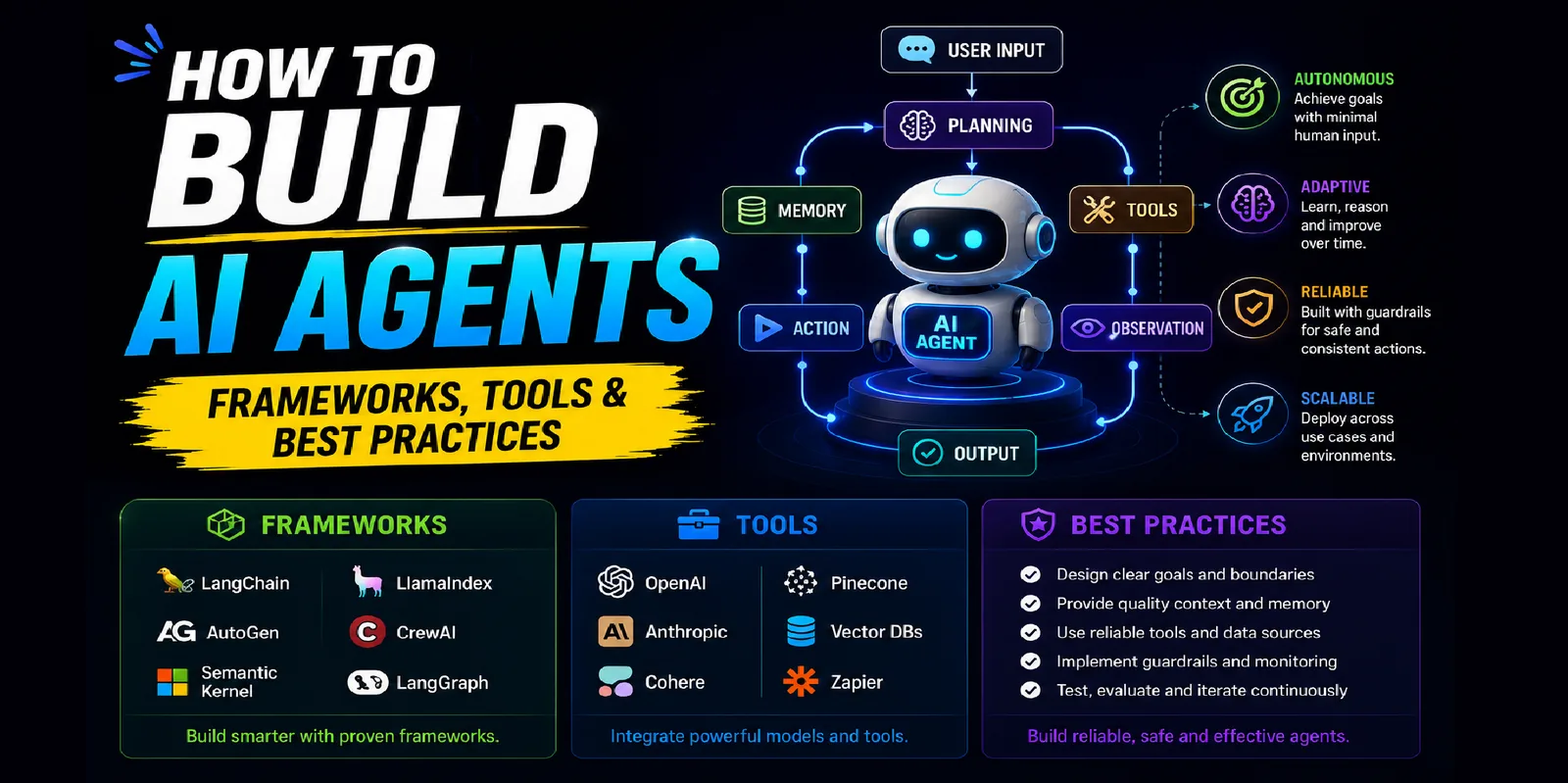
How to Build AI Agents: Frameworks, Tools & Best Practices
Step-by-step guide to building production AI agents. Compare frameworks, select tools, and follow best practices for reliable agent development in 2026.
Faizan Ali Khan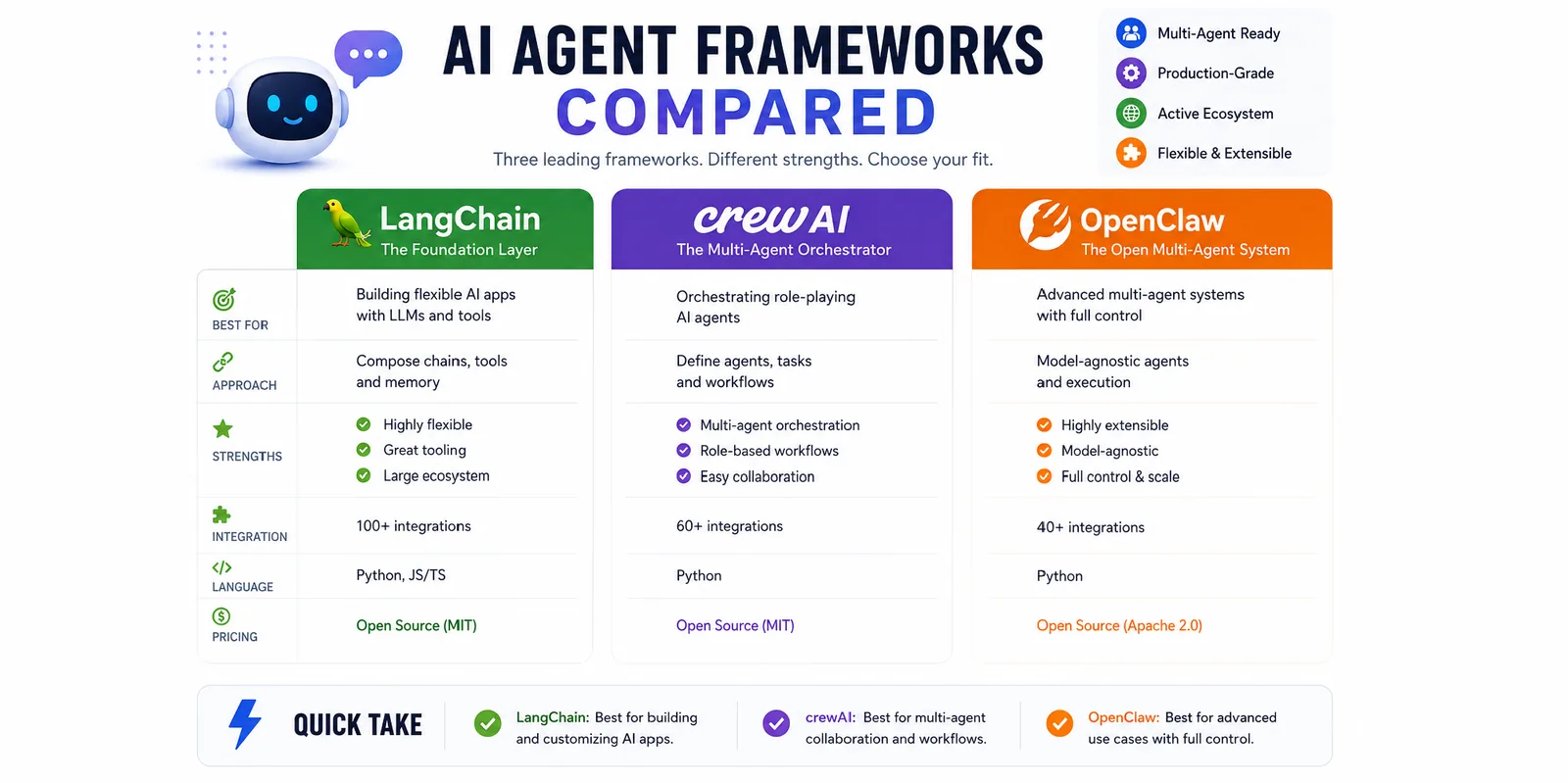
AI Agent Frameworks Compared: LangChain vs CrewAI vs OpenClaw
Detailed comparison of LangChain, CrewAI, and OpenClaw agent frameworks. Features, pricing, operating effort, and use case fit for enterprise AI agent development.
Faizan Ali Khan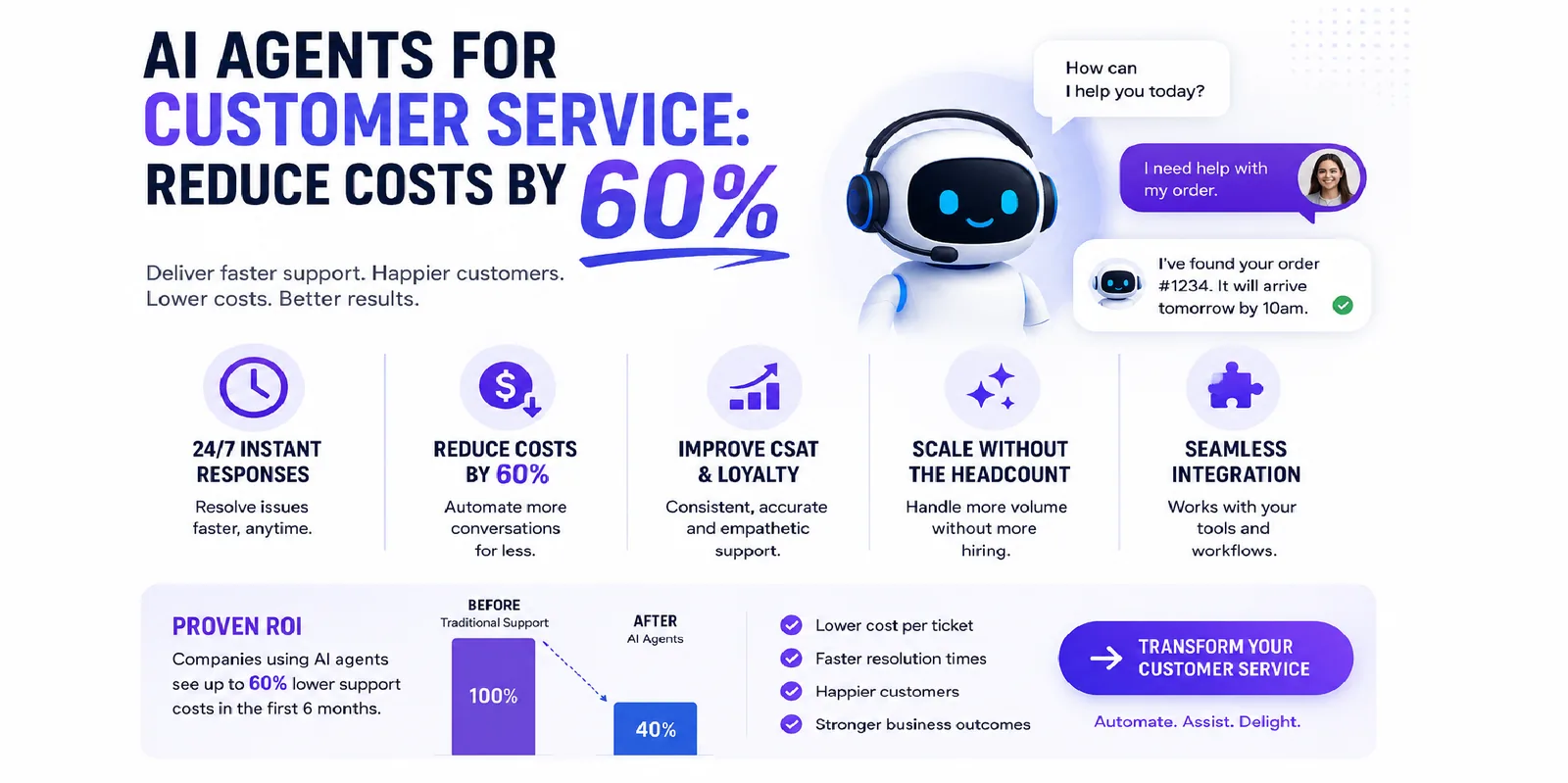
AI Agents for Customer Service: Reduce Costs by 60%
AI agents for customer service resolve 70%+ of tickets autonomously, cutting costs by 60%. Learn implementation strategies, real results, and best practices.
Faizan Ali KhanReady when you are
Want Cubitrek to run AI Agents for you?
We install ai agents programs for growing companies across the US and Europe. Book a call and we'll come back with a one-page plan in 72 hours.