

AI Agents Use Cases by Industry: 25 Real-World Examples
25 real-world AI agent use cases across healthcare, finance, retail, manufacturing, and more. See how industries deploy autonomous AI agents in 2026.

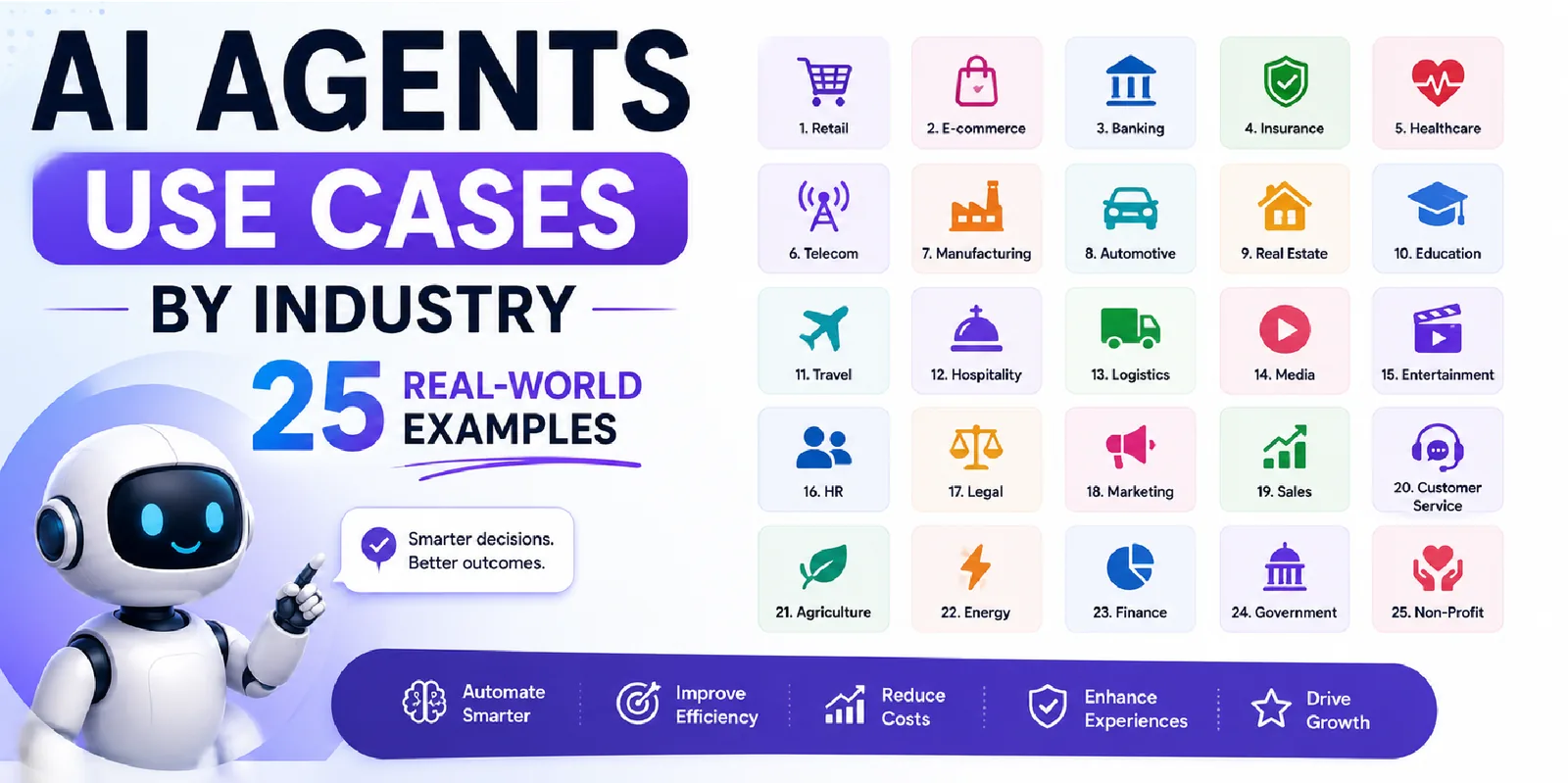
AI agents are software that perceive, decide, and act on their own. They now run inside every major industry. Generic automation follows rigid rules. Agents adapt to context, handle exceptions, and improve over time.
This list covers 25 proven use cases with real results.
Healthcare (5 Use Cases)
- Patient Intake and Triage
Agents run pre-visit intake, score symptom severity, and route patients to the right care. One major health system cut wait times by 40%. The same agent triaged 94% of cases correctly compared to human nurses. It collects symptoms, checks medication interactions, and flags urgent cases.
- Clinical Documentation (Ambient Scribing)
Agents listen to physician-patient conversations and write structured notes in real time. Physicians save 1 to 2 hours daily on documentation. Burnout drops. Face time with patients goes up. Notes land in the EHR with proper ICD-10 codes.
- Prior Authorization
Prior auth costs the US healthcare system $31 billion a year. Agents read records, match payer requirements, and submit auth requests with supporting docs. Cycle time drops 70%. First-submission approval rates hit 85%.
- Medication Management
Pharmacy agents review prescriptions against patient histories. They flag drug interactions, suggest formulary alternatives, and generate patient-friendly guides. Medication errors drop 45%. Pharmacist review time drops 60%.
- Post-Discharge Follow-Up
Agents reach patients after discharge by SMS, phone, or portal. They monitor recovery, check medication adherence, and escalate concerns. Hospitals report 25% lower 30-day readmissions.
Financial Services (5 Use Cases)
For a broader introduction, read our AI agents business guide.
- Fraud Detection and Investigation
Agents watch transactions in real time and flag suspicious patterns. They run preliminary investigations across accounts, devices, and locations. False positives drop 50%. They catch 30% more real fraud than rules-based systems.
- Loan Underwriting
Underwriting agents analyze applications, pull credit, and verify income and employment. They score risk against lending criteria and document the decision. Standard apps drop from 5 to 7 days to 4 to 8 hours.
- Regulatory Compliance Monitoring
Compliance agents scan regulator updates from SEC, FINRA, OCC, CFPB, and state bodies. They map changes to internal policies, flag gaps, and draft updated procedures. Reports generate on schedule.
- Client Portfolio Rebalancing
Agents track portfolio drift and calculate tax-optimal trades. They write client explanations and execute trades within approved limits. Wealth firms report 30% better portfolio alignment. Advisors spend 60% less time on routine rebalancing.
- Anti-Money Laundering (AML)
AML agents analyze transaction patterns and pull entity data from many sources. They draft Suspicious Activity Reports and prioritize cases for human review. Per-alert investigation time drops from 2 to 4 hours down to 15 to 30 minutes.
Retail and E-Commerce (5 Use Cases)
- Personalized Shopping Assistants
Agents act as virtual shopping assistants. They learn preferences, recommend products, and answer product questions from reviews and specs. They also complete purchases. Conversion rates climb 15 to 25%. Average order value climbs 10 to 20%.
- Inventory Management
Agents forecast demand from sales, seasonality, marketing calendars, and outside signals like weather. They write purchase orders, optimize warehouse allocation, and flag stockouts 2 to 3 weeks early. Overstock drops 30%. Stockouts drop 40%.
- Dynamic Pricing
Pricing agents watch competitors, demand, inventory, and margin targets. They adjust prices in real time and keep them consistent across channels. They also generate change explanations for compliance review.
- Returns Processing
Return agents check eligibility, decide between refund, exchange, or store credit, and generate labels. They handle 80% of returns autonomously. Customer satisfaction stays at 95%.
- Customer Churn Prevention
Agents spot at-risk customers from behavior signals. Reduced engagement, negative sentiment, competing-product research. They trigger personalized retention offers. Proactive churn agents cut churn 15 to 25% versus reactive-only setups.
Manufacturing (5 Use Cases)
- Predictive Maintenance
Agents read sensor data and predict failures. They schedule maintenance during planned downtime and order parts. Unplanned downtime drops 35 to 45%. Maintenance costs drop 25%.
- Quality Control
Vision-enabled agents inspect products on the line. They beat human consistency. Defects are caught at 99.5% accuracy. Quality escapes drop 60%. Inspection costs drop 70%.
- Supply Chain Disruption Response
Supply chain agents track global events, supplier comms, logistics, and inventory. When a port closes or a supplier slips, they find alternatives, reroute shipments, and adjust schedules. Stakeholders get notified.
- Production Scheduling
Scheduling agents optimize across order priority, machine availability, materials, labor, and energy costs. Daily plans improve throughput 10 to 15%. Changeover time drops.
- Safety Compliance Monitoring
Agents track incident reports, near-misses, inspections, and training records. They flag compliance gaps in real time. They generate OSHA documentation, schedule training, and track corrective actions to close.
Professional Services (5 Use Cases)
- Legal Contract Review
Agents review contracts clause by clause. They flag non-standard terms, missing provisions, and risk areas against playbooks. Redlines and comparison reports generate automatically. Law firms cut initial review time 80% on standard contracts.
- Audit Preparation
Audit agents pull documentation, reconcile accounts, and identify discrepancies. They build workpapers with supporting evidence. Audit prep time drops 50 to 60%. Documentation gets more complete.
- Proposal and RFP Response
Agents read RFPs, match requirements to capabilities and past proposals, and draft responses. They compile supporting materials and check submission rules. Response time drops from 2 to 3 weeks down to 3 to 5 days.
- Recruitment Screening
Recruiting agents screen resumes, score fit, and run initial phone screens via voice AI. They schedule interviews and stay in touch with candidates. Time-to-shortlist drops from 2 weeks to 2 days.
- Project Status Reporting
Agents pull status from Jira, Asana, GitHub, and Slack. They compile progress reports, flag risks, and send summaries to stakeholders. PMs save 3 to 5 hours per week. Reporting gets consistent.
How to Identify AI Agent Opportunities in Your Industry
AI Agents Use Cases by Industry · by the numbers
Look for processes with these traits.
- High volume. 100 or more instances per month.
- Structured decisions. Criteria you can write down.
- Digital data. The agent can reach what it needs.
- Repetitive judgment. Humans currently do the same call again and again.
- Clear metrics. You know what success looks like.
Pick a process important enough to justify the work. Pick one low-risk enough to absorb early errors. That is your first agent.
Keep exploring
Key takeaways
- Healthcare (5 Use Cases)
- Financial Services (5 Use Cases)
- Retail and E-Commerce (5 Use Cases)
- Manufacturing (5 Use Cases)
- Professional Services (5 Use Cases)
- How to Identify AI Agent Opportunities in Your Industry
Questions people ask about this
Sourced from client conversations, Search Console, and AI-search citation monitoring.
- All 25 use cases listed are in production at multiple organizations in 2026. The results cited are based on published case studies and industry reports. Your specific results will depend on implementation quality, data readiness, and process complexity.
- Score each potential use case on three criteria: business impact (cost savings, revenue lift, risk reduction), technical feasibility (data availability, integration complexity, defined success criteria), and organizational readiness (stakeholder buy-in, process documentation, change management capacity). Start with the use case that scores highest across all three.
Keep reading
Related articles.
More on the same thread, picked by tag and category, not chronology.
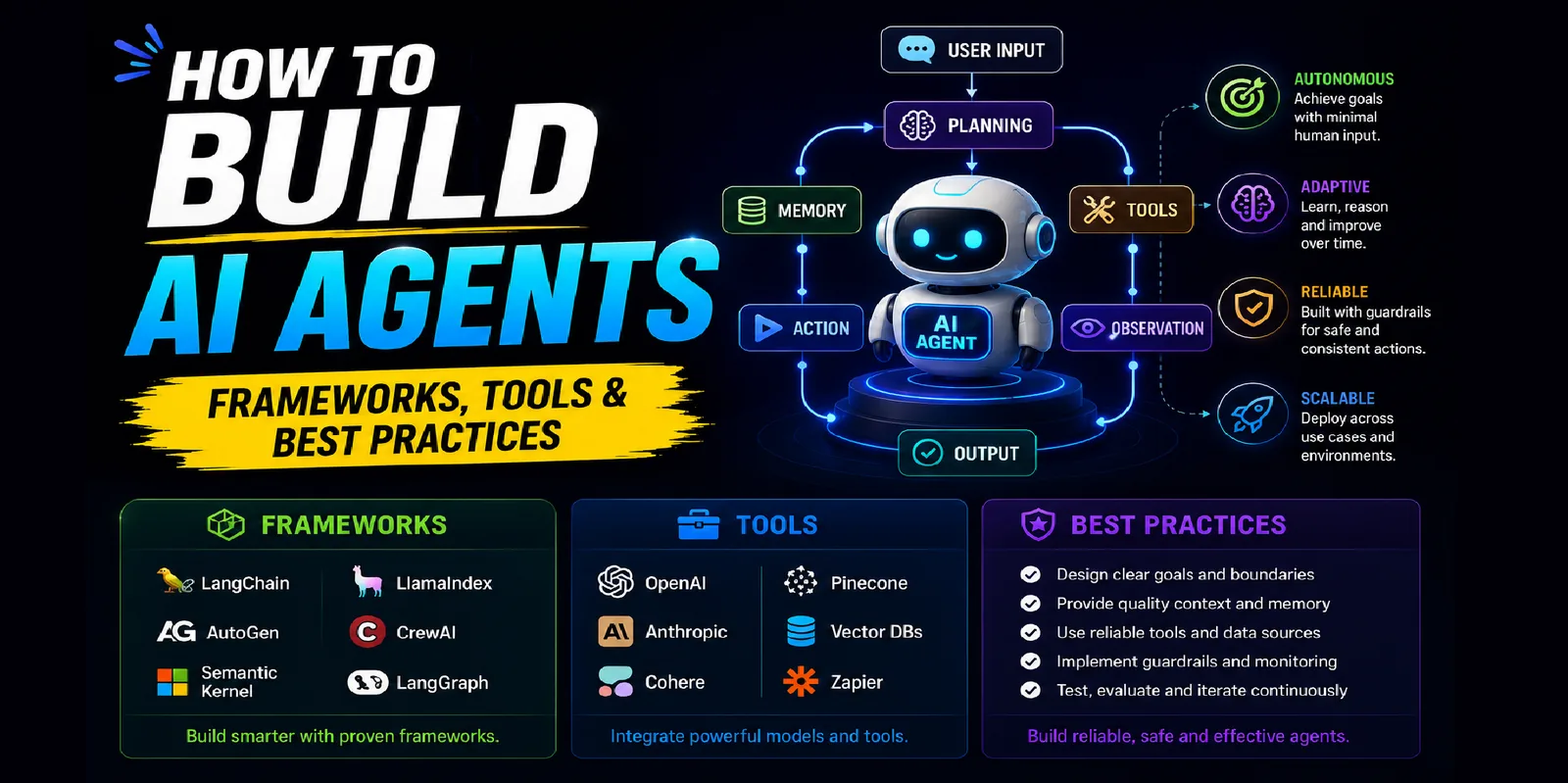
How to Build AI Agents: Frameworks, Tools & Best Practices
Step-by-step guide to building production AI agents. Compare frameworks, select tools, and follow best practices for reliable agent development in 2026.
Faizan Ali Khan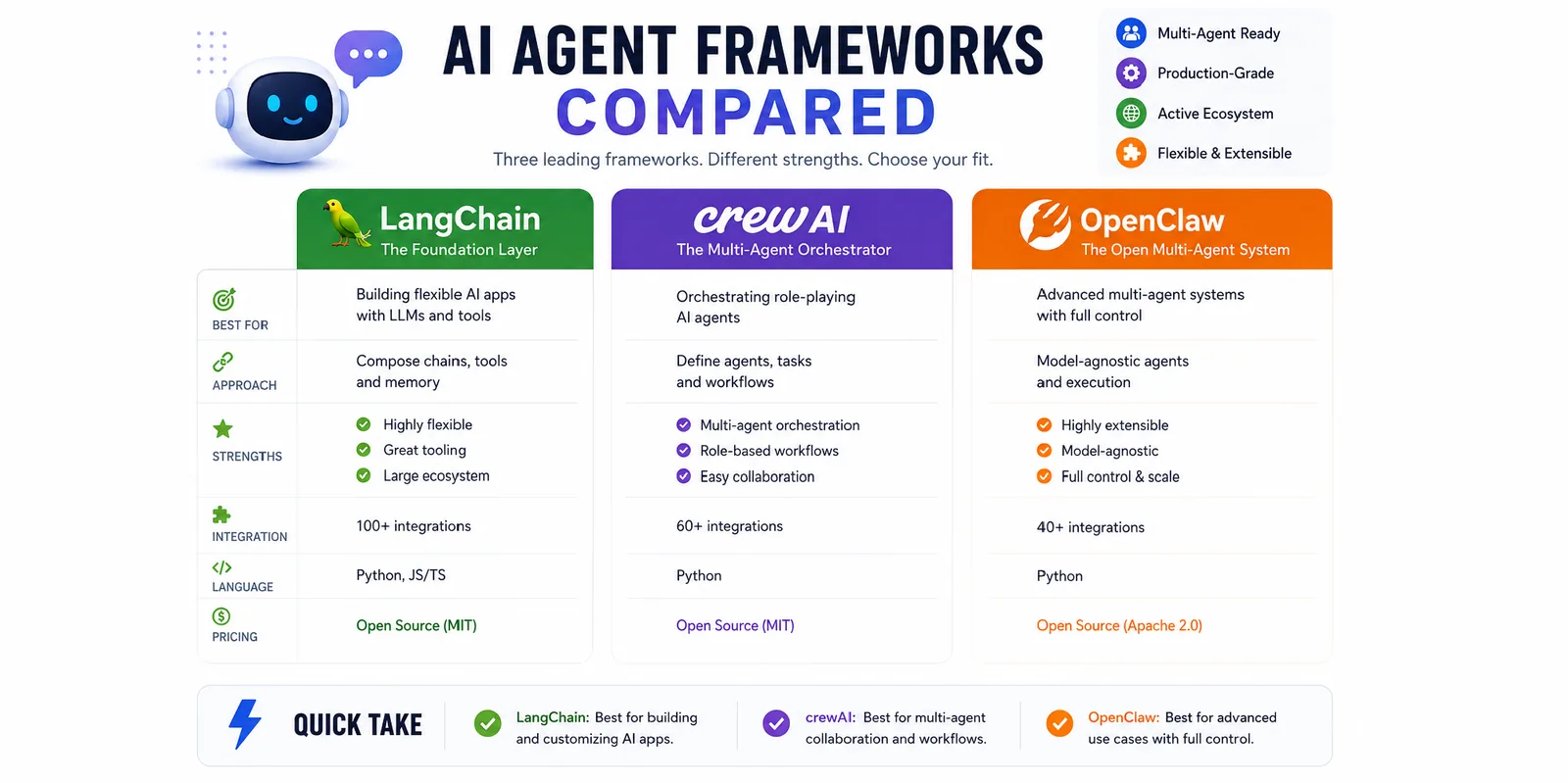
AI Agent Frameworks Compared: LangChain vs CrewAI vs OpenClaw
Detailed comparison of LangChain, CrewAI, and OpenClaw agent frameworks. Features, pricing, operating effort, and use case fit for enterprise AI agent development.
Faizan Ali Khan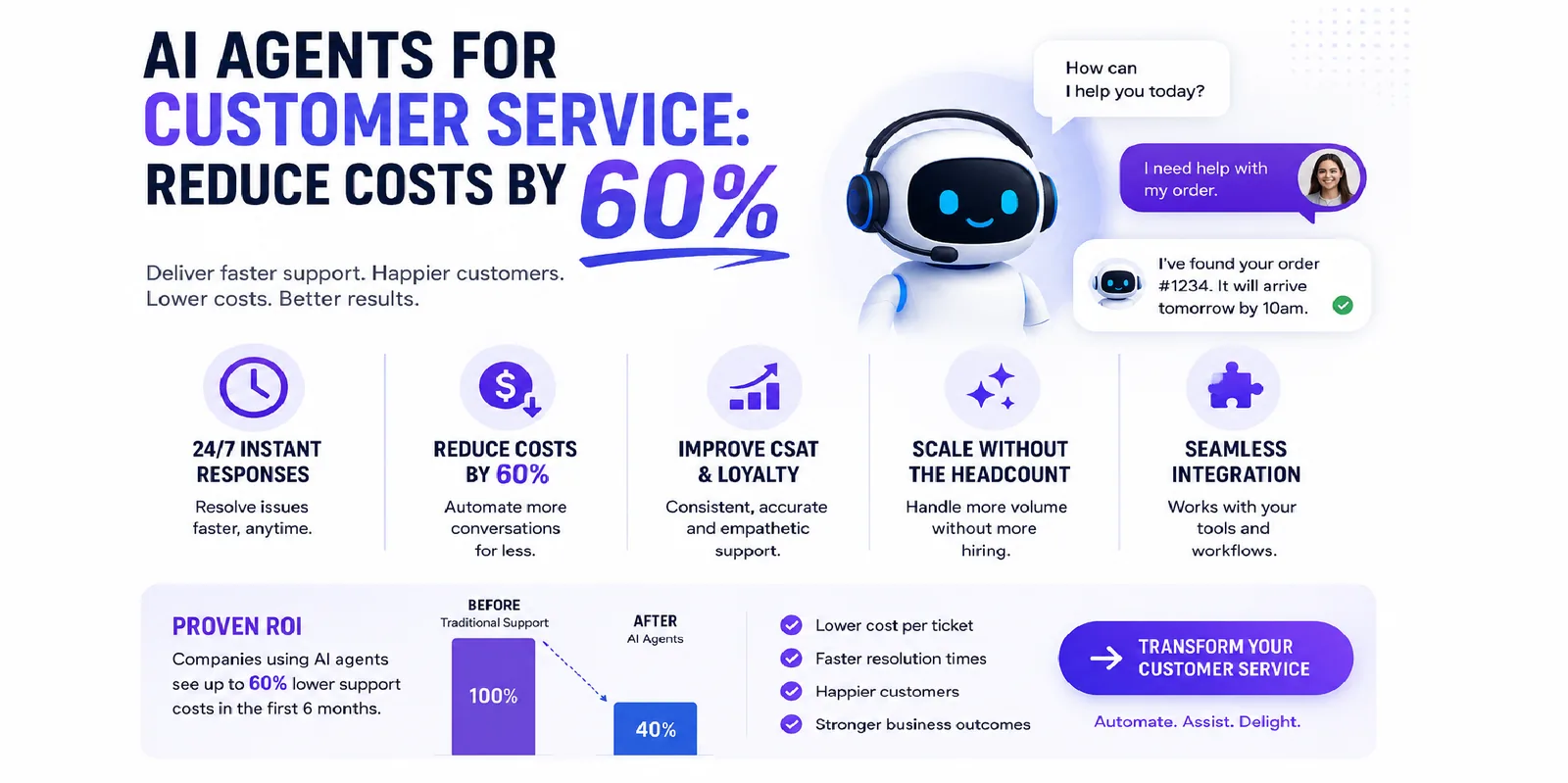
AI Agents for Customer Service: Reduce Costs by 60%
AI agents for customer service resolve 70%+ of tickets autonomously, cutting costs by 60%. Learn implementation strategies, real results, and best practices.
Faizan Ali KhanReady when you are
Want Cubitrek to run AI Agents for you?
We install ai agents programs for growing companies across the US and Europe. Book a call and we'll come back with a one-page plan in 72 hours.