AI Agents for Sales: Lead Qualification to Close
AI agents automate the sales cycle from lead qualification through close. Learn how sales teams use AI agents to 3x pipeline velocity in 2026.

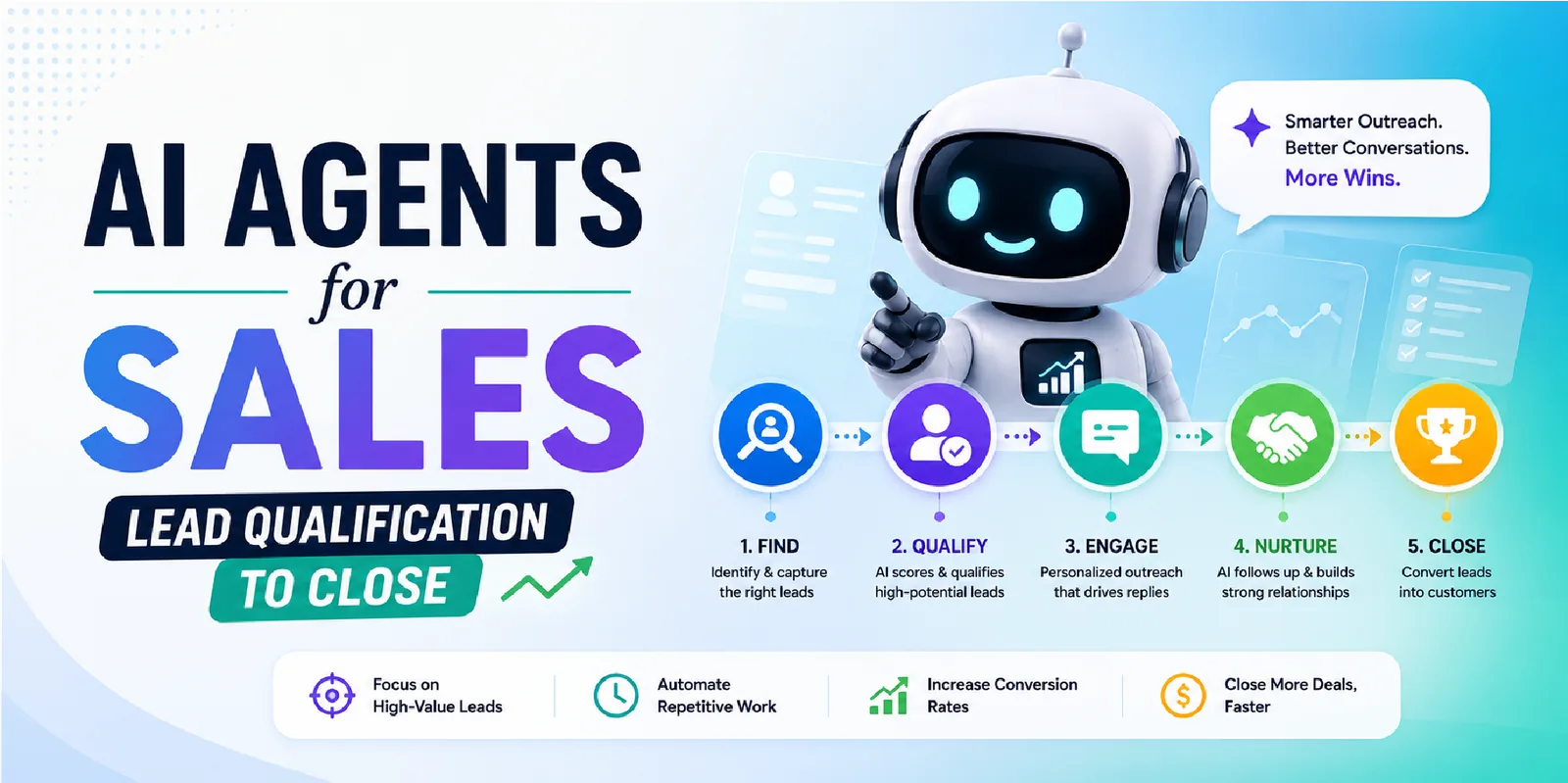
Sales reps spend only 28% of their time selling. The rest goes to admin work.
Data entry. Lead research. Email drafting. CRM updates. Meeting scheduling. Proposal writing. Internal reporting.
For a team of 20 reps at $100,000 average OTE, that is $1.44 million a year in non-selling labor.
AI agents reclaim that time. They automate the mechanical parts of the sales process. Humans stay in control of relationships and strategy.
Top sales orgs now deploy agents across the full funnel. Lead capture through closed-won. A continuous pipeline that runs 24/7. Agents do not replace salespeople. They make each rep 2-3x more productive on the work that does not need human judgment.
Use cases across the sales funnel
Lead enrichment and scoring
The moment a lead enters your system (form fill, inbound email, website visit, event registration), the agent enriches it.
- Company data: revenue, headcount, industry, tech stack.
- Contact data: title, LinkedIn profile, social presence.
- Intent signals: content downloads, competitor visits, hiring patterns.
It scores the lead against your ICP and routes high-scoring ones to the right rep with a full briefing.
Result: companies report 40% improvement in lead-to-opportunity conversion. Reps focus on pre-qualified leads instead of cold prospects.
Automated outreach and follow-up
Agents draft and send personalized outreach. Each message references the prospect's situation. Recent company news. Tech decisions. Hiring activity. Published content.
When prospects reply, the agent classifies the response (interested, objection, not now, unsubscribe). Then it continues the sequence, books a meeting, or alerts the rep.
The agent also runs persistent follow-up across weeks and months. 80% of sales need 5+ touchpoints. 44% of reps give up after one. Agents do not.
Meeting scheduling and prep
When a prospect agrees to a meeting, the agent handles all the logistics. Timezone coordination. Calendar checks. Confirmations. Reminders.
It also briefs the rep. The briefing covers prospect background, company overview, likely pain points, competitor presence, relevant case studies, and suggested talking points.
Proposal and quote generation
After discovery calls, agents draft proposals. They pull from template libraries, customize content for the prospect's industry, calculate pricing with approved discount structures, and generate professional documents.
Reps review and customize the draft instead of starting from scratch. Proposal time drops from 2-4 hours to 20-30 minutes.
Pipeline management and forecasting
Agents watch the pipeline continuously. They flag stalled deals. They spot opportunities where engagement has dropped. They suggest next best actions based on win patterns. They update forecast probabilities from actual buyer behavior, not rep optimism.
Sales managers get daily briefings with actionable insights. No more hours digging through CRM data.
Results from early adopters
| Metric | Before AI Agents | After AI Agents | Improvement |
|---|---|---|---|
| Lead Response Time | 4-24 hours | < 5 minutes | 96-99% faster |
| Lead-to-Meeting Rate | 3-5% | 8-12% | 2-3x increase |
| Meetings Booked Per Rep | 15/month | 35/month | 133% increase |
| Proposal Creation Time | 3 hours | 30 minutes | 83% faster |
| Pipeline Velocity | 45-day cycle | 28-day cycle | 38% faster |
| Rep Selling Time | 28% | 55% | +27 percentage points |
| Quota Attainment | 52% of reps | 71% of reps | +19 percentage points |
Building your sales agent stack
For a broader introduction, read our AI agents business guide.
The right sales agent stack ties six layers together:
- CRM. Salesforce or HubSpot. Source of truth for contacts, accounts, deals.
- Enrichment. Apollo, ZoomInfo, Clearbit. Lead and company data.
- Sequencing. Outreach, Salesloft, Apollo. Automated outreach execution.
- Agent platform. OpenClaw or custom build. Orchestration layer that ties everything together.
- LLM provider. Claude for complex reasoning. Haiku for high-volume tasks.
- Analytics. Gong, Clari, custom dashboards. Performance monitoring and tuning.
The critical integration is agent platform to CRM. Every action the agent takes (enrichment, scoring, outreach, meeting booking, proposal generation) syncs back. Your existing reporting and workflows keep working.
Implementation best practices
Start with lead enrichment and scoring. It delivers value without changing the rep's workflow.
Once reps trust the agent's enrichment and scoring, expand to automated outreach for cold leads. Keep humans in control of warm prospect comms and all pricing or negotiation.
Set clear rules of engagement. The agent handles initial outreach to leads below a set account value or engagement score. Above that, the human takes the lead with AI-generated briefings and suggested actions.
This hybrid gets you the best of both. AI efficiency for volume. Human judgment for high-stakes deals.
Keep exploring
Key takeaways
- AI Agent Use Cases Across the Sales Funnel
- Building Your Sales AI Agent Stack
- How do AI agents handle sales objections?
- What about personalization at scale?
Questions people ask about this
Sourced from client conversations, Search Console, and AI-search citation monitoring.
- For common objections in automated outreach (pricing concerns, timing, competitor comparisons), AI agents use objection-handling frameworks trained on your winning patterns. For complex or novel objections, the agent escalates to the human rep with context and suggested responses. The agent improves over time as it learns which responses lead to continued engagement.
- AI agents achieve personalization at scale by researching each prospect individually, analyzing their company's recent news, technology stack, job postings, social media activity, and published content, then crafting outreach that references these specific details. This level of personalization was previously only possible for top-of-funnel prospects; agents extend it to every lead.
Keep reading
Related articles.
More on the same thread, picked by tag and category, not chronology.
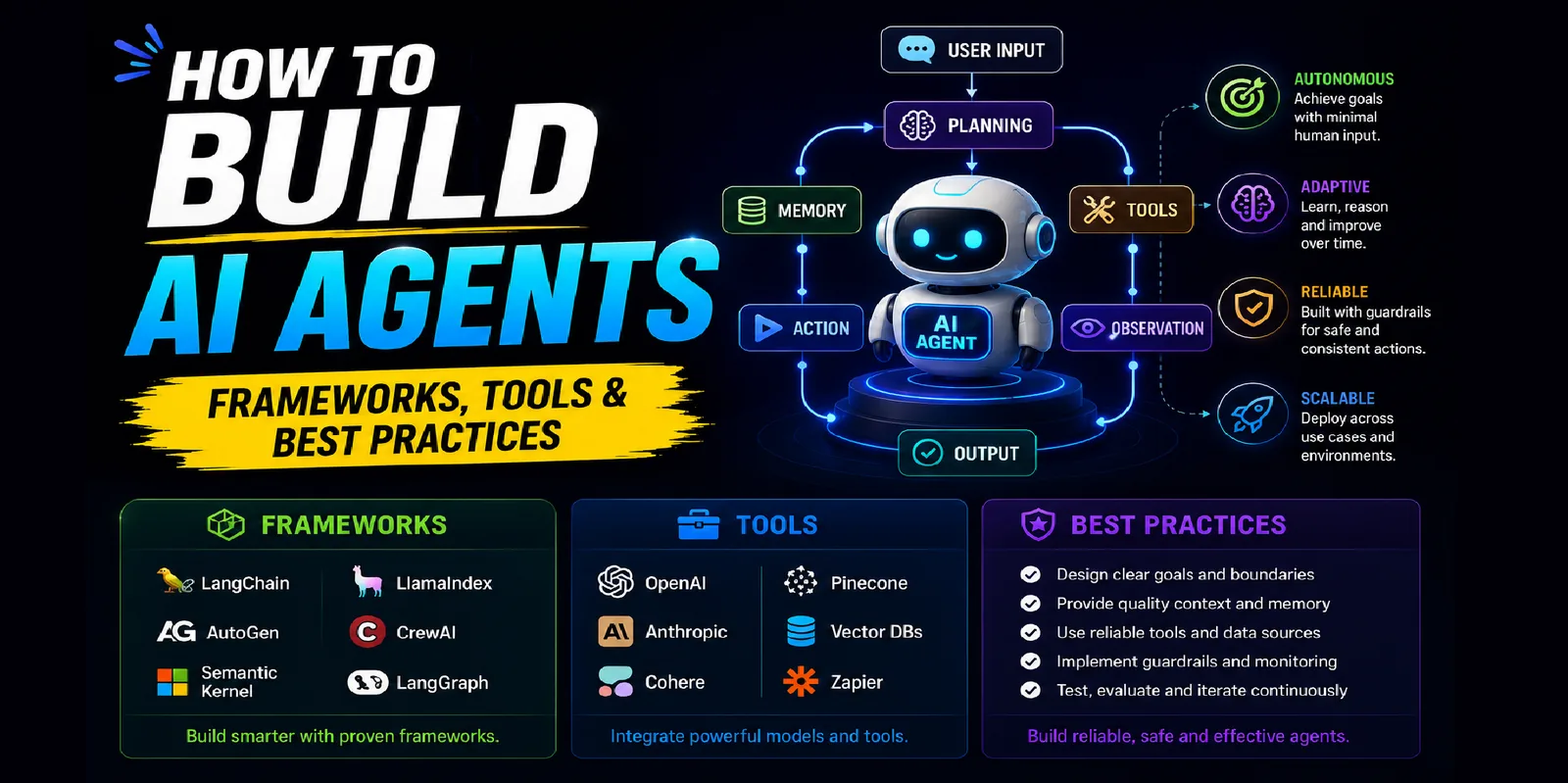
How to Build AI Agents: Frameworks, Tools & Best Practices
Step-by-step guide to building production AI agents. Compare frameworks, select tools, and follow best practices for reliable agent development in 2026.
Faizan Ali Khan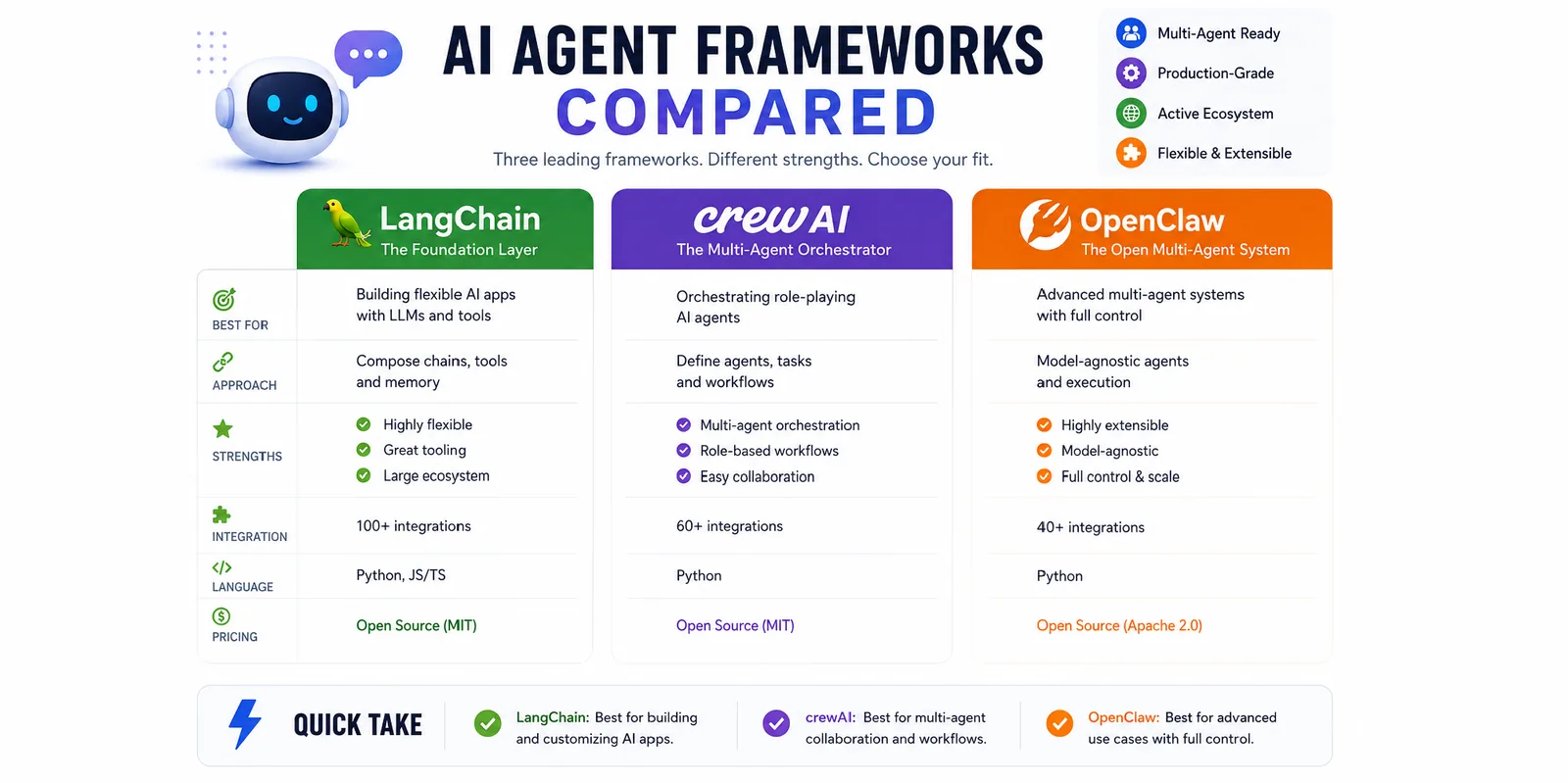
AI Agent Frameworks Compared: LangChain vs CrewAI vs OpenClaw
Detailed comparison of LangChain, CrewAI, and OpenClaw agent frameworks. Features, pricing, operating effort, and use case fit for enterprise AI agent development.
Faizan Ali Khan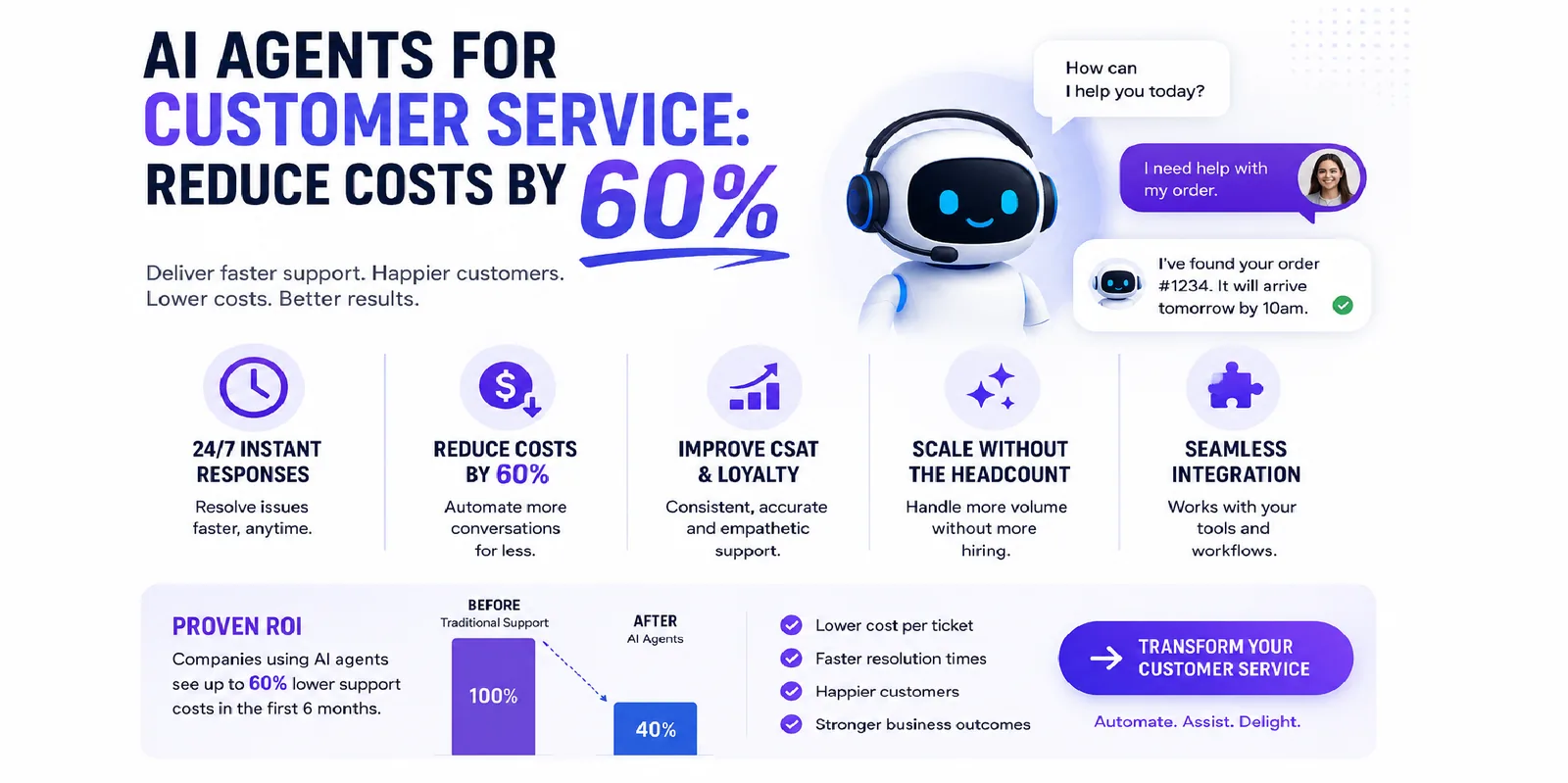
AI Agents for Customer Service: Reduce Costs by 60%
AI agents for customer service resolve 70%+ of tickets autonomously, cutting costs by 60%. Learn implementation strategies, real results, and best practices.
Faizan Ali KhanReady when you are
Want Cubitrek to run AI Agents for you?
We install ai agents programs for growing companies across the US and Europe. Book a call and we'll come back with a one-page plan in 72 hours.