

AI Agents for Customer Service: Reduce Costs by 60%
AI agents for customer service resolve 70%+ of tickets autonomously, cutting costs by 60%. Learn implementation strategies, real results, and best practices.

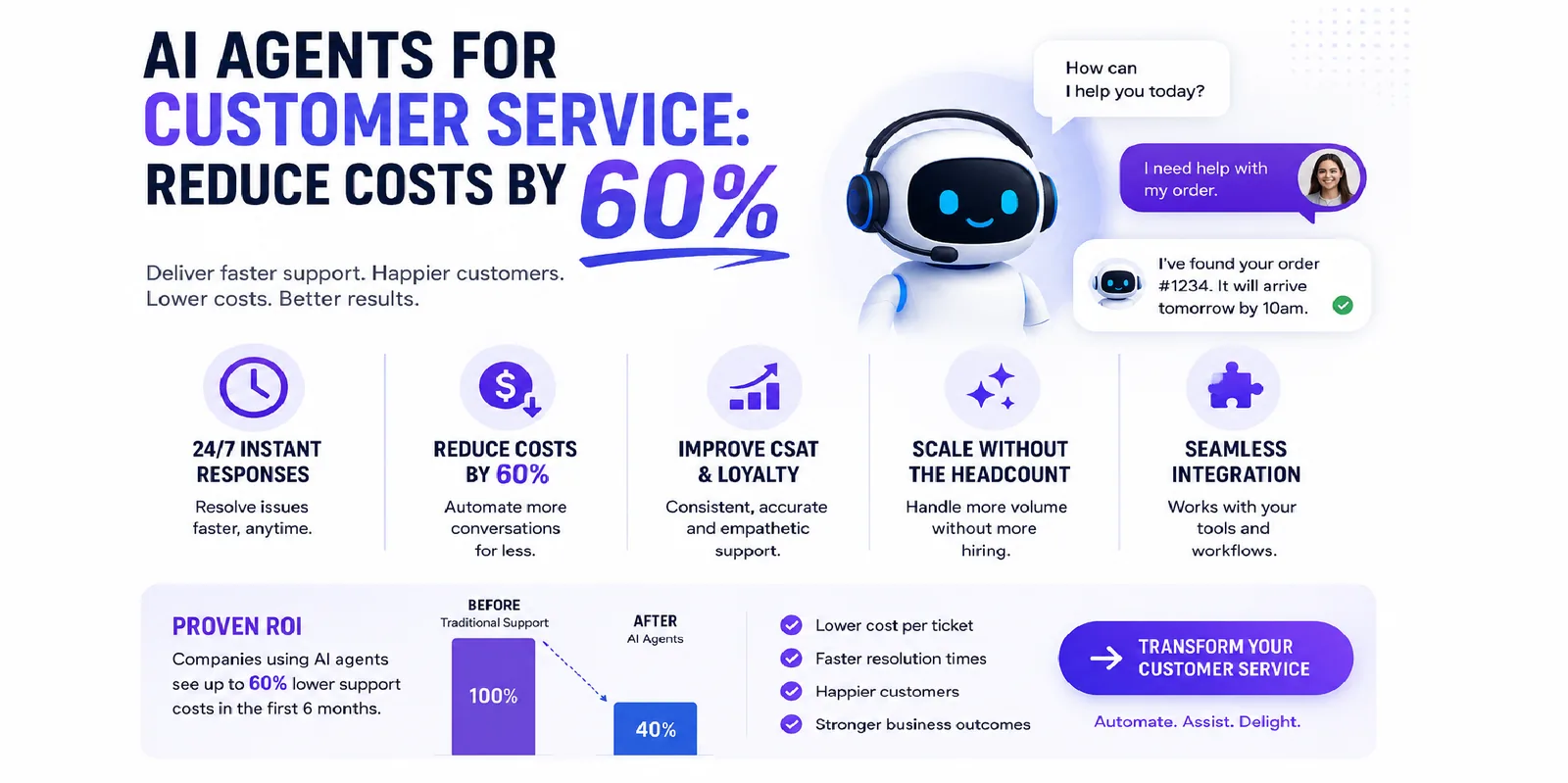
Customer service costs do not scale. Average cost per live-agent interaction runs $5 to $12 for chat, $8 to $15 for email, and $12 to $25 for phone.
A company handling 50,000+ tickets a month spends $3 to $15 million a year on support. That is before hiring, training, and turnover. Contact center turnover averages 30 to 45% a year.
These are not the chatbots of 2020. Modern AI agents understand nuanced requests. They pull customer history and account data. They process refunds, change subscriptions, troubleshoot issues, and escalate when needed.
The result. 60 to 70% cost reduction with equal or better CSAT.
How AI Customer Service Agents Work
Every interaction follows the same five-step loop.
- Classify. Billing, technical, account, complaint, general.
- Retrieve context. Account history, recent orders, prior tickets, open issues.
- Reason. Match policy, KB articles, and the situation to a resolution path.
- Act. Process the refund. Update the subscription. Reset the password. Generate the return label. Book the appointment.
- Confirm. Tell the customer, update the ticket, and trigger any follow-up.
Step four is what separates agents from chatbots. They do the work, not just describe it.
Cost Reduction Breakdown
| Cost Component | Before AI Agents | After AI Agents | Reduction |
|---|---|---|---|
| L1 Support Headcount | 100 agents | 30 agents | 70% |
| L2 Support Headcount | 40 agents | 30 agents | 25% |
| Average Handle Time | 8.5 minutes | 2.1 minutes | 75% |
| Cost Per Resolution | $12.50 | $0.50-2.00 | 84-96% |
| Training Costs (annual) | $450,000 | $120,000 | 73% |
| After-Hours Coverage | $180,000/yr (outsourced) | $0 (agent is 24/7) | 100% |
| First Contact Resolution | 68% | 82% | +14 pts |
| CSAT Score | 4.1/5 | 4.3/5 | +0.2 pts |
The 60% cost reduction is conservative. Teams that fully tune their setup hit 65 to 75% in 12 months. That includes automated QA, predictive routing, and continuous learning from resolved tickets.
Implementation Strategy: The Four-Phase Approach
For a broader introduction, read our AI agents business guide.
Phase 1: Triage and Classification (Weeks 1-4)
Deploy the agent as a classifier first. It routes tickets to the right human or team. Resolution time drops 20 to 30% with no action authority.
The agent reads tickets, categorizes them, scores urgency, and routes with a summary for the human.
Phase 2: Information and Guidance (Weeks 5-8)
Expand the agent to FAQ and guidance work. It answers common questions from the KB. It walks customers through self-service. It collects info needed for human resolution. This phase deflects 30 to 40% of tickets.
Phase 3: Autonomous Resolution (Weeks 9-16)
Give the agent permission to act inside set limits. Start with low-risk, high-volume actions:
- Refunds under $50.
- Contact info updates.
- Password resets.
- Order status checks.
- Return label generation.
Expand the action scope as confidence grows. This phase handles 50 to 60% of tickets autonomously.
Phase 4: Proactive and Predictive (Months 5-12)
The final phase goes proactive. The agent watches for issue patterns and reaches out before customers do. It spots at-risk customers and triggers retention flows. It also learns from human resolutions to expand what it can handle alone.
What AI Agents Cannot Replace in Customer Service
Good deployment means knowing the boundary. Send these to humans:
- Emotional situations that need real empathy and de-escalation.
- Complex disputes with multiple parties or legal stakes.
- VIP and high-value relationships that need personal attention.
- Novel cases with no precedent in the KB.
- Anything where a wrong action causes real harm or liability.
The best setups route exceptions to humans. Those humans are freed from routine work and can focus on the calls that need a human.
Technology Stack for Customer Service Agents
The common 2026 stack pairs a few pieces.
- Agent platform. OpenClaw or custom on LangChain.
- LLM provider. Claude or GPT-4 for quality. Haiku or GPT-4o-mini for volume.
- Knowledge base. RAG pipeline with company docs, policies, and past resolutions.
- CRM integration. Salesforce, HubSpot, or Zendesk via API or MCP.
- Ticketing integration. Zendesk, Freshdesk, Intercom, or ServiceNow.
OpenClaw fits customer service well. ClawHub already has skills for major CRM and ticketing platforms. Integration drops from weeks to hours.
Metrics That Matter
Track these KPIs to know if the agent is working.
- Containment rate. Tickets resolved without a human.
- First contact resolution.
- Average handle time. For AI and human-assisted.
- CSAT per channel.
- Escalation rate and appropriateness.
- Cost per resolution.
- Agent confidence scores. How sure the AI is about its answers and actions.
Keep exploring
Key takeaways
- How AI Customer Service Agents Work
- Implementation Strategy: The Four-Phase Approach
- What AI Agents Cannot Replace in Customer Service
- Technology Stack for Customer Service Agents
- How do AI agents handle multiple languages?
- What about data privacy and compliance?
Questions people ask about this
Sourced from client conversations, Search Console, and AI-search citation monitoring.
- Modern LLMs support 50+ languages natively. The AI agent can detect the customer's language, respond in that language, and access translated knowledge base content, all without separate deployments per language. This eliminates the need for multilingual support teams, which is one of the highest-impact cost reductions for global companies.
- For GDPR, CCPA, and similar regulations, ensure the AI agent: stores conversation data according to retention policies, provides data access and deletion on request, does not use customer data for model training without consent, maintains audit trails for all actions taken, and operates on infrastructure that meets data residency requirements. Self-hosted platforms like OpenClaw provide the most control over data handling.
Keep reading
Related articles.
More on the same thread, picked by tag and category, not chronology.
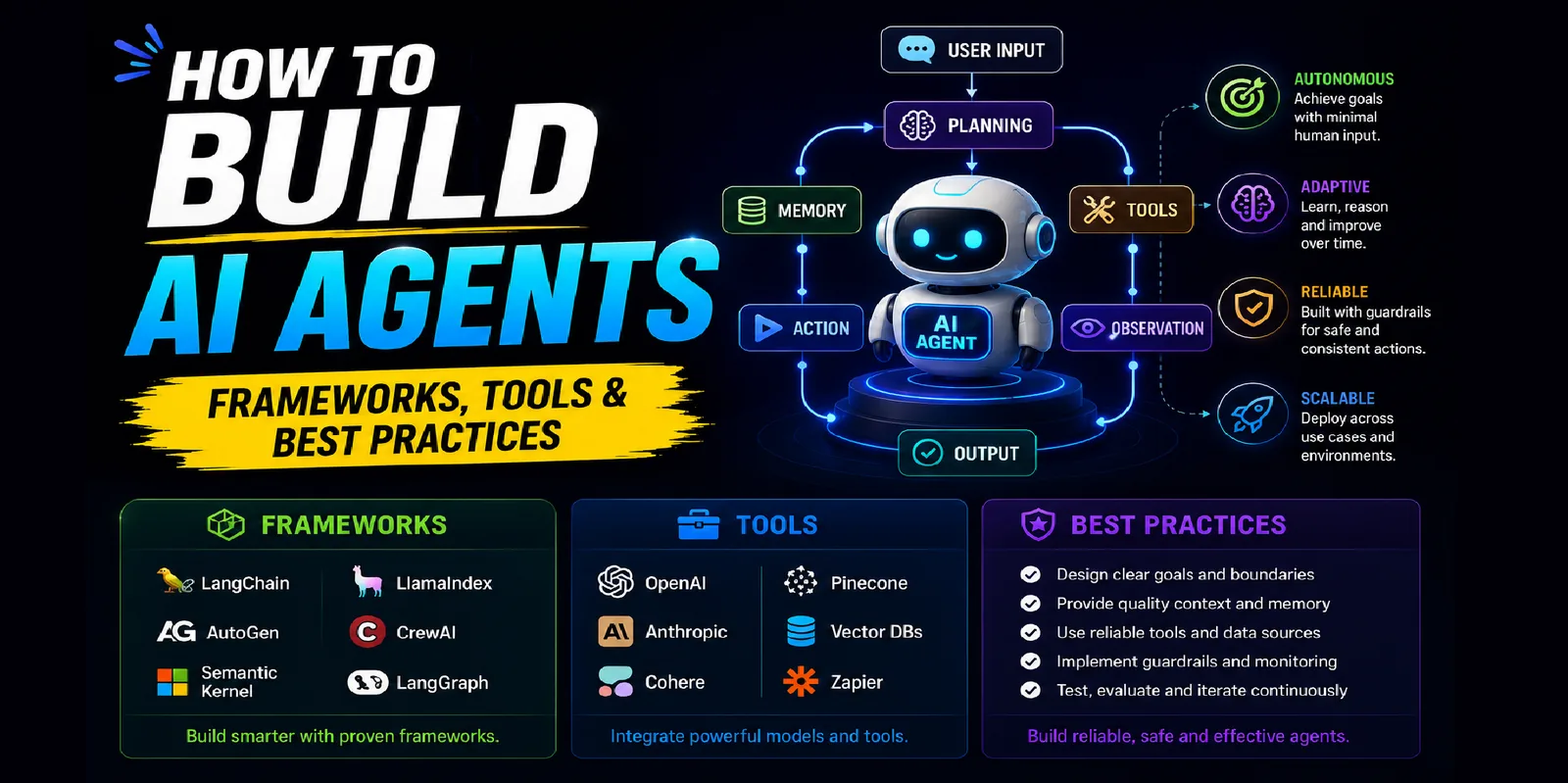
How to Build AI Agents: Frameworks, Tools & Best Practices
Step-by-step guide to building production AI agents. Compare frameworks, select tools, and follow best practices for reliable agent development in 2026.
Faizan Ali Khan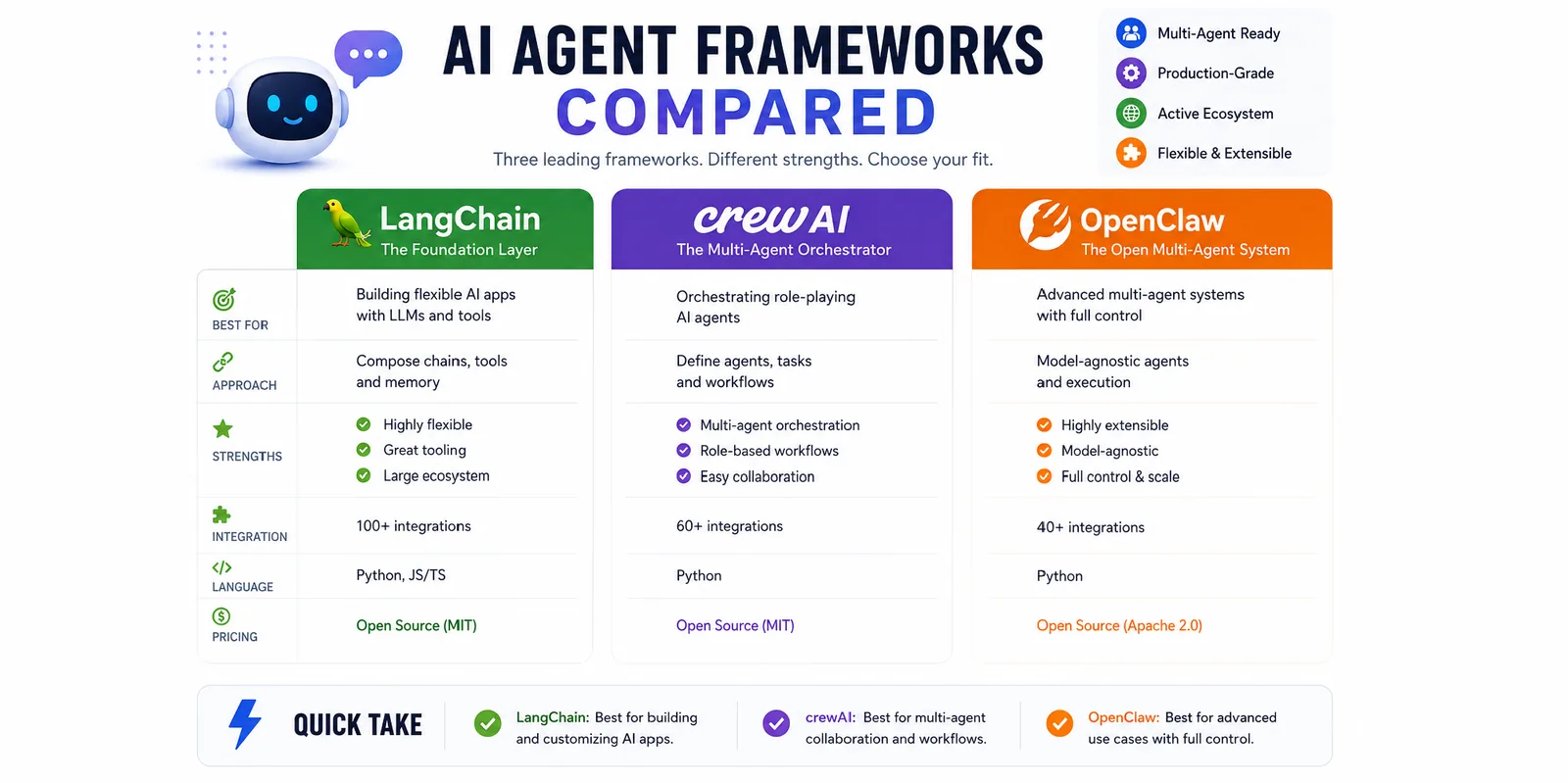
AI Agent Frameworks Compared: LangChain vs CrewAI vs OpenClaw
Detailed comparison of LangChain, CrewAI, and OpenClaw agent frameworks. Features, pricing, operating effort, and use case fit for enterprise AI agent development.
Faizan Ali Khan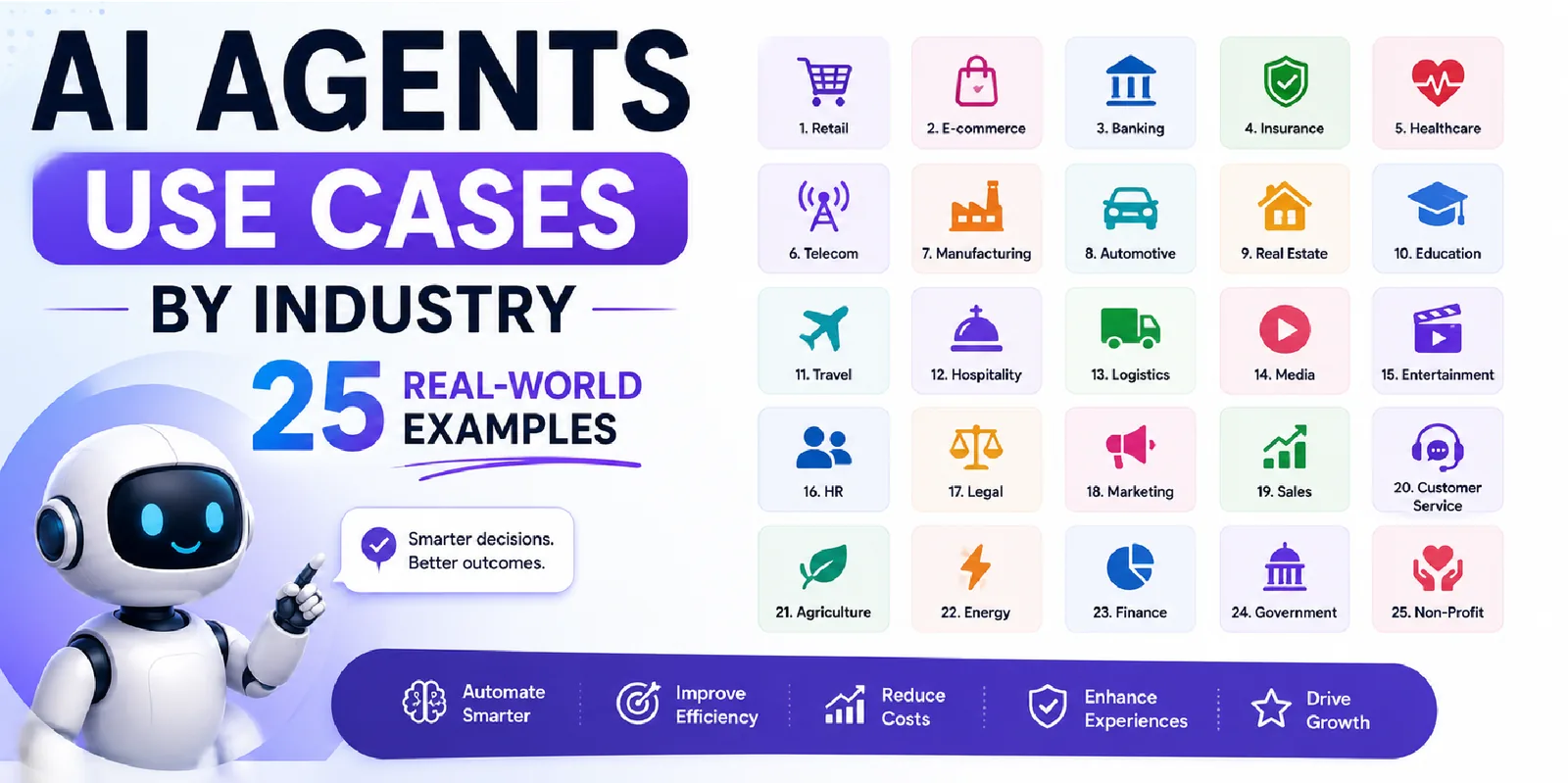
AI Agents Use Cases by Industry: 25 Real-World Examples
25 real-world AI agent use cases across healthcare, finance, retail, manufacturing, and more. See how industries deploy autonomous AI agents in 2026.
Faizan Ali KhanReady when you are
Want Cubitrek to run AI Agents for you?
We install ai agents programs for growing companies across the US and Europe. Book a call and we'll come back with a one-page plan in 72 hours.