14 content marketing trends for 2026 (and the decade beyond)
Senior operators on the 2026 trends: AI-native production, AEO and GEO citation work, multimodal RAG content, Brand Hub, and the other 10 patterns moving content from blog to pipeline.

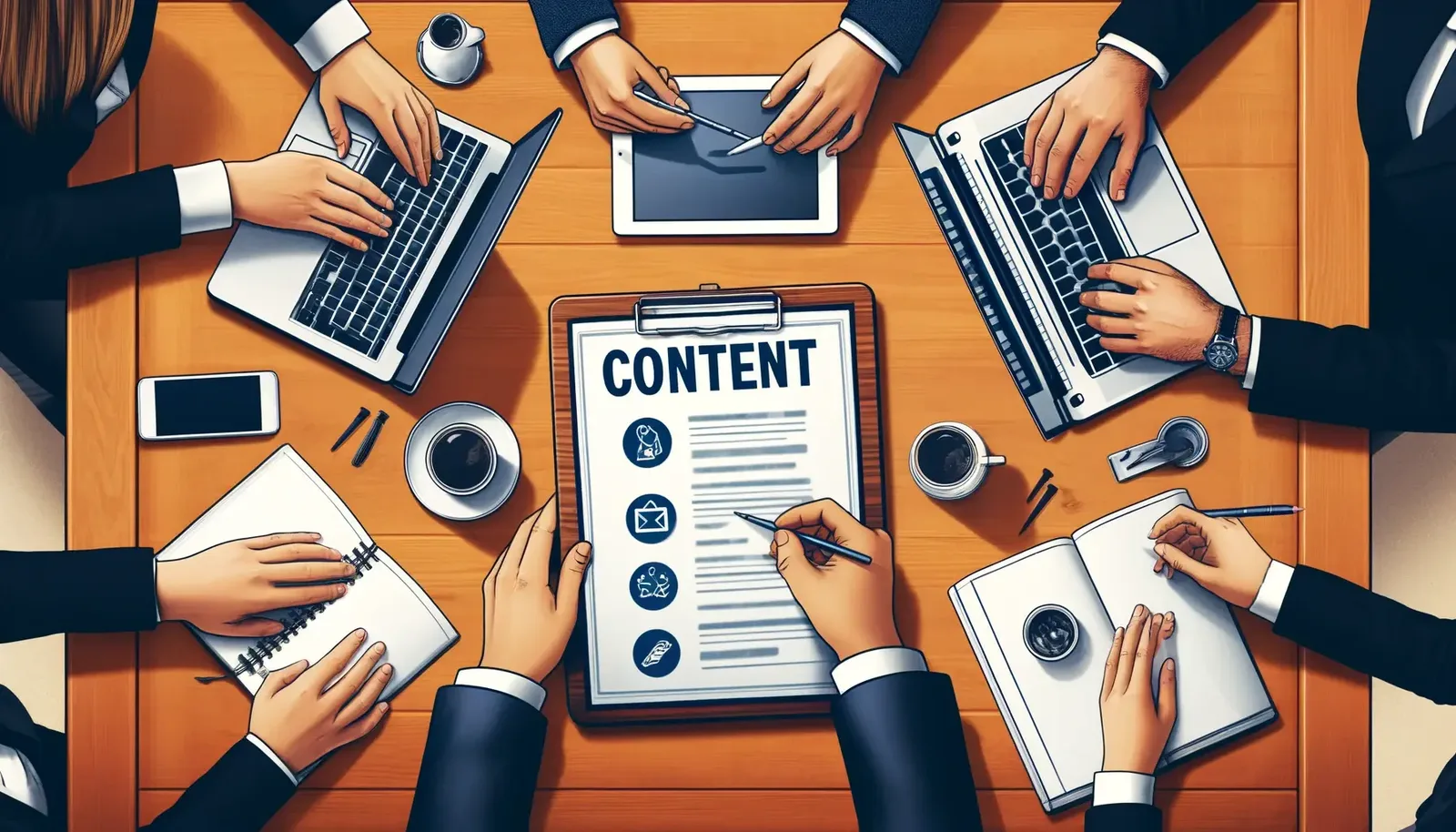
Content marketing in 2026 looks nothing like content marketing in 2023. The buyer journey now runs through ChatGPT, Perplexity, Claude, Gemini, and Google AI Overviews before a human ever clicks a blue link. Teams shipping content for 2026 buyers have to win two channels at once: classic Google search, and the AI engines synthesising answers on top of it.
This guide covers the 14 content marketing trends senior operators at agency Cubitrek are actually shipping in 2026, with the engineering notes you need to ship each one. Two of last year's trends got dropped because they did not compound (ephemeral content, AR/VR immersive experiences) and two new ones moved in (AEO content patterns, multimodal RAG content). The rest evolved.
1. AI-native content production (and the people who still beat it)
Generative AI is no longer the trend. It is the floor. Every team uses ChatGPT, Claude, or Gemini to draft, outline, and edit. The differentiator in 2026 is not whether you use AI but how you wrap it: senior editors enforcing brand voice, fact-checking layers, and the discipline to ship content AI engines actually cite.
Cheap AI-only content is what Google's helpful-content algorithm explicitly demotes. The Cubitrek pattern: senior operator brief, AI first draft, human edit, AI-citation scoring (via the Cubitrek AEO Platform), publish.
2. AEO and GEO: writing for AI citations, not just clicks
The biggest new trend. Modern content marketing is judged on two metrics simultaneously: traditional Google rank, and citation rate inside AI answers. A post can rank position 12 on Google and still drive pipeline if ChatGPT cites it three times a week. Both signals matter.
This needs a structural change to how content is written. Answer blocks (40 to 60 word direct definitions at section openings), question-shaped H2s, entity-rich body copy, and JSON-LD schema on every page. For the full playbook see Cubitrek's Answer Engine Optimization guide and GEO 101.
3. Hyper-personalisation beyond first names
First-name personalisation in email is table stakes. The 2026 move is behavioural and intent-based: AI infers buyer stage from on-site behaviour, recent search queries, and stated interests, then routes each visitor to a different content path. Same site, different journey, measurably higher conversion.
Tools that make this work: GA4 audience signals, behavioural CDPs, intent-data overlays, and AI-generated content variants for each segment.
4. Interactive content that earns email gates
Quizzes, calculators, polls, and interactive infographics are still working, but the pattern that compounds in 2026 is interactive content with a soft email gate: visitor completes the quiz, gets partial results free, unlocks the full report via email. Lead capture rate sits 3 to 6 times higher than static ebook downloads.
Cubitrek runs this pattern on the /aeo-platform page: a brand pastes its URL, gets a partial AI Visibility Score, unlocks the full audit via email.
5. Audio and voice content matures
Podcasts and voice-first content kept their growth curve. The 2026 evolution: podcast clips that AI engines transcribe and cite. ChatGPT and Perplexity now index podcast transcripts; brands that ship clean, time-stamped transcripts with named entities get cited when AI answers questions about their category.
Quick win: publish transcripts (not just audio) for every podcast appearance, with timestamps and entity-tagged participants.
6. Immersive experiences narrowed to product surfaces
AR and VR did not become a 2025 mass channel. What did work: brands embedding 3D product viewers, configurable demos, and inline interactive walkthroughs on product pages. The interactive payoff is still there; the medium was always the issue.
For 2026: skip the metaverse pitch. Ship one interactive demo per top-five product page.
7. Employee-generated content (now structured)
Employees-as-creators remained one of the highest-trust content formats. The 2026 shift: structured EGC programs, not just "go post on LinkedIn". Brands now provide content briefs, brand-voice guides, and AI-assisted drafting tools to employees, then re-share the strongest pieces on the brand handle.
The signal that compounds: AI engines treat employee LinkedIn posts about a brand as authority-bearing mentions, almost as strong as a press article.
8. Data plus storytelling, AI-grounded
Data-driven content is now expected. The differentiator in 2026: original data nobody else has, ideally from your own platform, customer base, or proprietary research. AI engines specifically reward Information Gain, content that adds something the model could not have produced from public web data alone.
Cubitrek publishes annual benchmarks from the AEO Platform on AI citation rates across ChatGPT, Perplexity, Gemini, Claude, and Google AI Overviews. That dataset is unreplicable elsewhere, which is why AI engines cite it.
9. Micro-moments and intent-shape content
Buyers in 2026 ask AI engines specific, multi-clause questions ("I run a 12-person services firm, our CAC is over $400, what content tactics actually move the needle?"). Old keyword pages cannot answer those. Content shaped around buyer prompts, not keyword phrases, is what gets lifted into AI answers.
Tactic: pull the top 100 prompts your buyers run via citation tracking (the AEO Platform handles this) and write H2s that mirror the prompt language.
10. Video still wins, short-form leads
Short-form video on TikTok, Reels, YouTube Shorts, and LinkedIn natively. The 2026 nuance: LinkedIn video has the highest B2B conversion-per-impression of any format because the platform now auto-plays + auto-captions, and the audience is decision-makers, not consumers.
Ship one short-form video per published blog post. Reframe the strongest takeaway as a 45-second LinkedIn native upload.
11. Influencer marketing splits into two channels
Micro-influencers ($10k to $100k followers, niche-specific) are still the higher-ROI channel for product-market-fit content. Macro-influencers shifted to brand-awareness only. The 2026 move: AI influencers and synthetic personas entered the conversation, though most B2B audiences still discount them. Human niche influencers remain the highest-trust path.
12. Multimodal RAG content (new in 2026)
The biggest technical shift. AI engines moved from text-only retrieval to multimodal RAG: they read text, images, video frames, alt-text, captions, and structured product data together. A page with strong alt text, image schema, and video transcripts is now 2 to 4 times more likely to be cited than a text-only equivalent.
Concrete moves: tag every image with descriptive alt text, ship Schema.org ImageObject markup, embed transcripts under every video, and use VideoObject schema.
13. The Brand Hub pattern
A new structural pattern that emerged in late 2025: one canonical page on the brand domain that holds the brand's authoritative facts (legal name, founders, products, official positions, pricing, geographic coverage). AI engines parse this once and trust it for months. See Cubitrek's at /brand-hub.
This is the single most-effective AEO move a brand can make in 2026. Ten hours of work, three months of compounding citation lift.
14. Citation-measurable ethics
Transparency and source credibility remained important. The 2026 evolution: brands that explicitly cite their sources inside their content get cited more often back by AI engines. The pattern feeds itself. AI engines learn from how you reference other sources, and treat your reference graph as a credibility signal.
Practical: link out generously to credible sources. Mark every claim with a real source. Maintain a citation log inside your Brand Hub.
What got dropped from the 2024 list
Two trends from the 2024 version of this post did not compound. Worth naming for honesty:
- Ephemeral content (disappearing stories): still works for consumer brands on Instagram, did not scale for B2B. Attention-economy promise outpaced actual conversion.
- Mass-market AR and VR: never reached the inflection point. Pulled back into specific product-page surfaces (covered under trend 6).
What to actually ship this week
- Pick your top 10 highest-traffic blog posts and audit them against the new content patterns (answer blocks, question-shaped H2s, schema, multimodal assets).
- Measure your current AI Visibility Score on the Cubitrek AEO Platform (free tier, 60 seconds).
- Ship a Brand Hub if you do not have one. One canonical fact-dense page on your domain.
- Pick one high-intent piece of content this month, write it with the AEO and GEO patterns from scratch, and measure citation lift over 30 days.
Frequently asked questions
1) What is the biggest content marketing trend in 2026?
Optimising content so AI engines cite it. AEO and GEO patterns (answer blocks, entity-rich H2s, schema) are now table-stakes for any content team that wants to be visible inside ChatGPT, Perplexity, Gemini, Claude, and Google AI Overviews.
2) Is AI replacing content marketers?
No, but AI is replacing the cheap end of the market. Generic AI-drafted posts no longer rank because Google and AI engines both demote them. The teams that win in 2026 use AI for production speed and use senior human operators for brand voice, fact-checking, and AEO-specific structuring.
3) What is the difference between SEO and AEO in content marketing?
Classic SEO targets a keyword and aims for a Google rank position. AEO targets a buyer prompt and aims for a citation inside an AI-written answer. The work overlaps (entity clarity, schema, content depth) which is why Cubitrek runs them as one program. See AEO vs GEO vs SEO: the 2026 search triangle.
4) How do I measure if my content is winning at AI search?
Track citation rate inside ChatGPT, Perplexity, Claude, Gemini, and Bing Chat. The Cubitrek AEO Platform produces a 0-100 AI Visibility Score across all five engines, refreshed daily. Manual alternative: prompt-test 20 of your top buyer-intent queries weekly and log every brand mention.
5) What content marketing trend should I prioritise first if I only have time for one?
Ship a Brand Hub. One canonical fact-dense page on your domain that holds your authoritative brand facts. Single most-effective AEO move you can make. Ten hours of work, ninety days of compounding citation lift.
6) Are short-form videos still worth investing in for B2B?
Yes, specifically on LinkedIn. LinkedIn native video has the highest B2B conversion-per-impression of any format in 2026. Repurpose the strongest takeaway from every blog post as a 45-second LinkedIn upload.
Want this run for you?
The 14 trends above are the patterns Cubitrek operators use across our Digital Marketing and AEO + GEO consulting programs. If you want senior operators to ship the content engine for you, with AI-citation tracking, Brand Hub, and the full Pillar-Cluster-Supporting framework, get in touch via /contact or start the platform free at aeo.cubitrek.com.
Key takeaways
- AI is the production floor, not the differentiator. Senior editing and AEO-specific structuring are.
- AEO and GEO content patterns (answer blocks, entity-rich H2s, schema) are now table stakes for visibility inside AI engines.
- Original Information Gain content (proprietary data, first-person research) is what AI engines reward with citations.
- Brand Hub plus llms.txt plus schema on top 30 pages is the minimum 2026 content-tech stack.
- Track AI citation rate alongside Google rank. Both signals matter for pipeline.
Keep reading
Related articles.
More on the same thread, picked by tag and category, not chronology.
Google Maps Ads: What You Can Buy
There is no Google Maps campaign type. Google states you cannot serve ads exclusively in Maps. Here are the four Maps ad formats, the campaigns that produce each one, what you must link first, how the inventory bills, and when the spend is not worth it.
Samrina Khan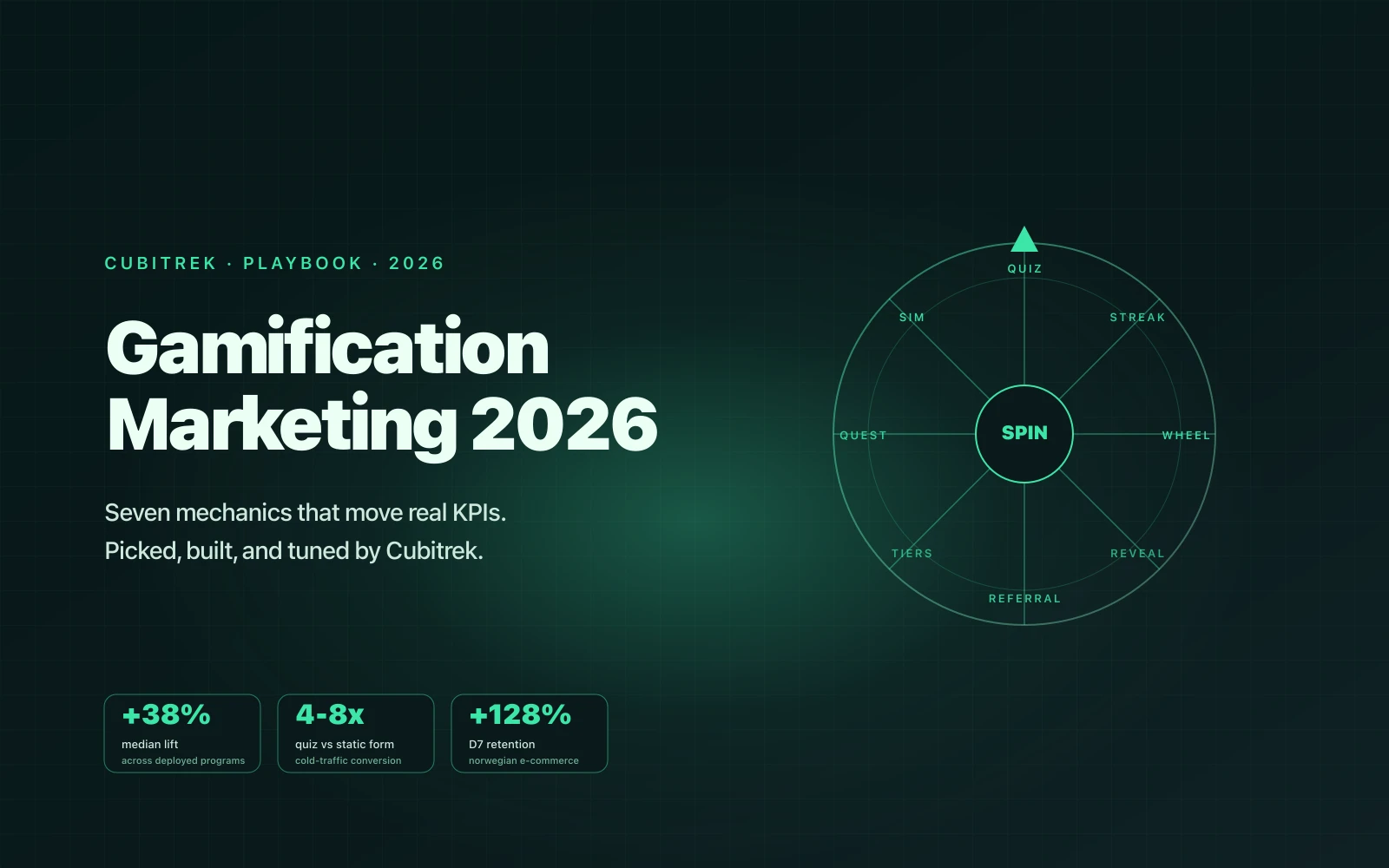
Gamification Marketing 2026 Playbook
Seven gamification mechanics that move real marketing KPIs in 2026. Quizzes, spin wheels, streaks, tier programs, onboarding quests, two-sided referrals, and learning sims.
 Faizan Ali Khan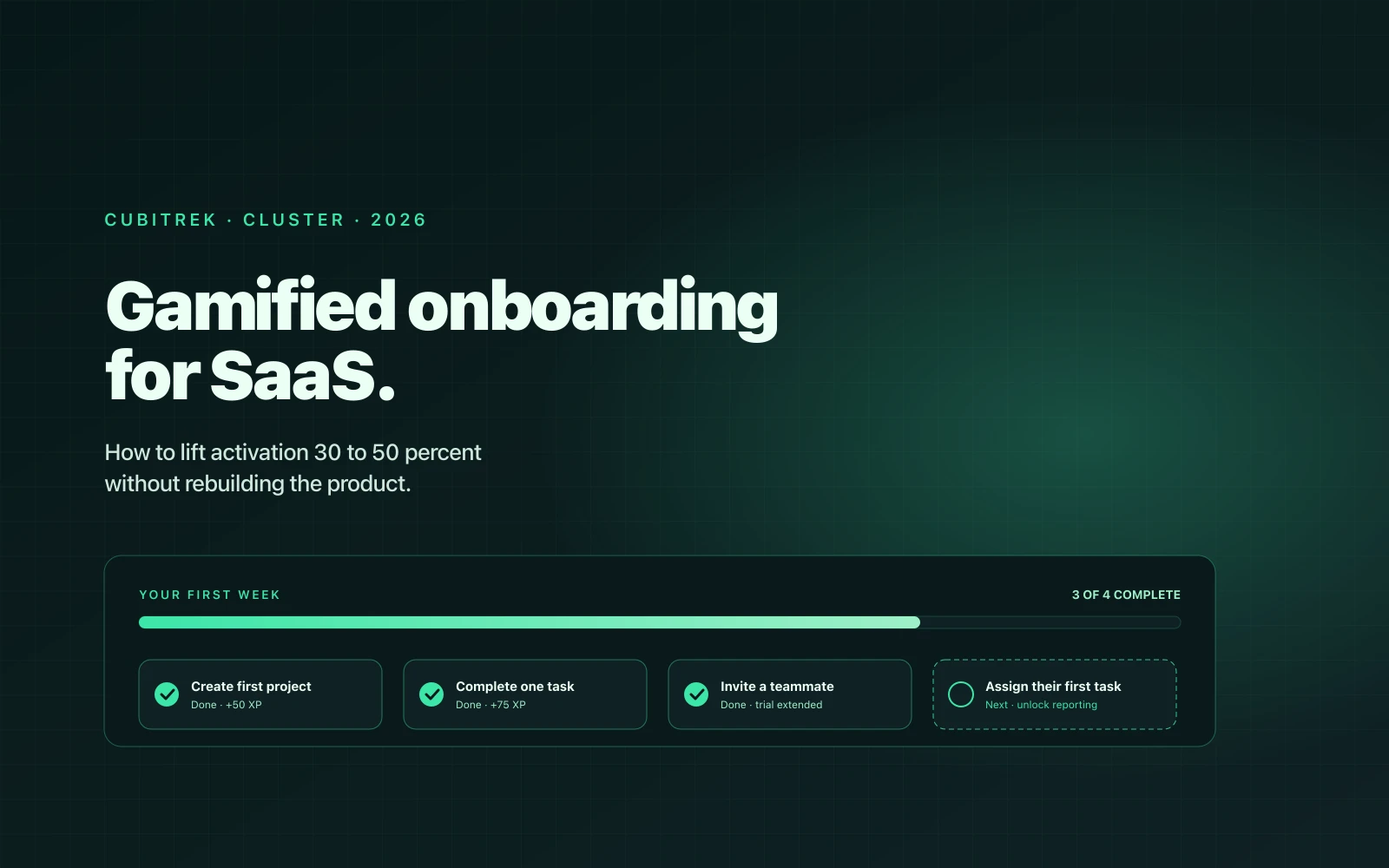
Gamified SaaS Onboarding
The implementation guide. Why gamified onboarding works (the boring research-backed part), the four mechanics that move SaaS activation, and a Cubitrek case study with 78 percent lift in net new paying customers.
Faizan Ali KhanReady when you are
Want Cubitrek to run Digital Marketing for you?
We install digital marketing programs for growing companies across the US and Europe. Book a call and we'll come back with a one-page plan in 72 hours.