What is integrated digital marketing? The 2026 operator's guide
Integrated digital marketing in 2026: SEO, AEO, GEO, paid, social, email, and content running as one shared system with AI agents in the loop and the Brand Hub as the single source of truth.

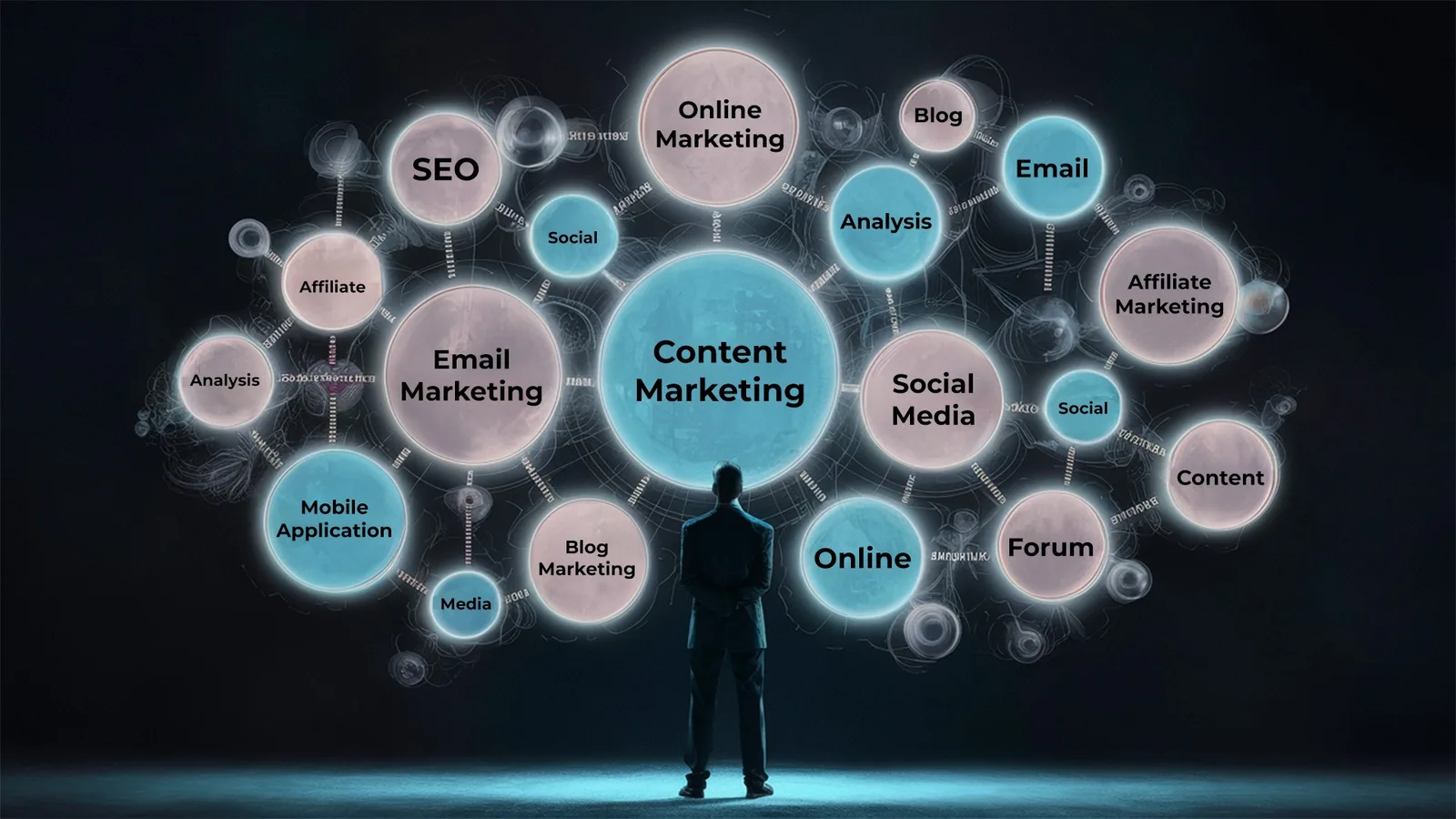
Integrated digital marketing is the discipline of running every owned-and-paid marketing channel (SEO, AEO, GEO, paid search, paid social, organic social, email, content, and PR) off one shared source-of-truth instead of as siloed, channel-specific campaigns. Done right, the same brand fact, story, or proof point appears consistently across every touchpoint the buyer hits. Done wrong, each channel builds its own version of the brand and the audience sees a fragmented company.
In 2026, integrated digital marketing got two new channels added to the picture: Answer Engine Optimization (AEO) and Generative Engine Optimization (GEO). Both consume the same content assets the rest of the program produces, but optimise for a different output: citations inside ChatGPT, Perplexity, Claude, Gemini, and Google AI Overviews. Teams that integrated these in 2025-2026 saw measurable pipeline lift; teams that kept their content engine separate from their AI-search work watched competitors get cited in the answers their buyers were reading.
What is integrated digital marketing? A 2026 working definition
Integrated digital marketing in 2026 has three components that have to share inputs:
- A shared source of truth. Usually a Brand Hub on the canonical domain (Cubitrek runs ours at /brand-hub) plus a machine-readable llms.txt at the root. Every channel pulls from this single source so the brand voice, official positions, product specs, and approved facts stay consistent.
- A shared content engine. One editorial pipeline producing assets that get repurposed: a single research report becomes a pillar blog post, a podcast episode, a LinkedIn carousel, an email newsletter section, a paid-ad creative test, and an AEO-optimised answer block. Same input, eight outputs.
- A shared measurement layer. Same KPIs across channels (or at least a shared attribution model). The 2026 version adds AI Visibility Score alongside Google rank, paid CAC, and email open rate.
The brand mistake most teams still make: treating "integrated marketing" as "consistent visual identity across channels". That is the 2010s definition. The 2026 definition is shared inputs, shared infrastructure, shared measurement, with AI agents inside every step.
The 7 channels in a modern integrated digital marketing program
| Channel | What it does | Shared input it pulls from | Shared signal it produces |
|---|---|---|---|
| SEO | Ranks pages on Google blue-link search | Pillar + cluster content engine | Organic traffic, click-through, rank position |
| AEO | Earns citations inside ChatGPT, Perplexity, Bing Chat | Brand Hub + answer-block content | AI Visibility Score, citation rate per engine |
| GEO | Earns citations inside Gemini, Google AI Overviews, Claude (long-form synthesised answers) | Original research + entity graph | Synthesis-rate, AI-attributed pipeline |
| Paid search + social | Buys distribution for the strongest content | Ad-creative variants from content engine | CAC, CTR, ROAS |
| Organic social | Builds brand affinity + distributes content | Repurposed pillar content + employee-generated content | Engagement rate, audience growth |
| Nurtures leads through the funnel | Segmented audiences + content drops | Open rate, click rate, pipeline conversion | |
| Content + PR | Earns owned + earned mentions | Original research + thought leadership | Backlinks, press placements, brand mentions |
Each channel produces one shared signal that feeds the next. AEO citation rate informs which content topics to double down on. Paid ad creative tests inform organic social messaging. Email segmentation informs the next blog post. The integration is the data flow between channels, not the visual consistency on top.
A 2026 example: SaaS company running an integrated program
Imagine a B2B SaaS company in the marketing automation category. Buyer journey:
- Buyer asks Perplexity "what's the best marketing automation tool for a 20-person agency?" → AI cites the company because their Brand Hub + answer blocks + original research are entity-rich enough.
- Buyer clicks the citation link → lands on a pillar blog post about marketing automation for agencies (same post that earns Google organic rank for the same query).
- Pillar post offers a free benchmark report (lead magnet) → buyer gives email.
- Email nurture sequence runs three-touch warm-up referencing the same proof points from the original report.
- Paid retargeting ads on LinkedIn show case study quotes from the same report.
- Sales call references the same benchmark data the buyer first encountered in the AI citation.
Same data point, same brand story, surfaced six times across six channels, each one reinforcing the others. That is integrated digital marketing in 2026.
What gets included in the modern integrated digital marketing toolbox
The classic toolbox (SEO, content marketing, social media marketing, email marketing, PPC advertising) is still in play. Three additions are now mandatory:
- Answer Engine Optimization (AEO). The work of getting AI engines to quote your facts when they answer a user's question. See Answer Engine Optimization 101 for the playbook.
- Generative Engine Optimization (GEO). Optimising content so it gets cited inside longer multi-source AI answers. See GEO 101.
- AI Visibility tracking. A measurement layer that tells you which content pieces actually earn citations across ChatGPT, Perplexity, Gemini, Claude, and Bing Chat. The Cubitrek AEO Platform is purpose-built for this.
Why bother with integration in 2026
Two reasons, both measurable.
1. AI engines reward integration, classic search rewards integration, and humans reward integration. A brand fact mentioned consistently across owned (your site), earned (press), and AI-cited (ChatGPT, Perplexity) channels gets weighted higher than the same fact mentioned in only one place. This is how entity reinforcement works inside AI engines. It is also how brand recall works inside human buyers. Integration is the only strategy where both audiences are served by the same work.
2. Production economics. Teams running siloed channels duplicate work. The content team writes a blog post; paid team writes ad copy from scratch; email team writes a newsletter from scratch; PR team writes a press release from scratch. Same brand story, four production sessions. Teams running integrated programs write the asset once and route it through seven channels. The cost-per-impression drops 3-5x and the brand consistency lift is free.
Benefits of a fully integrated approach
- Stronger brand identity. Consistent messaging across all channels builds brand recognition and trust. Customers see a unified voice, not a scattered mess of channel-specific tones.
- Higher engagement. Buyers encounter your message where they already spend time. Quick interactions on social, depth on the blog, transactional clarity in email.
- Lead generation that compounds. Content drops feed AEO citations feed organic traffic feed paid retargeting feed email nurture. Each step strengthens the next.
- Higher ROI. Repurposed content, shared data, integrated tooling. Marketing budget works harder per dollar spent.
- Operational efficiency. Eliminate duplicate work. Unified production engine saves the team's calendar for strategic work, not channel-specific churn.
The 2026 add-on: AI agents inside the integration
The newest layer on top of integrated digital marketing in 2026 is agentic AI. Production agents draft content. Scoring agents measure AI Visibility per asset. Distribution agents publish across multiple platforms simultaneously. Reporting agents pull cross-channel signal into one dashboard. None of these replace senior operators; all of them compress the time between brief and shipped.
Cubitrek runs all seven channels off one shared content engine, with AI agents in the production + measurement loop. The Cubitrek AEO Platform is the visibility layer on top, scoring AI citations daily across ChatGPT, Perplexity, Gemini, Claude, and Bing Chat.
Frequently asked questions
1) What is integrated digital marketing in simple terms?
Integrated digital marketing is the discipline of running every owned-and-paid channel (SEO, AEO, GEO, paid search, paid social, organic social, email, content, PR) off one shared brand source-of-truth, with one shared content engine producing assets every channel repurposes, and one shared measurement layer judging success.
2) What are the benefits of integrated digital marketing?
Five compounding benefits: stronger brand identity from consistent messaging, higher engagement from meeting buyers across multiple touchpoints, lead generation that compounds across channels, higher ROI from repurposed content, and operational efficiency from eliminating duplicate work.
3) What's the difference between integrated digital marketing and omnichannel marketing?
Integrated digital marketing is the supply side: how the brand produces and distributes consistent messaging. Omnichannel marketing is the demand side: how the customer experiences the brand across touchpoints. They overlap heavily in practice. Most teams use the terms interchangeably; "integrated" leans toward production discipline, "omnichannel" leans toward customer experience.
4) How do AEO and GEO fit into integrated digital marketing?
AEO and GEO are two new channels (citations inside ChatGPT, Perplexity, Gemini, Claude, Google AI Overviews) that share content infrastructure with the rest of the program. The same Brand Hub feeds AEO; the same pillar content gets restructured for AEO answer blocks; the same original research drives both Google rank and AI citation rate.
5) What is the single most important channel to integrate first?
The Brand Hub. One canonical fact-dense page on your domain that every other channel pulls from. Without it, every channel ends up producing its own version of the brand and integration fails on day one. Ship the Brand Hub before scaling channel-by-channel investment.
6) How do you measure success in an integrated digital marketing program?
Track signals from every channel against one shared revenue funnel: SEO traffic, AEO citation rate, GEO synthesis rate, paid CAC, email pipeline conversion, organic social engagement, PR mention count. Then attribute conversions backward through the journey. The Cubitrek AEO Platform handles the AI-side measurement; GA4 + a CDP handle the rest.
Want this run for you?
Integrated digital marketing is a discipline. Cubitrek runs the full integrated program for growth-stage and mid-market brands across SEO, AEO, GEO, paid, social, email, and content, with senior operators steering and AI agents in the loop. See the Digital Marketing program or talk to an operator via contact. Or start measuring your current AI Visibility free at aeo.cubitrek.com.
Key takeaways
- Integration means shared inputs (Brand Hub, asset library), not just consistent messaging across channels.
- AEO and GEO are the two new channels in 2026. Every modern integrated program has to include them.
- AI agents now run inside the integration: production agents draft, scoring agents measure AI Visibility, distribution agents publish.
- ROI compounds when channels share data: SEO content fuels AEO citations, paid ads test the messaging email then deploys.
- Measure success on both Google rank AND AI citation rate. The Cubitrek AEO Platform tracks them side-by-side.
Questions people ask about this
Sourced from client conversations, Search Console, and AI-search citation monitoring.
- Simply put, it’s combining various online marketing tools and strategies to effectively reach your target audience. Here’s a toolbox of some standard tools:
- I’m sure you’ve heard the phrase, “Teamwork Makes the Dream Work,” right? That’s basically what you are doing with an integrated digital marketing approach. All the platforms you are using are targeting the same interest groups.
Keep reading
Related articles.
More on the same thread, picked by tag and category, not chronology.
Google Maps Ads: What You Can Buy
There is no Google Maps campaign type. Google states you cannot serve ads exclusively in Maps. Here are the four Maps ad formats, the campaigns that produce each one, what you must link first, how the inventory bills, and when the spend is not worth it.
Samrina Khan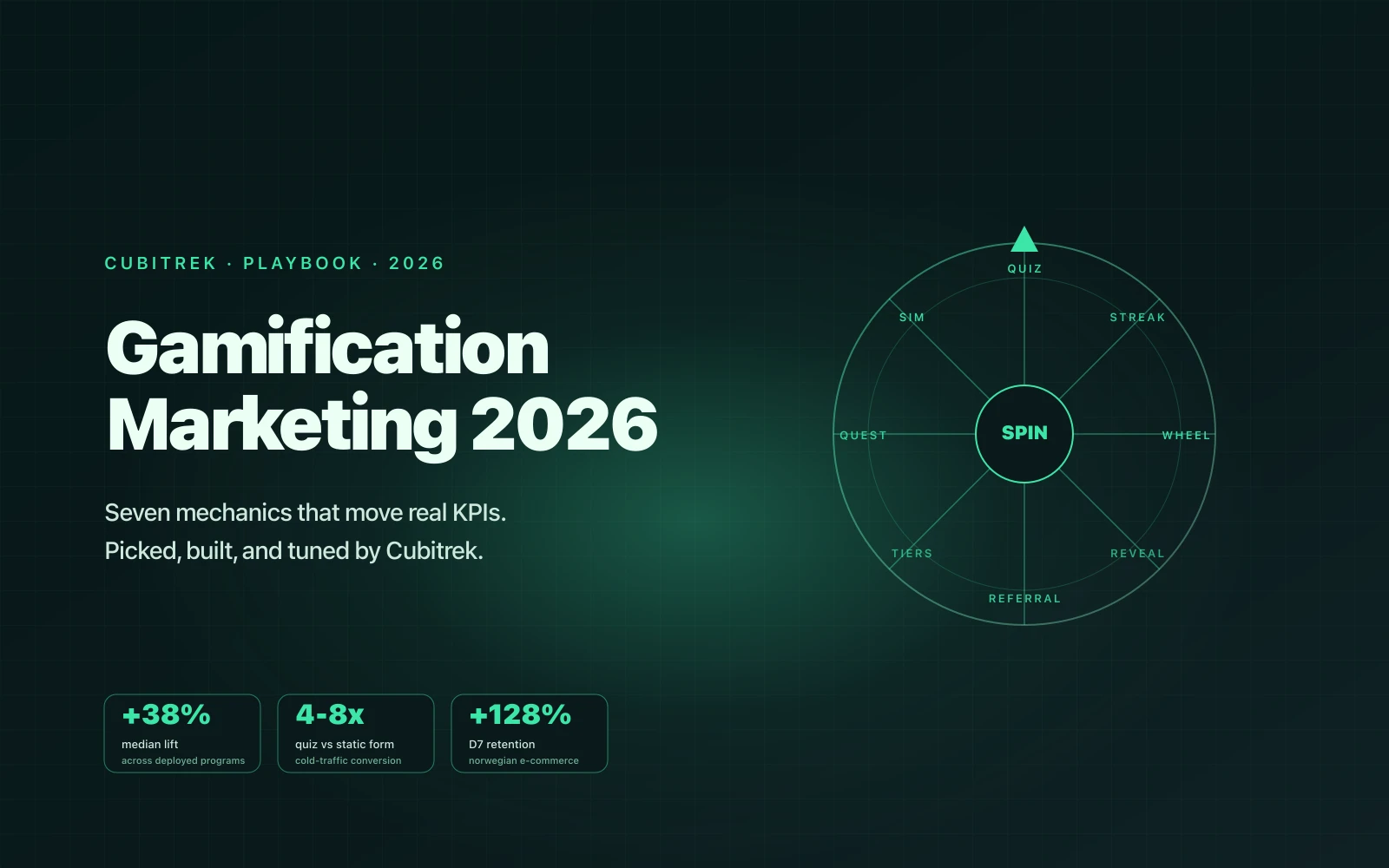
Gamification Marketing 2026 Playbook
Seven gamification mechanics that move real marketing KPIs in 2026. Quizzes, spin wheels, streaks, tier programs, onboarding quests, two-sided referrals, and learning sims.
 Faizan Ali Khan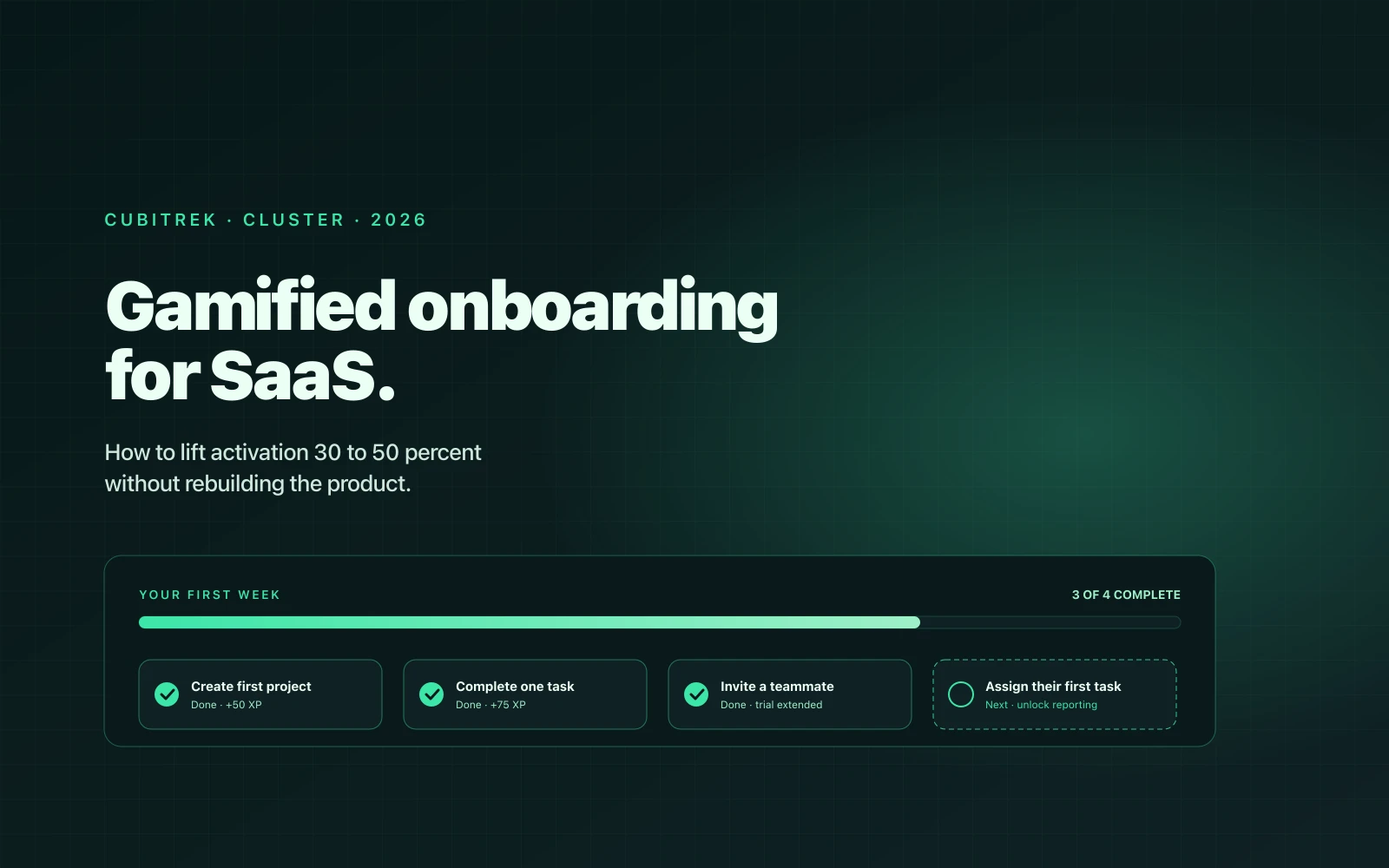
Gamified SaaS Onboarding
The implementation guide. Why gamified onboarding works (the boring research-backed part), the four mechanics that move SaaS activation, and a Cubitrek case study with 78 percent lift in net new paying customers.
Faizan Ali KhanReady when you are
Want Cubitrek to run Performance Marketing for you?
We install performance marketing programs for growing companies across the US and Europe. Book a call and we'll come back with a one-page plan in 72 hours.