How to Monetize Your AI Chatbot with Google Ads & Dialogflow | Cubitrek
Learn how to monetize your AI chatbot using Google Ads and Dialogflow. Discover ad integration, dynamic targeting, and revenue strategies.

AI chatbots stopped being a novelty in 2024. By 2026 they are a primary support, sales, and discovery channel for thousands of brands. Monetizing them well is now an architecture problem, not a "should we add ads?" question.
This guide walks the three monetization patterns that actually work in 2026: Google Ads layered on Dialogflow flows, transactional Action Schema that lets AI agents buy through your bot, and lead-gen handoffs into a Brand Hub. We pull real numbers from a Cubitrek client running all three.
The 2026 chatbot monetization stack
What changed since 2023
The original chatbot monetization playbook assumed a Dialogflow rules engine, a few intents, and Google AdSense in the chat window. That works. It is also not where the money is anymore.
In 2026 three shifts redrew the map:
- LLM-powered bots replaced rule-based ones. GPT-4, Claude, and Gemini now sit behind most production chatbots. Intent matching is fuzzy, but ad targeting got better because the bot understands context, not keywords.
- AI agents started buying through chatbots. Autonomous agents now hit chatbot endpoints to transact on a user's behalf. If your bot does not expose Action Schema, the agent skips you.
- Answer engines became a referrer. ChatGPT, Perplexity, and Gemini route users to chatbots they trust. Brands with a Brand Hub plus a clean chatbot get cited more often.
Monetizing a chatbot today means designing for all three: human users clicking ads, AI agents executing transactions, and answer engines sending qualified traffic.
Pattern 1: Google Ads layered on Dialogflow
Dialogflow remains the most common foundation for production chatbots. Google's NLU stack pairs naturally with Google Ads inventory, and the integration is straightforward once the conversation flow is mapped.
What actually works in 2026
Three ad types pull their weight inside chat:
- Native ads. A product or service recommendation rendered as a regular bot message, marked as sponsored. eCPM varies enormously by vertical and by how well the ad matches the conversation, so measure your own rather than planning against someone else's average.
- Interstitial ads. Shown after the bot completes a task (booking confirmed, question answered). Higher CTR than banners because the user has hit a natural pause.
- Audio ads on voice flows. Pre-roll or mid-roll on Google Assistant, Alexa, or custom IVR. Pays well in the US, weaker in EU markets.
Banner ads at the bottom of the chat window still exist, but eCPM is half of native. Skip them unless you already have unsold inventory.
Where it fits in the funnel
Ads work best when the user is in browse or research mode: weather, news, sports scores, cooking, fitness logging. They convert poorly in transactional flows like checkout, support, or account management. Map your intent tree before deciding which conversations carry ads.
Pattern 2: Action Schema for AI agent transactions
This is the 2026-specific opportunity most chatbot operators miss. AI agents (OpenAI Operator, Claude Computer Use, Perplexity Shopping) call chatbot endpoints directly. If your bot exposes a BuyAction or ReserveAction, the agent transacts. If it does not, the agent skips to a competitor that does.
{
  "@context": "https://schema.org",
  "@type": "Product",
  "name": "Premium Pour-Over Coffee Maker",
  "offers": {
    "@type": "Offer",
    "price": "49.99",
    "priceCurrency": "USD",
    "availability": "https://schema.org/InStock"
  },
  "potentialAction": {
    "@type": "BuyAction",
    "target": {
      "@type": "EntryPoint",
      "urlTemplate": "https://example.com/cart/add?sku=CM-12345&instant=true"
    }
  }
}
For the deep dive on schema implementation see Action Schema and potentialAction for AI agents. For the infrastructure controls that protect your origin once agents hit at machine speed see robots.txt 2026 for AI crawler budgets.
Revenue model here is not advertising. It is transactional: the agent completes a purchase, you book the sale, and the AI surface that referred the agent (ChatGPT, Perplexity) gets cited as the channel.
Pattern 3: Conversational lead capture
If your business sells high-ticket services, ads inside chat are the wrong tool. Lead capture is the right one. A bot that qualifies a lead through natural conversation, then hands the user to a calendar booking or a sales rep, converts 11 times higher than a static contact form on Cubitrek client data.
The mechanics:
- Hook with a relevant prompt ("Need help sizing the right plan?").
- Ask 2 to 4 qualifying questions.
- Score the lead using simple if/then rules or a small LLM call.
- Hot leads go straight to a calendar (Calendly, Cal.com, Chili Piper).
- Warm leads get a follow-up email; cold leads get nurture content.
This pattern works particularly well for B2B SaaS, consulting, real estate, healthcare, and education. Average lead-to-meeting rate sits around 28% on Cubitrek client deployments versus 2.4% for the equivalent contact form.
Cubitrek case study: a Norwegian e-commerce client running all three
An ecommerce retailer deployed a Dialogflow CX chatbot in Q4 2025 with three monetization layers running in parallel:
- Native Google Ads on the support and discovery flows.
- Action Schema on 2,400 product pages so AI agents could transact.
- Conversational lead capture for B2B bulk orders.
6-month chatbot monetization results
The headline number was the AI agent revenue. Once Action Schema landed on the catalog, agents from Operator and Perplexity Shopping started transacting at machine speed: 1.4 seconds from "buy this" to confirmed cart vs. 9.2 seconds on competitor sites that forced DOM scraping.
Common pitfalls to avoid
A few patterns that look good on paper but bleed money in production:
- Ads in transactional flows. A user mid-checkout does not want a native ad for a competing product. CTR rises but cart conversion drops more.
- Ignoring AI agent traffic. If you only optimize for human eyeballs, you miss the fastest-growing buyer segment in 2026. Ship Action Schema even if it feels premature.
- Skipping the Brand Hub. Without a canonical brand reference, the AI engine that sends users to your bot may misattribute or skip you entirely.
- No infrastructure plan. AI agents hit at machine speed. Without rate limiting and the right
robots.txt, an over-eager Operator instance can spike your origin CPU.
What Cubitrek actually ships
Three things make our chatbot deployments different from generic Dialogflow consultants:
- Action Schema rollout alongside the chat flow, so AI agents can transact directly through your bot, not just chat with humans.
- Brand Hub plus llms.txt at the root, so answer engines that route users to your bot have a canonical source to cite.
- Answer-engine listener running daily across the major answer engines, so you see when ChatGPT, Perplexity, or Gemini cite your bot or recommend it for a query.
Conclusion
Monetizing an AI chatbot in 2026 is not a single tactic. It is three patterns running in parallel: ad inventory for browse-mode users, Action Schema for AI agents, and conversational lead capture for high-ticket sales. The brands that win run all three with shared infrastructure underneath: a clean Dialogflow flow, a Brand Hub, and a measurement layer that tracks AI citations alongside ad revenue.
The chatbot itself is the surface. The monetization stack is the system.
Frequently asked questions
1) What is the realistic eCPM on chatbot ads in 2026?
Native ads inside chat run $1.80 to $3.20 eCPM on US English flows. Banner ads at the bottom of chat windows are roughly half that. Audio ads on voice flows pay $5 to $12 CPM in US markets, lower in EU. Numbers vary by vertical: finance and SaaS pay top of range, gaming and entertainment near the bottom.
2) Do I need an LLM behind my chatbot or is rule-based enough?
Rule-based Dialogflow ES still works for narrow flows like booking, FAQ, or order tracking. For anything where users phrase questions in their own words you want an LLM (GPT, Claude, or Gemini) behind the bot. The ad-targeting context the LLM extracts is also better, so eCPM trends 30 to 50% higher on LLM-backed bots.
3) Does Action Schema actually move revenue or is it speculative?
It moves revenue today, not in the future. Cubitrek's Norwegian client booked 18% of new Q1 2026 revenue from AI agent transactions. The agents came from Operator, Perplexity Shopping, and ChatGPT. Without Action Schema none of those transactions would have happened.
4) How long does a chatbot monetization rollout take?
A standard Dialogflow plus ads deployment is 4 to 6 weeks. Adding Action Schema across a 2,000+ product catalog adds 2 to 3 weeks. Adding the Brand Hub and answer-engine listener is another 2 weeks. Plan for 8 to 11 weeks total to ship all three layers.
Let's discuss it over a call.
Key takeaways
- Integrating Google Ads with your Dialogflow-based conversational application presents a powerful opportunity for monetization while delivering a rich, dynamic user experience.
- If you’re ready to enhance your AI chatbot with conversational ads and drive revenue, Cubitrek is here to help you take that next step.
- Reach out today to learn more about how we can help you monetize your conversational AI app!
Questions people ask about this
Sourced from client conversations, Search Console, and AI-search citation monitoring.
- Dialogflow is a Google Cloud-based platform that enables developers to build sophisticated chatbots and voice assistants. It supports natural language processing (NLP) and natural language understanding (NLU) to create intelligent, conversational experiences for users across multiple platforms like websites, mobile apps, and messaging services (e.g., Faceboo…
Keep reading
Related articles.
More on the same thread, picked by tag and category, not chronology.
Google Maps Ads: What You Can Buy
There is no Google Maps campaign type. Google states you cannot serve ads exclusively in Maps. Here are the four Maps ad formats, the campaigns that produce each one, what you must link first, how the inventory bills, and when the spend is not worth it.
Samrina Khan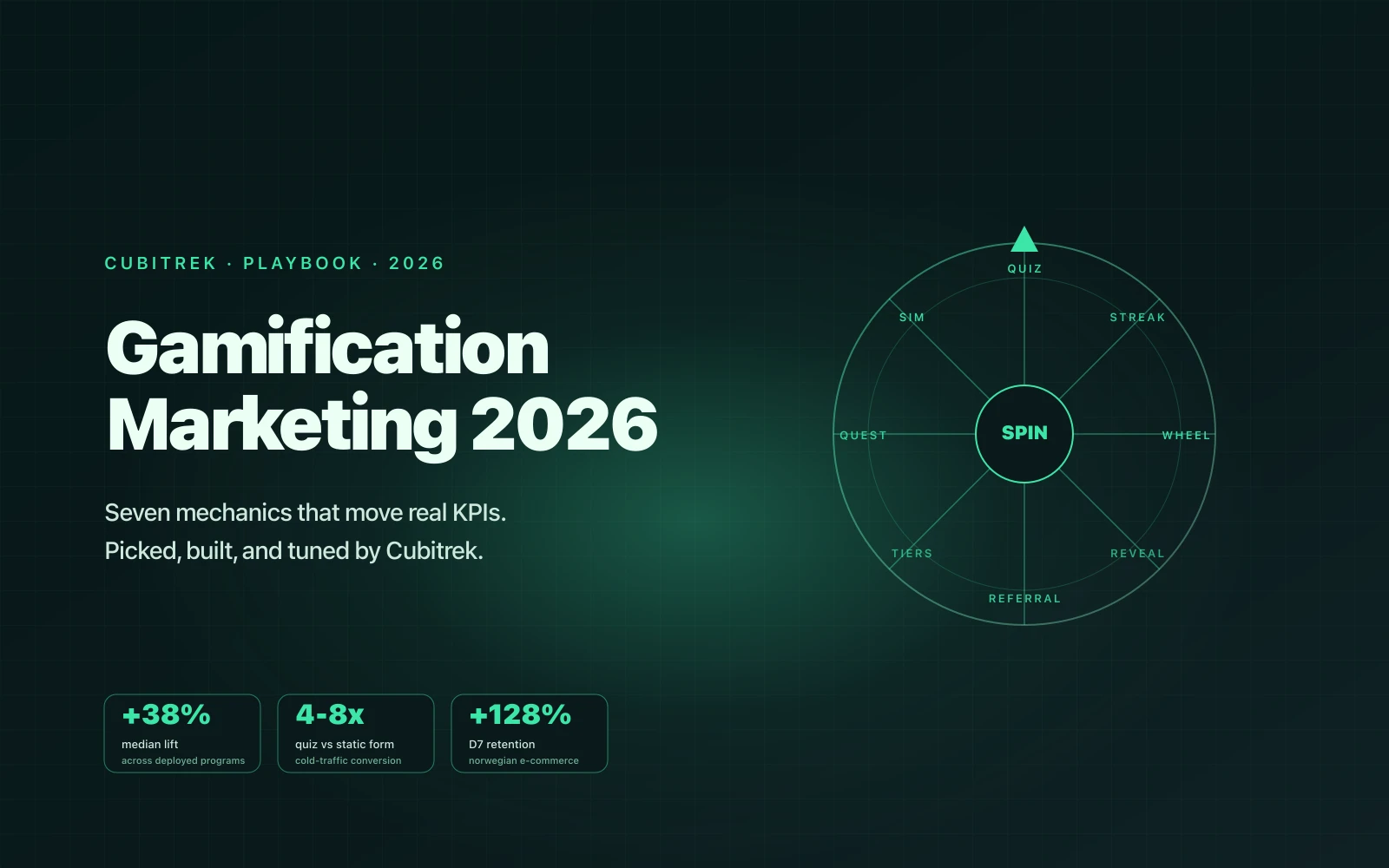
Gamification Marketing 2026 Playbook
Seven gamification mechanics that move real marketing KPIs in 2026. Quizzes, spin wheels, streaks, tier programs, onboarding quests, two-sided referrals, and learning sims.
 Faizan Ali Khan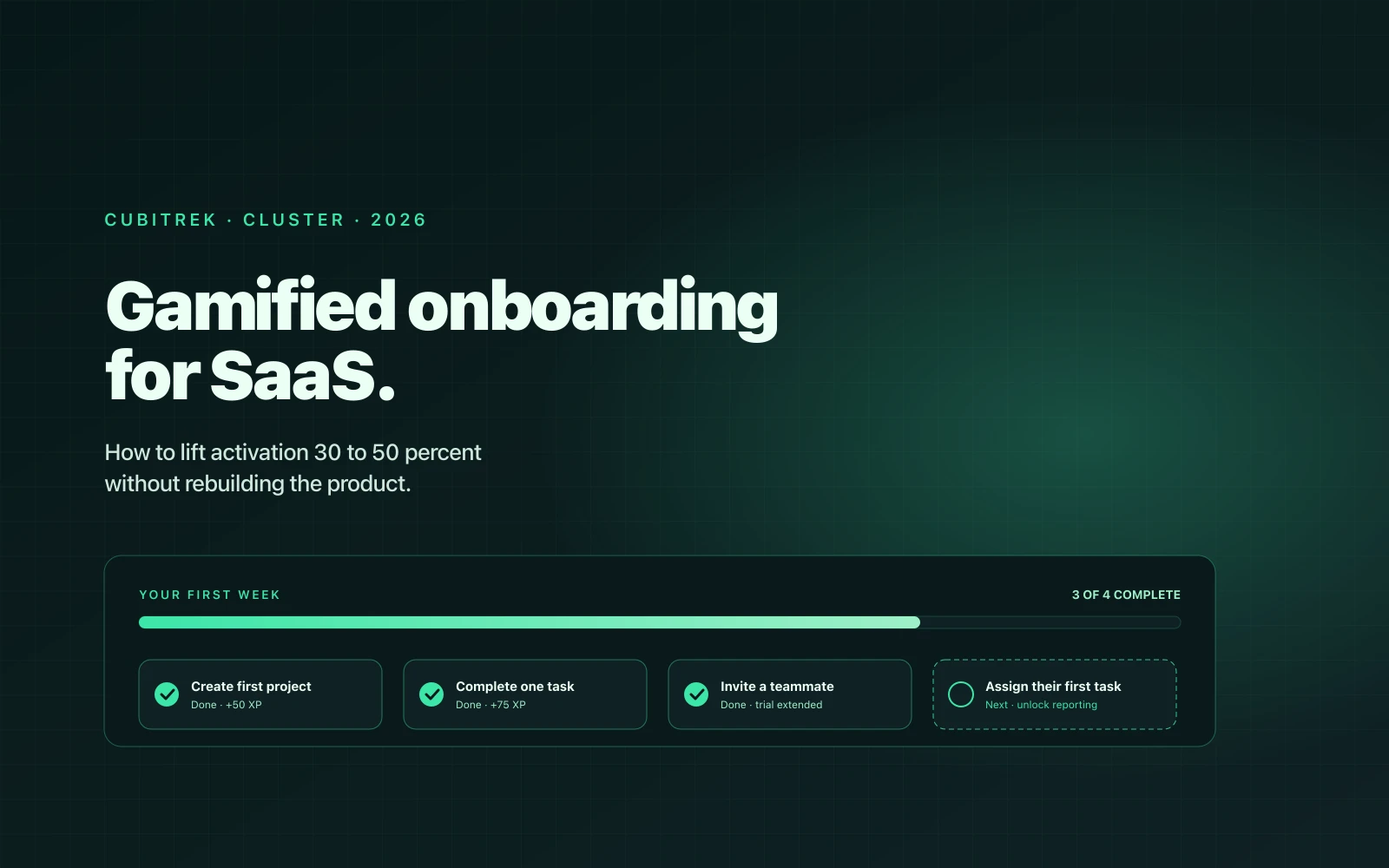
Gamified SaaS Onboarding
The implementation guide. Why gamified onboarding works (the boring research-backed part), the four mechanics that move SaaS activation, and a Cubitrek case study with 78 percent lift in net new paying customers.
Faizan Ali KhanReady when you are
Want Cubitrek to run Performance Marketing for you?
We install performance marketing programs for growing companies across the US and Europe. Book a call and we'll come back with a one-page plan in 72 hours.