

Header architecture for vector proximity: the GEO guide for content teams
Header architecture is now the structural rulebook for AI retrieval. Question-format H2s, answer-first paragraphs, deeper H3 nesting. The 2026 GEO content playbook with Q2 chunking-size updates.

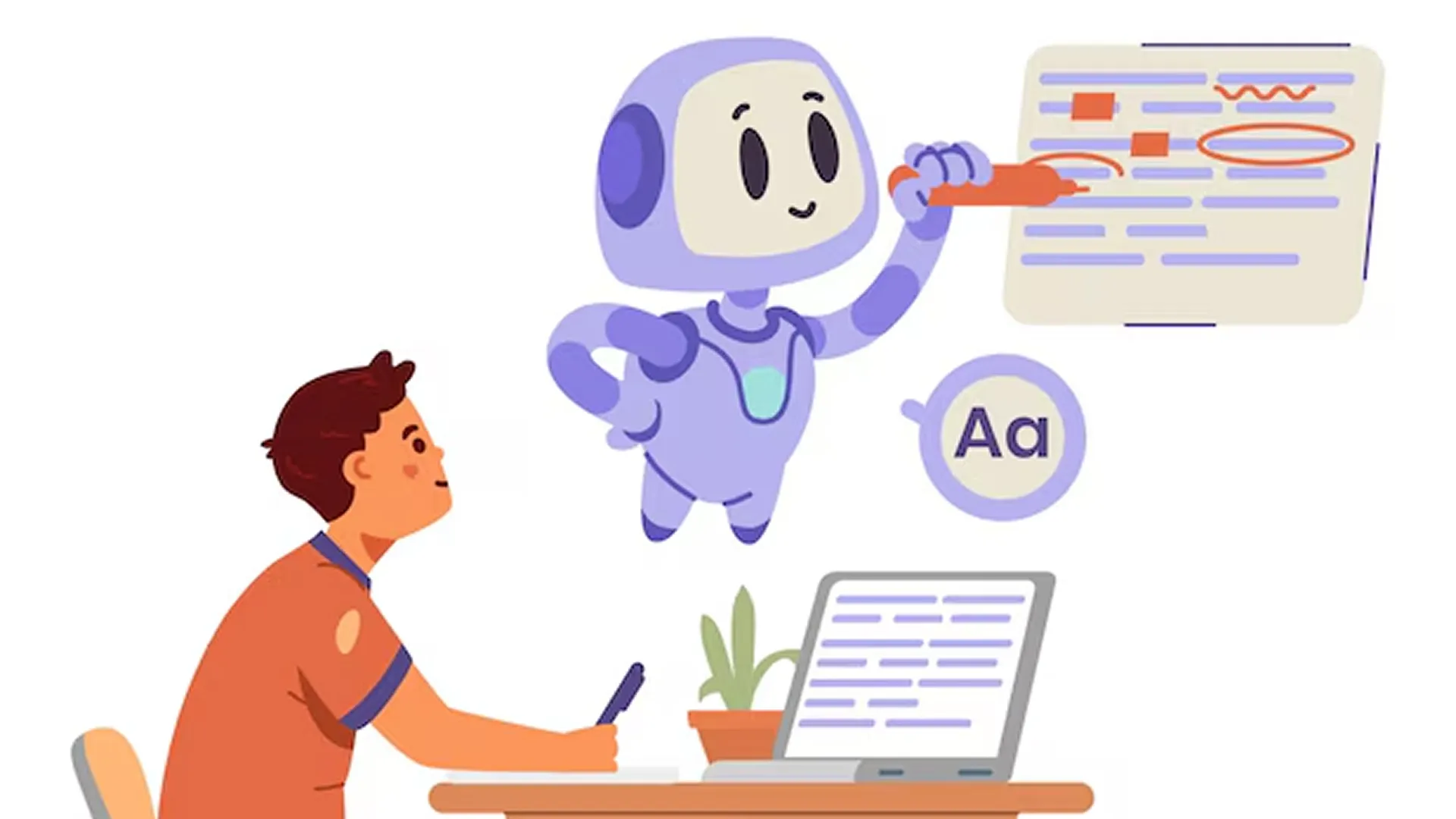
We are no longer just writing for human eyes. We are architecting for vector proximity. When AI retrieves an answer, it calculates the mathematical distance between the user's query and your content chunks. If your headers are vague, that distance grows and your content gets ignored. This guide explains how H2 and H3 tags act as semantic anchors that make your content machine-readable.
The new SEO: writing for the embedding model
For a decade, content teams optimized for keywords. We wrote so a Google crawler could see that the page was about "cloud computing" or "enterprise software."
That paradigm is shifting. With RAG (Retrieval-Augmented Generation) and LLM-based search like ChatGPT Search and Google AI Overviews, we are now writing for vector embeddings, not just crawlers.
In this new landscape, your content structure (specifically your header architecture) decides whether an AI can find your content or whether it gets lost in the noise. This guide covers vector proximity and how to use H2 and H3 tags so the embedding model can pick your text.
Why headers move the needle for AI
Headers as semantic anchors
To understand why headers matter to an AI, you need to understand how an AI reads. It does not read a whole article at once. It splits the text into smaller pieces called chunks.
When the model searches, it looks for the chunk whose vector sits closest to the query. Strong headers act as semantic anchors that guide the embedding model to the right chunk. Pair this with semantic chunking strategies so every chunk has a clean meaning.
When a user asks a question, the AI looks across these chunks to find the one with the smallest vector distance from the user's intent.
The problem with fluff headers
If your H2 is vague (think "Introduction" or "Things to Consider") the chunk under it has no semantic identity. The vector goes muddy.
The fix: anchor theory
Treat your H2 and H3 tags as semantic anchors. A strong header sets the coordinate space for the text below it. Anchored headers shrink the distance between the question and the answer in vector space.
3 rules for shrinking vector distance
To win at GEO, content teams need an answer-first architecture. Here are the three rules.
The Cubitrek AEO Platform applies these rules at scale through its pillar and cluster content engine, and scores whether the resulting pages actually get cited.
1. The query-mirroring protocol
Classic SEO rewarded clever, catchy headers. Vector SEO rewards clarity. Your H2 should mirror the likely intent of the user. The same idea drives token optimization for AI understanding.
- Weak header: Getting Started
- Vector-optimized header: How to Configure the API Key
Why it works: when a user asks "How do I configure the API key?", the vector of their question lands on top of your header. The retrieval system anchors right to your block of text.
2. Front-load the resolution
Vector proximity is heavily shaped by the text right after the header. Distance grows when the answer hides at the bottom of the paragraph.
The golden rule: the first sentence after an H2 must directly answer the header.
Bad structure: H2: Pricing Tiers When we thought about how to price our product, we wanted everyone to have access… (three sentences of fluff) … so the Pro plan is $10.
Optimized structure: H2: Pricing Tiers The Pro plan costs $10 per month and includes full API access.
3. Use H3s to tighten the context window
Large blocks of text dilute vector precision. If an H2 covers 500 words across three different nuances, the embedding becomes the average of those topics, not a specific answer.
Use H3 tags to slice large concepts into tighter, mathematically distinct chunks.
- H2: Data Privacy Policies
- H3: GDPR Compliance
- H3: CCPA Data Handling
- H3: Data Retention Periods
That gives you three high-precision vectors instead of one generic, low-confidence vector.
Case study: optimizing for the chunking algorithm
Most RAG systems split text on headers. Here is how a chunking algorithm reads two structures.
Scenario A: human-centric (low retrieval score)
- H2: The Future
- Text: We believe the integration of silicon and software is critical. Latency is the enemy of speed…
The header "The Future" is semantically empty. The text talks about latency, but the anchor does not support it. An AI looking for "How to reduce latency" might skip this chunk because the Future anchor pulls the vector away from the technical topic.
Scenario B: machine-first (high retrieval score)
- H2: Reducing Latency in Silicon Integration
- Text: Latency is minimized by optimizing the hardware-software handshake…
The header acts as a strong anchor. The vector for this chunk clusters tightly around "latency" and "silicon." When a user asks about this topic, the mathematical distance is near zero. Retrieval is locked in.

Q2 2026 update: chunk size keeps shrinking
When this guide first published in early 2026, RAG systems retrieved chunks of roughly 300-500 tokens. As of May 2026, the median chunk size across production retrieval stacks (Perplexity, Claude's RAG layer, the major enterprise vector DBs) has dropped to 150-200 tokens. Three implications for header architecture:
- H3 use has roughly doubled in well-ranked content. Pages that earned AI citations in Q4 2025 with H2-only structure now lose those citations to pages with deeper H3 nesting under the same H2s. The chunking algorithm cuts more aggressively.
- Answer-first paragraph rule got stricter. The first sentence after a header now matters even more, because the retrieved chunk may not include the second sentence at all. Lead with the resolution; explain in the followup chunk.
- Question-format H2s pull citations at 3-4x the rate of declarative H2s. "How to configure the API key" outperforms "API Key Configuration" by a measurable margin on the same content. The vector of the user query lands directly on the question-format header.
Tactical move every team should run this month: audit your top 30 pages by traffic, identify any H2 that covers more than 200 words without an H3 split, add 2-3 H3s underneath. Bump updatedAt. Request indexing. The lift is usually visible within 2-3 weeks.
Key takeaways for content teams
To future-proof your documentation and blog content for AI search:
- Be explicit: drop the clever headers, use descriptive, keyword-rich headers that mirror user questions.
- Chunk often: keep sections short. Use H3s to break complex ideas into discrete vectors.
- Answer first: the sentence right after the header should carry the core value of the section.
When you architect your headers for vector proximity, you make your content readable for humans and retrievable for machines. Pair it with multi-modal RAG retrieval so images and charts feed the same answer pipeline.
Frequently asked questions
1) Where can I buy vector-proximity header modules for AI applications?
You cannot buy a header module. Header architecture is a writing strategy, not a software product. It is how you organize your HTML tags (H2s and H3s) inside your CMS, whether that is WordPress, HubSpot, Next.js, or anything else.
If you want tools that process those headers for vector search, look at vector databases like Pinecone, Weaviate, or Milvus, plus orchestration frameworks like LangChain. They rely on the header architecture you create in your content to work well.
2) How does header architecture affect vector proximity accuracy?
It cuts semantic noise.
- Without architecture: a 500-word block with no headers gets one average vector. Specific details get lost in the average.
- With architecture: every H2 or H3 forces a new chunk. The vector is calculated only on the text under that header.
Result: the mathematical distance between the user's specific question and your specific answer shrinks, so the AI is far more likely to retrieve the correct passage.
3) What is the most cost-effective header architecture for large-scale indexing?
In this context cost means computational tokens and retrieval efficiency. The most cost-effective approach is a standardized hierarchy.
- How it works: every page type uses a template. For example, every product page has H2s for Installation, Pricing, and Troubleshooting.
- Token efficiency: standard headers stop the AI from pulling irrelevant chunks, which lowers tokens per query.
- Scalability: you can programmatically inject the templated headers into thousands of pages without rewriting from scratch.
4) Does Cubitrek offer a tool to track AI citations after this work ships?
Yes. Our answer-engine listener queries the major answer engines daily and logs every citation, missed mention, and competitor cited. The data feeds our passage writer, which drafts the next answer block. See the full toolset on the AEO/GEO service page.
Let's discuss it over a call.
Key takeaways
- Drop clever headers. Use descriptive, query-mirrored headers that mirror real user prompts.
- Answer first. The first sentence after the H2 must directly resolve the header.
- Use H3s aggressively. Median chunk size has dropped to 150-200 tokens in Q2 2026; H2-only pages lose citations to deeper-nested competitors.
- Question-format H2s outperform declarative H2s by 3-4x on AI citation rate.
- Audit your top 30 traffic pages monthly. Any H2 covering more than 200 words without an H3 split is leaving citations on the table.
Keep reading
Related articles.
More on the same thread, picked by tag and category, not chronology.
AI SEO Services: The Real Work
An agency owner's account of what sits under the AI SEO label: the four kinds of work in a real engagement, which three are verifiable and which one is not, and the cases where you should not buy it at all.
Faizan Ali Khan
AI Video Labeling Rules in 2026
Europe's transparency rules and California's provenance rules both became enforceable on 2 August 2026. What applies in the EU, US, UAE and Pakistan, which videos actually attract penalties, and what it means for agencies and the companies that hire them.
 Samrina Khan
How to Choose an AEO Agency
The buyer's side of answer engine optimization: the four layers a real program covers, twelve questions with the answers that should worry you, what it costs, and the cases where hiring anyone is the wrong move.
Faizan Ali KhanReady when you are
Want Cubitrek to run AEO & GEO for you?
We install aeo & geo programs for growing companies across the US and Europe. Book a call and we'll come back with a one-page plan in 72 hours.