

How Temu Used Gamification, Referral & Paid Ads to Explode in a New Market
How Temu grew with in-app games, referral rewards and heavy paid ads, what changed after US duty-free imports ended in May 2025, and what is still safe to copy.

Temu launched in the US in September 2022 and by early January 2023 ranked number one on both the US App Store and Google Play. That growth was not luck. It was a deliberate Temu growth strategy built on three reinforcing mechanics: gamification, referral and paid ads, and aggressive market-entry tactics. Then 2025 changed the model: the US ended duty-free entry for low-value parcels from China on 2 May 2025, Temu moved its US sales to locally based sellers, and its US daily users fell 58% that month, according to Sensor Tower data reported by Reuters.
This Temu case study breaks down what worked, what changed in 2025 and 2026, and which parts of the playbook are still safe to use. For the wider mechanic library beyond Temu (quizzes, learning sims, streaks, tier programs), see our 2026 gamification marketing playbook.
Temu by the numbers
What is Temu and how the growth strategy works
Temu is a cross-category marketplace owned by PDD Holdings (also the parent of Pinduoduo, the gamified-shopping pioneer in China). The app sells everything from clothes and electronics to home goods at deeply discounted prices.
What makes Temu different is not the prices. Wish tried that and in 2024 sold its marketplace to Qoo10 for about $173 million. Temu's edge was the combination of three growth mechanics running on top of those prices: game-loop engagement, referral rewards, and very heavy paid acquisition.
Gamification in marketing: the engagement engine
Game mechanics inside Temu turn shopping into a daily habit. Open the app, spin the wheel, claim a free gift, invite a friend to unlock a coupon, watch the countdown timer hit zero on a flash deal. Each interaction triggers dopamine via variable-ratio reinforcement, the same loop that powers slot machines and TikTok.
The gamification mechanics that move retention
- Daily login rewards. Coupons, points, or small free items just for opening the app. Streak bonuses for consecutive days.
- Spin-to-win wheels. Real prizes (free items, shopping credit, big discount tiers). Variable reward schedule keeps users returning multiple times per day.
- Time-limited challenges. "Invite three friends in 24 hours to unlock $20 credit." FOMO-driven referral acceleration.
- Progress bars and tier unlocks. Visible progress toward a reward beats "earn 5 coins per task" with no goalpost. Same psychology as video game XP bars.
- Group-buying and team rewards. Imported from Pinduoduo. Two friends commit to buy together and both get a deeper discount. Built-in viral spread.
These are not novel mechanics. Pinduoduo, Shein, Wish, and even Amazon's Prime Day countdown use versions of them. What Temu did differently was tune them aggressively and combine them with the referral and paid ad layers below.
The referral and paid ads combo
Gamification alone is not a growth strategy. It is a retention strategy. To grow the user base, Temu wired gamification directly into a referral system, then poured paid acquisition spend on top.
The combo works like this:
- Paid ads bring the first user. Temu was reported to be Meta's biggest advertiser in 2023, spending close to $2 billion there. As US tariffs rose it pulled its US Google Shopping ads on 9 April 2025, and from January to May 2026 it put 75% of its US ad budget into Meta, according to Sensor Tower.
- Onboarding triggers gamification. New user opens the app, gets a spin-the-wheel free gift, lands on a "$20 credit when you invite three friends" task.
- Referral mechanics activate. The user shares a referral link on WhatsApp, iMessage, or social. Friends arriving via that link land on a tailored onboarding flow that rewards both sides.
- Friends become the next paid-ad cohort. Each new user reduces the blended CAC because they came in via a paid invitee, not a paid ad.
Temu has never published a customer acquisition cost. PDD Holdings reports Temu inside a single e-commerce segment, so any per-install figure for Temu is an outside estimate.
Market-entry growth hacks Temu used to outrun competitors
Temu entered a saturated US market in late 2022 dominated by Amazon, Shein, and Walmart. Five tactics let it grab share fast:
- Loss-leader pricing on hero SKUs. Very low-priced items shipped direct from China, duty-free in the US until 2 May 2025. The EU added a €3 customs duty on low-value parcels from 1 July 2026. Users came for the deal, stayed for the gamification.
- Super Bowl 2023 ad. Five months after launch, Temu aired its "Shop like a billionaire" spot twice during the game, and Sensor Tower measured a 47% day-over-day rise in downloads on game day.
- Cross-platform paid blitz. TikTok, Meta, YouTube Shorts, Snapchat, Pinterest. Heavy creative testing optimized to install volume, not ROAS.
- Influencer seeding at scale. Mid-tier TikTok creators received free haul-bags. Unboxing and reaction videos generated organic reach that paid spend could not buy.
- Referral rewards. In-app rewards for inviting friends, tied to the games rather than a one-off discount.
Temu vs. Shein: why Temu grew faster
Both apps sell low-priced goods sourced from China. Both ran heavy paid acquisition. Temu pulled ahead on three vectors:
- Multi-category vs. fashion-only. Shein lives or dies by apparel. Temu sells home, electronics, beauty, toys, and apparel. Bigger TAM, more reasons to return.
- Gamification as the core loop. Shein's app is a clean catalog. Temu's app is a game with a catalog inside it.
- Referral economics. Shein's referral program existed but was generic. Temu's was tuned, gamified, and tied to in-app challenges.
Both were hit when US duty-free entry for low-value parcels from China ended on 2 May 2025.
Brands that used the same mechanics
None of these mechanics started with Temu. Brands that used them earlier, with mixed results:
- Duolingo. Streaks, leagues, owl-themed gamification, friend invites.
- Robinhood. Confetti animations and free-stock referral bonuses. Massachusetts regulators challenged these game-like features, and Robinhood dropped the confetti in 2021 and settled for $7.5 million in January 2024.
- DraftKings and FanDuel. Daily fantasy challenges, deposit-match referrals, leaderboards. Nearly identical reward-loop architecture.
- Whatnot. Limited-time live-shopping events with countdowns, bid-streaking, and viewer-referral rewards.
The Temu playbook is not Temu-exclusive. It is a portable framework.
How Cubitrek applies the Temu playbook for clients
The formula for our clients is the same as Temu's, scaled to mid-market budgets:
- Pick three game mechanics that fit the product. Streaks for daily-use apps. Spin-wheels for shopping. Tier progress for SaaS.
- Wire each mechanic to a referral trigger. Reward both sides, not just the inviter.
- Build a paid-ad creative engine. Test 50 to 200 variants per week, kill anything below the winning quartile after 1,000 impressions.
- Track LTV by acquisition channel weekly. Referral and gamified-organic compounds; pure paid does not.
For B2B SaaS clients we adapt the mechanics: free credits for inviting a teammate, leaderboards inside the workspace, milestone unlocks for hitting usage targets. Same psychology, different surface. We covered that pattern in detail in Gamified onboarding for SaaS, and the lead-capture variants in Gamified lead magnets: quizzes, spin wheels, scratch cards.
The infrastructure side: why most brands cannot ship this
Three reasons most brands fail to copy Temu:
- Creative volume. Testing at Temu's scale needs an industrial creative pipeline, not a handful of new ads a month.
- Real-time gamification logic. Spin-to-win, daily login streaks, and tier unlocks need a transactional event store and sub-100ms response times. WordPress and Shopify themes break under that load.
- Attribution. When a large share of installs comes through referrals, you need server-side event tracking (Meta Conversions API, TikTok Events API) to keep the paid algorithm fed. Browser pixels have lost signal since App Tracking Transparency arrived with iOS 14.5 in April 2021.
Conclusion: the playbook is portable, the execution is not
Temu's growth was not a stunt. It was a system, gamification, referral economics, and paid acquisition wired into one reinforcing loop. The mechanics are public knowledge. The execution gap is what separates brands that ship a "spin to win" widget once and brands that build a daily-active growth engine.
For B2C apps, marketplaces, and high-volume e-commerce, the mechanics still work, but regulators now test them. The European Commission's Temu proceedings, opened in October 2024, cover addictive design including game-like reward programs, and in May 2026 it fined Temu €200 million for failing to assess the risk of illegal products on its marketplace. In the US, the FTC's September 2025 settlement alleged that Temu's games and spin wheels offered no way to report a suspect listing until November 2024. Build honest discounts, clear terms and a report button in from day one. The edge comes from the creative pipeline, the gamification logic, and the attribution stack supporting it.
Frequently asked questions
1) How does Temu use gamification?
Daily login rewards, spin-to-win wheels, tier progression, time-limited challenges, and group-buying mechanics. Each one triggers a small dopamine reward and ties into a referral loop, turning shopping into a habit users open multiple times per day.
2) What did Temu pay to acquire a customer?
Temu has not published a figure. PDD Holdings reports Temu inside a single e-commerce segment, so any per-install number you see for Temu is an outside estimate. The design is still instructive: paid ads bring the first users, and referral rewards bring the friends who follow.
3) Can mid-market brands copy this without Temu's budget?
Yes, on a smaller scale. The mechanics scale down. What does not scale down is the creative volume and the engineering quality required to make gamification feel responsive.
4) What is the biggest mistake brands make when copying Temu?
Shipping a single mechanic (a spin-to-win widget, a referral popup) without wiring it into a daily-use loop or a paid-acquisition pipeline. One mechanic on its own rarely moves retention; the full loop is what compounds. Measure each mechanic against a baseline taken before launch.
Let's discuss it over a call.
Key takeaways
- The mechanics are portable: streaks, spin wheels, tier progress and two-sided referral rewards.
- Wire each mechanic to a referral trigger and a paid-acquisition engine, and measure each against a baseline taken before launch.
- Build honest discounts, clear terms and a way to report bad listings in from day one; EU and US regulators have examined exactly these features.
Keep reading
Related articles.
More on the same thread, picked by tag and category, not chronology.
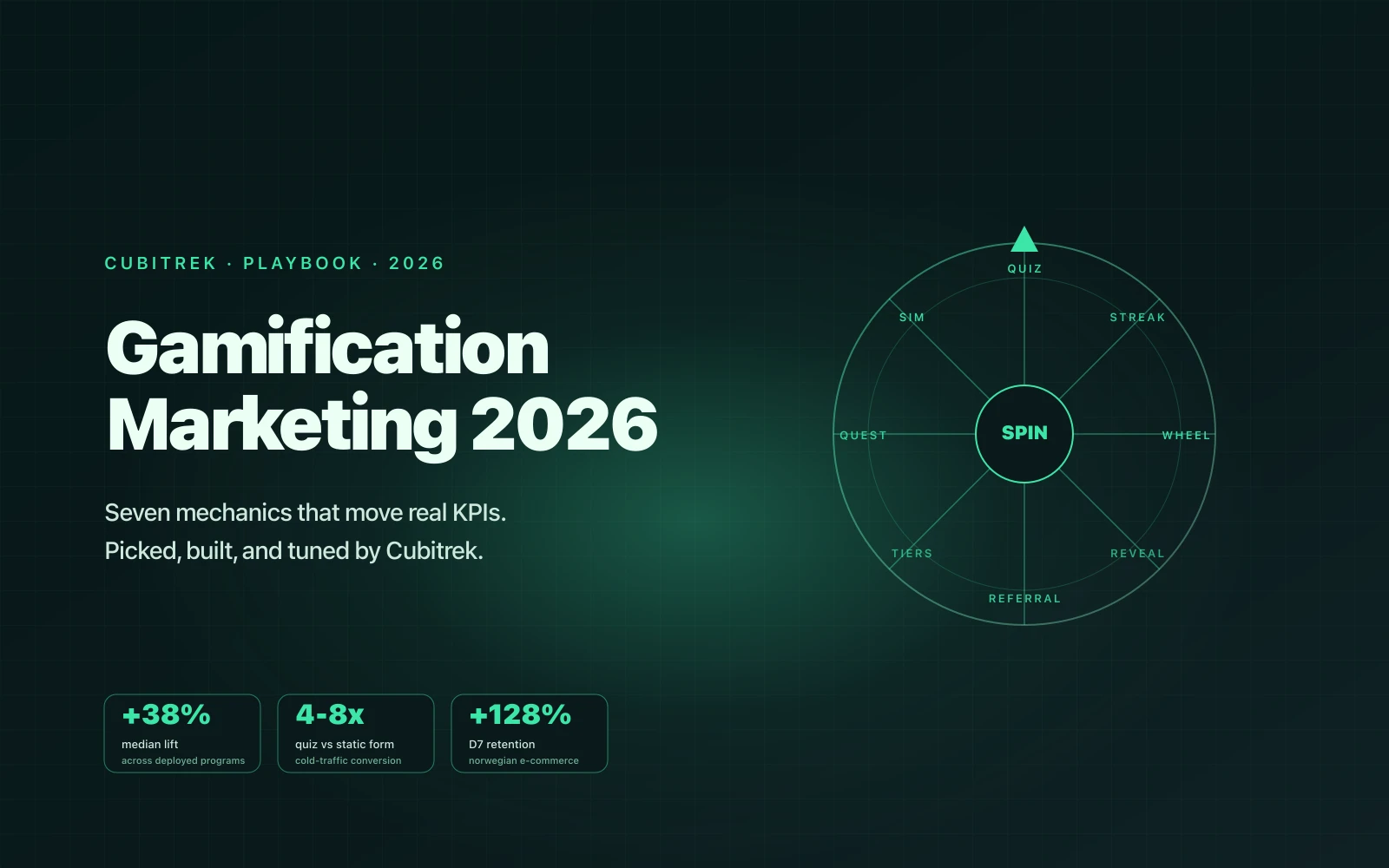
Gamification Marketing 2026 Playbook
Seven gamification mechanics that move real marketing KPIs in 2026. Quizzes, spin wheels, streaks, tier programs, onboarding quests, two-sided referrals, and learning sims.
 Faizan Ali Khan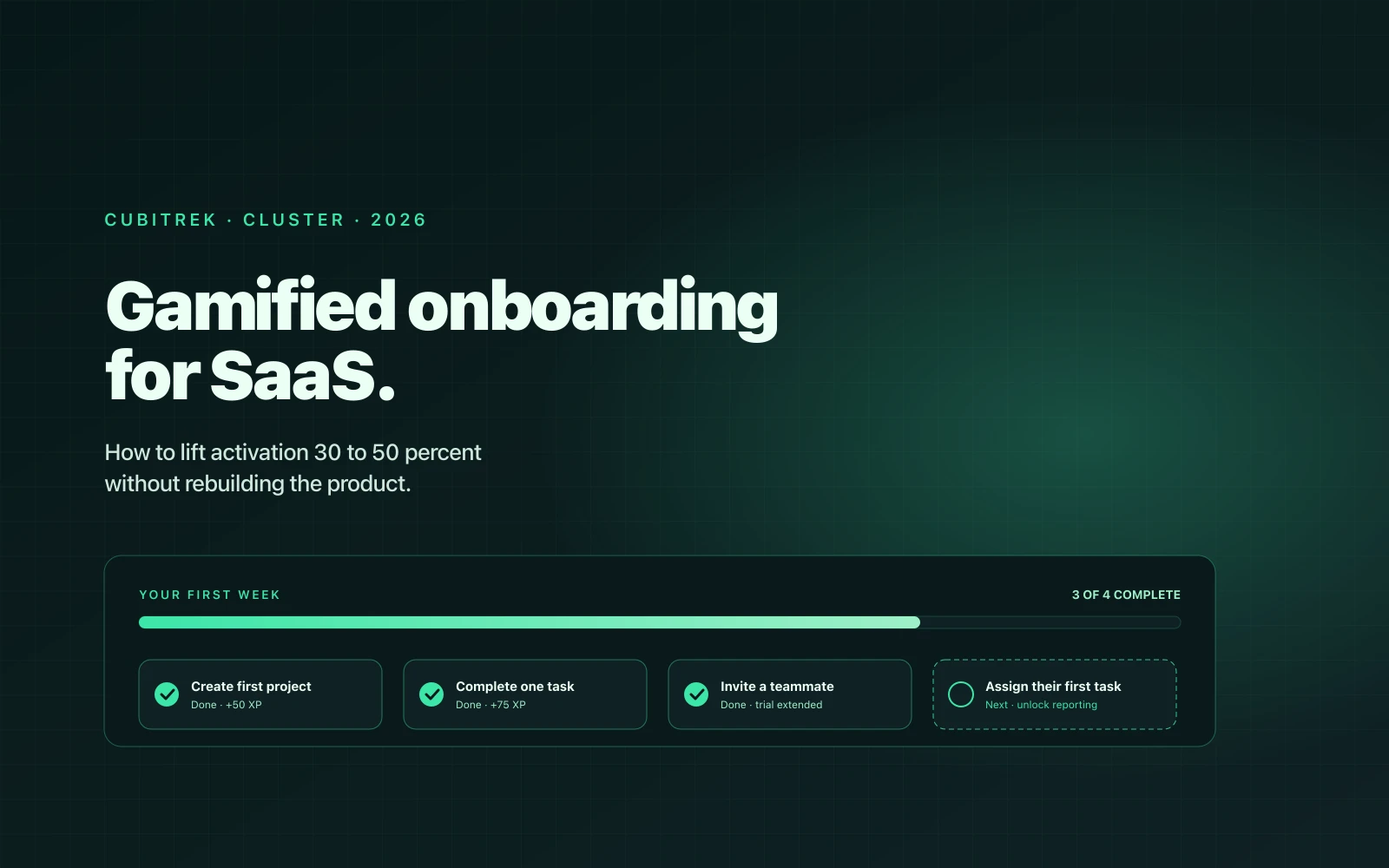
Gamified SaaS Onboarding
The implementation guide. Why gamified onboarding works (the boring research-backed part), the four mechanics that move SaaS activation, and a Cubitrek case study with 78 percent lift in net new paying customers.
Faizan Ali Khan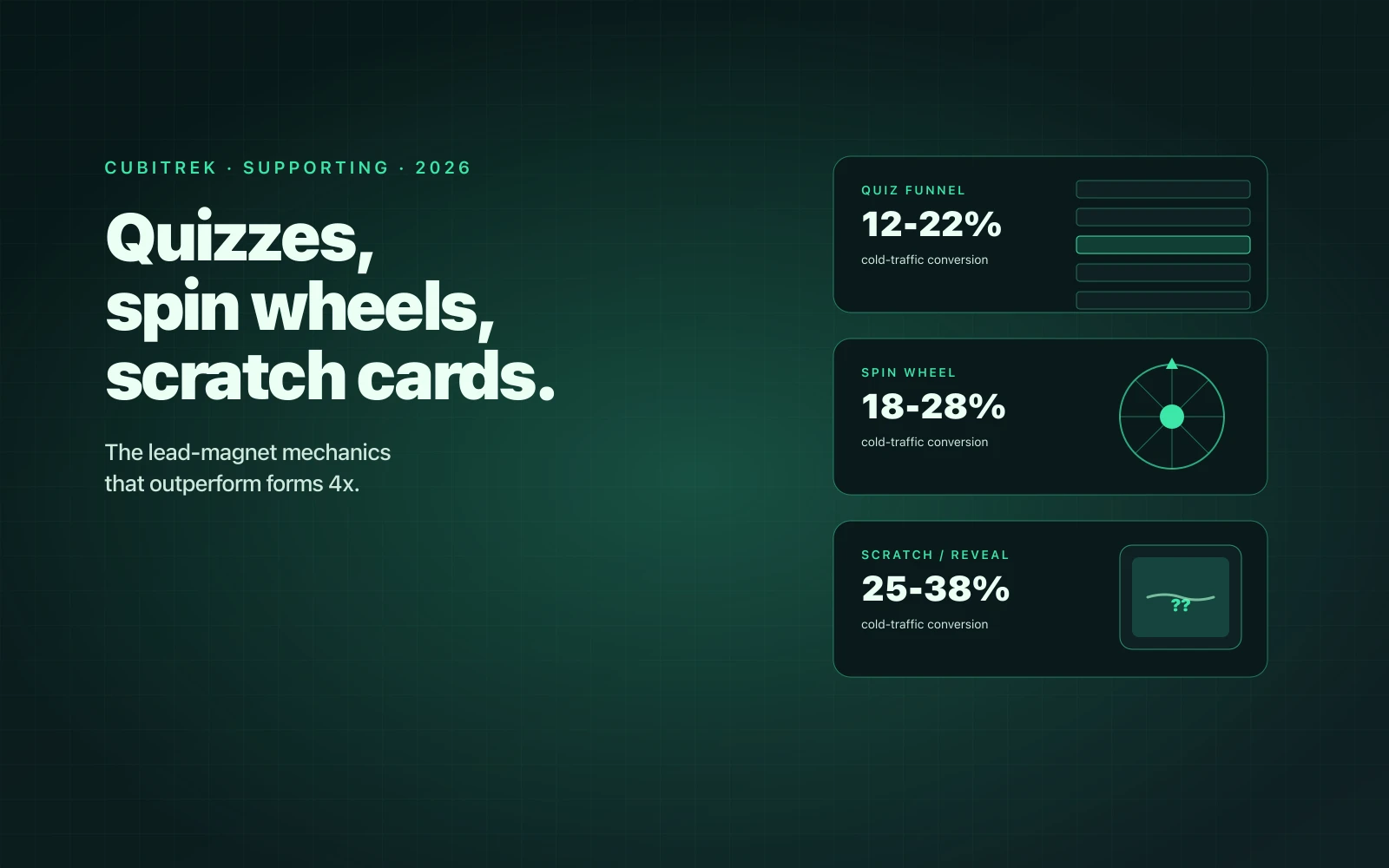
Gamified Lead Magnets
Static forms convert at 2 to 4 percent on cold traffic. Quizzes, spin wheels, and scratch reveals convert at 12 to 38 percent. The short, sharable version: when each mechanic wins, when it loses, and the reward economy that determines lead quality.
Faizan Ali KhanReady when you are
Want Cubitrek to run Performance Marketing for you?
We install performance marketing programs for growing companies across the US and Europe. Book a call and we'll come back with a one-page plan in 72 hours.