

Institutional vs Product Advertising: What Works Best in 2026
Institutional vs product advertising in 2026: when to build brand, when to sell, and how AI creative plus AI-answer visibility change the math.

Advertisers put real money into campaigns to lift sales and grow brand presence. One question decides where that money goes. Are you promoting your product or your brand?
The answer sits in the split between product and institutional advertising. This guide answers a simple question. What is institutional vs. product advertising, and what works best in 2026?
Institutional Marketing
Institutional marketing promotes a company's image, values, or goodwill. It does not push a specific product or service. The goal is brand reputation, trust, and positive public perception.
Corporations, government agencies, and non-profits use it to build credibility. It helps them align with the values their audience cares about.
In institutional advertising, teams raise exposure to the overall brand, image, and core message. Three areas of focus work together to attract and retain customers.
Brand
Companies build a recognizable brand image that resonates with their audience. Institutional advertising reflects that brand across every effort. It does not center on any single product.
Company Image
The strategy strengthens brand identity and reputation in the consumer's mind. Positive perception drives loyalty and long-term engagement.
Core Message
The message speaks to consumer behaviors, values, and needs. A haircare company, for example, shows how its products support healthy, beautiful hair.
Benefits of Institutional Advertising
Here are common benefits of institutional advertising.
-
Increases customer loyalty: Marketing the company's brand helps build durable loyalty.
-
Boosts brand recognition: The team designs a logo or brand image people recall instantly.
-
Promotes referrals: Loyal customers bring in more customers through word of mouth.
Product Advertising
Product advertising is marketing built around one specific product. The company advertises it separately from the rest of the range.
Teams use product promotion to draw attention to a product's features, uses, and advantages. There are three types of product advertising.
Comparative Advertising
Comparative advertising names the differences between a business and its competitors. The aim is to encourage customers to try a particular product.
Benefits of Comparative Advertising
- Differentiates your brand
- Emphasizes your product's benefits
- Convinces customers to try something new
- Builds loyalty
- Uses research to back the claim
Competitive Advertising
Competitive advertising challenges rivals in the market directly. It creates ads that compare product quality against competitors.
It is a bold move. A brand uses it to build a trust factor and improve recall.
Innovative Product Advertising
Launching a product for the first time calls for innovative product advertising. You might use a new channel, highlight features nobody has seen, and explain why your product is different.
Benefits of Product Advertising
Here are the common benefits of the product advertising method.
- Increases demand: Product advertising shows what makes a product better than rivals. It shows buyers the value they gain after purchase.
- Shows product uses: The team demonstrates key uses so customers understand the function.
- Targets a specific audience: The team researches the market to uncover real needs and speak to them.
Key Differences Between Institutional and Product Advertising
<table>``<tbody>``<tr>``<td>``<p>``<b>Feature</b>``</p>``</td>``<td>``<p>``<b>Institutional Advertising</b>``</p>``</td>``<td>``<p>``<b>Product Advertising</b>``</p>``</td>``</tr>``<tr>``<td>``<p>Purpose</p>``</td>``<td>``<p>Brand building, reputation</p>``</td>``<td>``<p>Promote specific product or service</p>``</td>``</tr>``<tr>``<td>``<p>Target Audience</p>``</td>``<td>``<p>General public, stakeholders, investors</p>``</td>``<td>``<p>Consumers, potential buyers</p>``</td>``</tr>``<tr>``<td>``<p>Message</p>``</td>``<td>``<p>Values driven, credibility focused</p>``</td>``<td>``<p>Informational, persuasive, sales driven</p>``</td>``</tr>``</tbody>``</table>
Institutional vs Product Advertising: What Works Best in 2026
Advertising in 2026 runs on AI creative, agentic ad ops, and brand visibility inside AI answers. Consumer behavior, technology, and brand values all shape which approach wins. The right call depends on your goals, your audience, and your industry.
One shift matters most this year. AI now writes, generates, and adapts creative at scale. Dynamic creative optimization turns one asset into thousands of variations in real time.
Why Institutional Advertising Works in 2026
Consumers value brand ethics and transparency.
- Gen Z and Millennial buyers prefer brands with clear ethics, sustainability, and social responsibility.
- Brands like Patagonia and Apple built trust by leading with mission, not just products.
AI creative made "good enough" ads free, so taste is now the moat.
- When content volume costs almost nothing, average creative loses its value.
- What stays scarce is direction, cultural relevance, and a brand voice that does not sound machine made.
Loyalty and Long-Term Impact
- Strong institutional branding drives loyalty and high lifetime value.
- Brands with higher unaided awareness consistently see lower cost per acquisition on conversion campaigns.
- Sustainability work attracts conscious buyers even when rivals price lower.
Brand Trust in the Age of AI
- In 2026, AI-generated ads, deepfakes, and misinformation make consumers skeptical.
- Only 45% of Gen Z and Millennial consumers feel positive about AI-generated ads, while 82% of executives assume they do.
- Brands that keep signaling authenticity and disclose AI use stand out. 73% of younger consumers say AI disclosure raises or does not change their intent to buy.
Challenges of Institutional Advertising
-
Slower to show results. Unlike product ads, institutional campaigns do not drive instant sales.
-
Harder to measure. Trust and reputation are intangible. They need long-term tracking, not a one-week window.
Why Product Advertising Works in 2026
AI and personalization drive higher conversions.
- Hyper-personalized AI ads show buyers what they need and lift conversion rates.
- E-commerce brands use AI recommendation ads to reach individuals with relevant products.
- 86% of media buyers now use or plan to use AI to build video ads.
Short attention spans reward direct selling.
- Short-form video on TikTok, Instagram Reels, and YouTube Shorts makes quick product ads effective.
- A 10-second ad showing a product's value can beat a long institutional campaign.
AI cut the cost of ad creative.
- One case study replaced actors with AI avatars and cut cost per video from $20 to $2.
- AI video ads pulled 3x more views than image creative and hit 80% of real-actor performance.
Retail media and social commerce keep growing.
- Buyers purchase inside social ads through TikTok Shop, Instagram checkout, and retail media networks.
- Worldwide retail media spend reached roughly $169 billion in 2025 and keeps climbing.
Challenges of Product Advertising
- Competitive and expensive. Brands must keep buying paid ads to compete, which raises acquisition cost.
- Weak long-term loyalty. Buyers chase discounts or a single feature, then switch when a rival matches it.
The New Layer: Brand Visibility in AI Answers
A third battleground opened up. Buyers now ask ChatGPT, Perplexity, Gemini, and Copilot before they visit a site. AI-driven search grew from under 2% to more than 9% of desktop search traffic between 2024 and 2025.
This is where institutional and product advertising meet. AI engines cite brands they trust, then recommend the products those brands sell.
- Answer Engine Optimization (AEO) and Generative Engine Optimization (GEO) get your brand cited inside AI answers.
- The quality gap is real. One study found ChatGPT referral traffic converting at 15.9%, against 1.76% for Google organic.
- Agentic ad ops let AI plan, launch, and optimize campaigns while your team sets the strategy and guardrails.
The Best Strategy in 2026: A Hybrid Approach
The strongest brands in 2026 do not pick one lane. They combine institutional and product advertising on purpose.
Winning Formula
- Use institutional advertising to build trust, stand apart, and earn long-term loyalty.
- Use product advertising to drive conversions and revenue right now.
- Add AEO and GEO so both show up when AI answers the buyer's question.
- Let AI run the creative and media, while humans own taste and strategy.
Conclusion
In 2026, both institutional and product advertising still matter. Institutional advertising builds long-term trust through values, sustainability, and responsibility. Product advertising drives quick conversions for startups and e-commerce brands.
The winning formula is not choosing between them. It is integrating both, then extending both into AI answers where more buyers now decide.
Frequently asked questions
1) What is the difference between institutional and product advertising?
Institutional advertising promotes the company's image, values, and reputation. Product advertising promotes a specific product and its features to drive sales.
2) Which works best in 2026, brand or product advertising?
Neither alone. The best results come from a hybrid. Institutional advertising builds trust while product advertising converts, and AEO plus GEO carries both into AI answers.
3) How is AI changing advertising in 2026?
AI now generates and adapts creative at scale. It cuts production cost, personalizes ads to each viewer, and runs media through agentic ad ops with human oversight.
4) What is AEO and GEO in advertising?
AEO and GEO get your brand cited and recommended inside AI engines like ChatGPT, Perplexity, and Gemini. They are becoming a core channel as AI search grows.
5) Can Cubitrek run both brand and product campaigns?
Yes. Cubitrek builds AI-driven campaigns, performance marketing, and AEO/GEO programs that work together across every surface.
Want to map the right mix for your brand? Read more on our blog or book a call with our team.
Key takeaways
- In 2025, both institutional and product advertising will play crucial roles in brands’ success.
- On the other hand, product advertising affects startups and e-commerce brands seeking quick conversions.
- Institutional Marketing
- Product Advertising
Keep reading
Related articles.
More on the same thread, picked by tag and category, not chronology.

Your business software should be a tool your AI can use
MCP lets an AI assistant use your ERP, POS or warehouse system directly, not through a chatbot bolted onto a dashboard. What the protocol changes, and the three things that have to be true before you connect anything.
 Faizan Ali Khan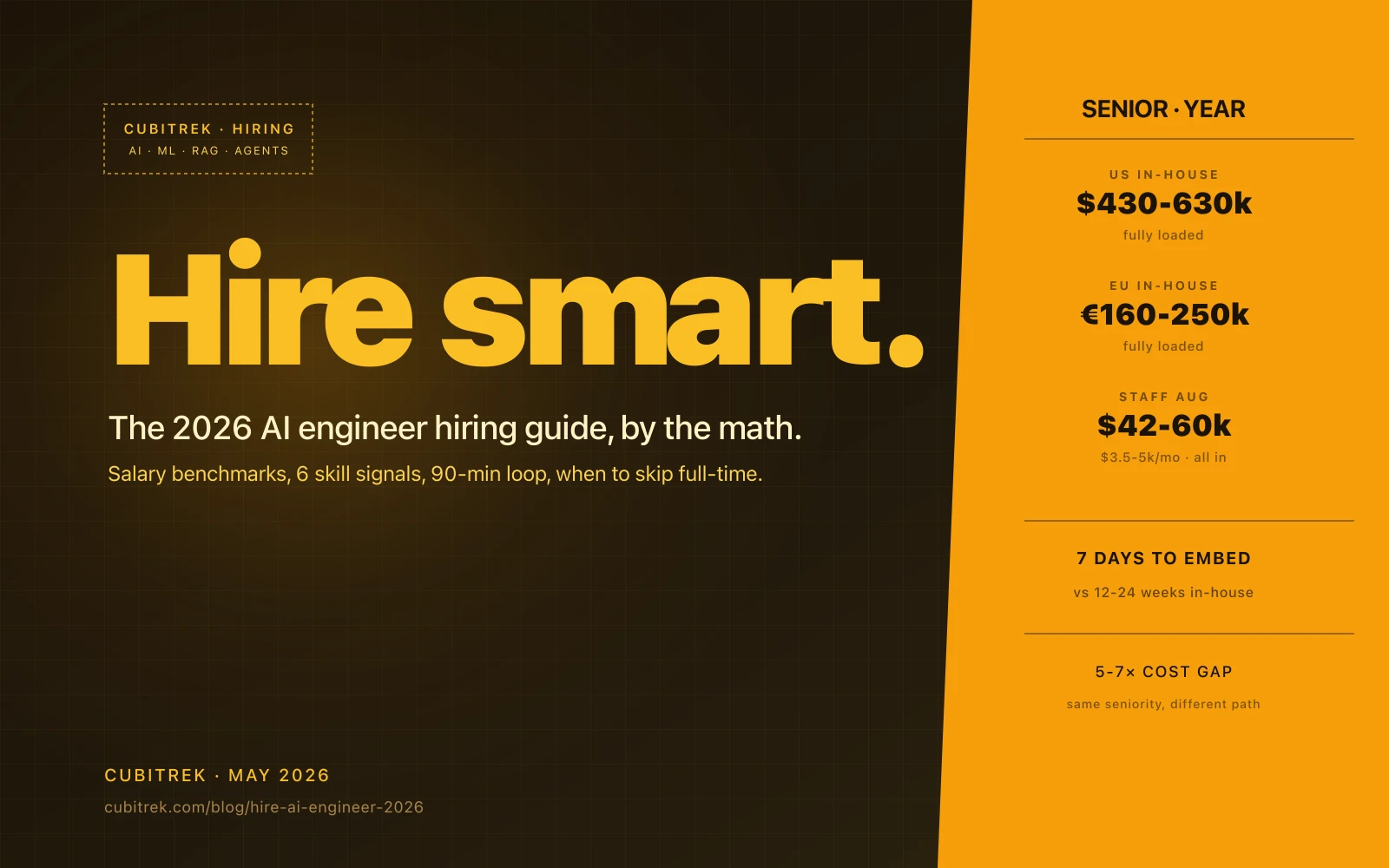
Hire an AI Engineer in 2026
Hire an AI engineer in 2026 and you face a market that did not exist three years ago. The role splits into 5 sub-specializations, and US senior salaries cleared $300k base in 2025. This guide tells you what to look for, what to pay, and when to skip a full-time hire entirely.
Faizan Ali Khan
Agent Passport: The Identity Standard
An open standard for verifiable, business-issued identity and authority for AI agents that talk to other AI agents across organisational boundaries. One signed JSON file at /.well-known/agent-passport.json. Ed25519 over DNS. MIT-licensed reference verifier in the spec repo. Cubitrek coined the term on April 28, 2026.
Faizan Ali KhanReady when you are
Let's turn the playbook into revenue.
Book a strategy call. We map your goal, audit what exists, and come back with a one-page plan in 72 hours.