
Understanding E-A-T in SEO: Expertise, Authoritativeness, and Trustworthiness:
The term “E-A-T” is often thrown around carelessly, and many people need clarification regarding its real meaning.

The term “E-A-T” is often thrown around carelessly, and many people need clarification regarding its real meaning.
Additionally, questions like: What is ‘eat in SEO’? and ‘Give me information regarding the latest Google Eat update’ get answered in this post.
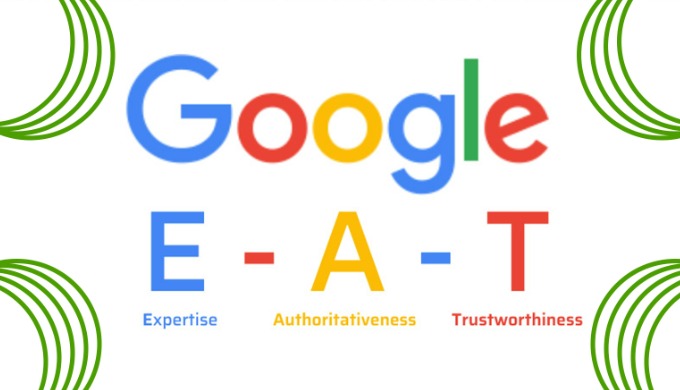
For starters, E-A-T stands for Expertise, Authoritativeness, and Trustworthiness.
It’s Google’s way of assessing if you know what you are talking about.
We all know that Google is all about providing accurate and relevant information to all browsers around the globe.
So, Google needed a way to differentiate experts’ opinions from ramblings of novices.
In more specific terms, what makes a website more authoritative on a particular topic?
For example, if you search for something serious, like information on your state’s tax code, this information must come from an experienced accountant.
It’s not just about a website’s domain authority. The expertise should be relevant to the topic.
Since expertise is subjective, it can’t simply be measured using numbers.
So, engineers at Google had to get creative with the approach.
How Does Google Define E-A-T and E-E-A-T?
This whole thing started with The Search Quality Rater Guidelines, a document exceeding 170 pages. In it, Google explains how Search delivers relevant results from reliable sources and how E-A-T guidelines are the main criterion they use.
Quality raters are human evaluators who use these guidelines to evaluate the quality of search results.
They aim to determine if content demonstrates expertise, authoritativeness, and trustworthiness (E-A-T).
High-quality information meets these criteria, like content from a technology blog that regularly publishes content authored by recognized experts in the field, supported by citations from industry publications.
On the other hand, low-quality content, spreading hate, or deception is also defined.
These Raters conduct side-by-side tests, comparing current and proposed search results against E-A-T SEO Google guidelines.
Expertise
All content on the website should come from someone who knows what they’re talking about. If you’re writing about cooking, for example, it’s better if you’re a chef or have some experience in the kitchen.
Authoritativeness
The writer should be the go-to person people can rely on for accurate information. If you’re known as an expert in your subject, people are more likely to trust what you say.
Trustworthiness
According to Google, trustworthiness is the most important metric they use. Trustworthiness is all about credibility. People need to feel confident that the information they’re getting is reliable and accurate. This can be influenced by things like having a well-designed website, using reputable sources, and being transparent about who you are and what your intentions are.
An additional ‘E’ was introduced in Google’s December 2022 update, changing the ‘E-A-T’ acronym to ‘E-E-A-T’. This extra ‘E’ is called ‘Experience.’
Experience
Good content usually demonstrates the writer has intimate, firsthand knowledge about the topic they’re discussing. Experience gives credence to the advice they offer, as they’ve tried it themselves.
So far, we have covered all the surface-level information about what Google is trying to achieve. But let’s get into the meat of this whole thing; from now on, we’ll cover the practical steps you can take to improve to ‘E-E-A-T.’
What Can You Do to Improve E-E-A-T?
Your main goal is to separate yourself from all the fraudulent businesses spamming their links. The critical thing to note is that these fraudulent businesses will never go the extra mile to establish their authority.
So, your efforts to improve ‘E-E-A-T’ will require a fair bit of work, but here are some creative solutions to make things easier, along with a E-A-T SEO checklist.
Reviews:
Reviews are crucial in improving the E-A-T score for a website, especially if it’s an online business. When clients leave reviews, it enhances the ‘Experience’ part of E-E-A-T.
Since these people have firsthand experiences, it garners credibility for a business, whether it’s an e-commerce store or your local restaurant.
Positive reviews from satisfied customers also improve the ‘Trustworthiness’ of the rest of your content.
Hence, the following section goes deeper into improving ‘Trustworthiness’ since it is the most crucial factor in Google’s eyes.
Appear Legit:
Appearances matter, so you must look like a legitimate business. All aspects of your digital presence come into play here.
- Having a visually appealing website design with straightforward navigation adds to your credibility.
- Remember to have consistent branding across all platforms.
- Make sure your website follows all the latest user security standards, especially when processing payment information.
- Mention all the information regarding your business, like contact details, address, hours of operation, people behind this business, and anything else that makes you legit.
There are many other things to consider, but it’ll become easier once you do competitor research. Essentially, you must find relevant websites that perform best in search results and then make a checklist of things your website is missing compared to them.
Wikipedia Page:
Wikipedia has a considerably high domain authority and trustworthiness in the eyes of Google’s search algorithm.
You’ve probably seen the evidence firsthand: Wikipedia pages often rank well, and a page about your business gives you an opportunity for increased visibility and organic traffic.
Besides, Wikipedia pages include outbound links, which can contribute to a website’s backlink profile and, ultimately, your ‘E-E-A-T.’ This brings us to our next section.
High Quality Links:
Building your website’s authority is a slow process. You must constantly bring your ‘A’ game to every post. And little by little, you’ll get some great backlinks that’ll improve your authority.
But you can expedite this process with a little bit of networking.
Once you have a catalog of your content prepared, try emailing other websites to get their attention and highlight their content that would benefit from a link to your website.
Let me explain with an example: If your e-commerce site sells bike parts, you should contact all the bike enthusiast blogs and ask them to rate your services.
Go local and find all listing websites operated by tourism services or regional small business directories. Focus especially on local government sites; their backlinks can give you a high degree of authority.
Get Expert Contributors:
If you have enough experience in your industry, you’d already be familiar with many experts who frequently write blogs related to your industry.
Back in the day, few websites hired field experts, but now that number has increased because Google rewards this extra effort to legitimize your website.
You can start by hiring these experts and paying for their time and effort. However, an extremely beneficial strategy is to target professionals who might need some backlinks for their blogs.
Introduce yourself to them and tell them you have a spot on your website for them if they ever need to voice their opinion.
In exchange, you’ll let them promote whatever they want to promote. Besides that, tell them how writing for different platforms can help their credibility in the real world.
Once you convince someone, create a dedicated author section that highlights all their academic credentials and industry experiences. Remember to link back to all the places that have accredited them.
Final thoughts
E-A-T and its evolved form E-E-A-T are Google's criteria for assessing website credibility: Experience, Expertise, Authoritativeness, and Trustworthiness. Encourage client reviews, run a legitimate digital presence, build a Wikipedia or Wikidata footprint, earn high-quality backlinks, and feature named expert contributors. Step one is distancing yourself from fraudulent entities. Step two is the slow build of topical authority through well-cited content authored by real people.
Let's discuss it over a call.
Key takeaways
- How Does Google Define E-A-T and E-E-A-T?
- What Can You Do to Improve E-E-A-T?
- Final thoughts:
Questions people ask about this
Sourced from client conversations, Search Console, and AI-search citation monitoring.
- This whole thing started with The Search Quality Rater Guidelines, a document exceeding 170 pages. In it, Google talks about ensuring that Search delivers relevant results from reliable sources and also how E-A-T guidelines are the main criterion they utilize.
- Your main goal is to separate yourself from all the fraudulent businesses spamming their links. The critical thing to note is that these fraudulent businesses will never go the extra mile to establish their authority.
Keep reading
Related articles.
More on the same thread, picked by tag and category, not chronology.

Top AI SEO Tools in 2026 (SEO + AEO/GEO Stack)
The 2026 AI SEO stack has three layers: classic SEO, AI writing, and AI-visibility tools that track citations across ChatGPT, Perplexity, Claude, and Gemini. Here are the seven we recommend and where each fits.
Faizan Ali Khan
How to Use Semantic Search in SEO?
Semantic Search in SEO Importance of Semantic Search For Content Marketing Keyword Research That Considers The Intent Behind Searches Content Creation That Considers The Intent Behind Searches Conclusion Semantic search
Faizan Ali Khan
The Impact of Page Experience on SEO: Optimizing for Core Web Vitals
Google Core Web Vitals are a set of performance metrics that focus on user experience by evaluating a webpage’s loading, interactivity, and visual stability.
Faizan Ali KhanReady when you are
Want Cubitrek to run SEO for you?
We install seo programs for growing companies across the US and Europe. Book a call and we'll come back with a one-page plan in 72 hours.