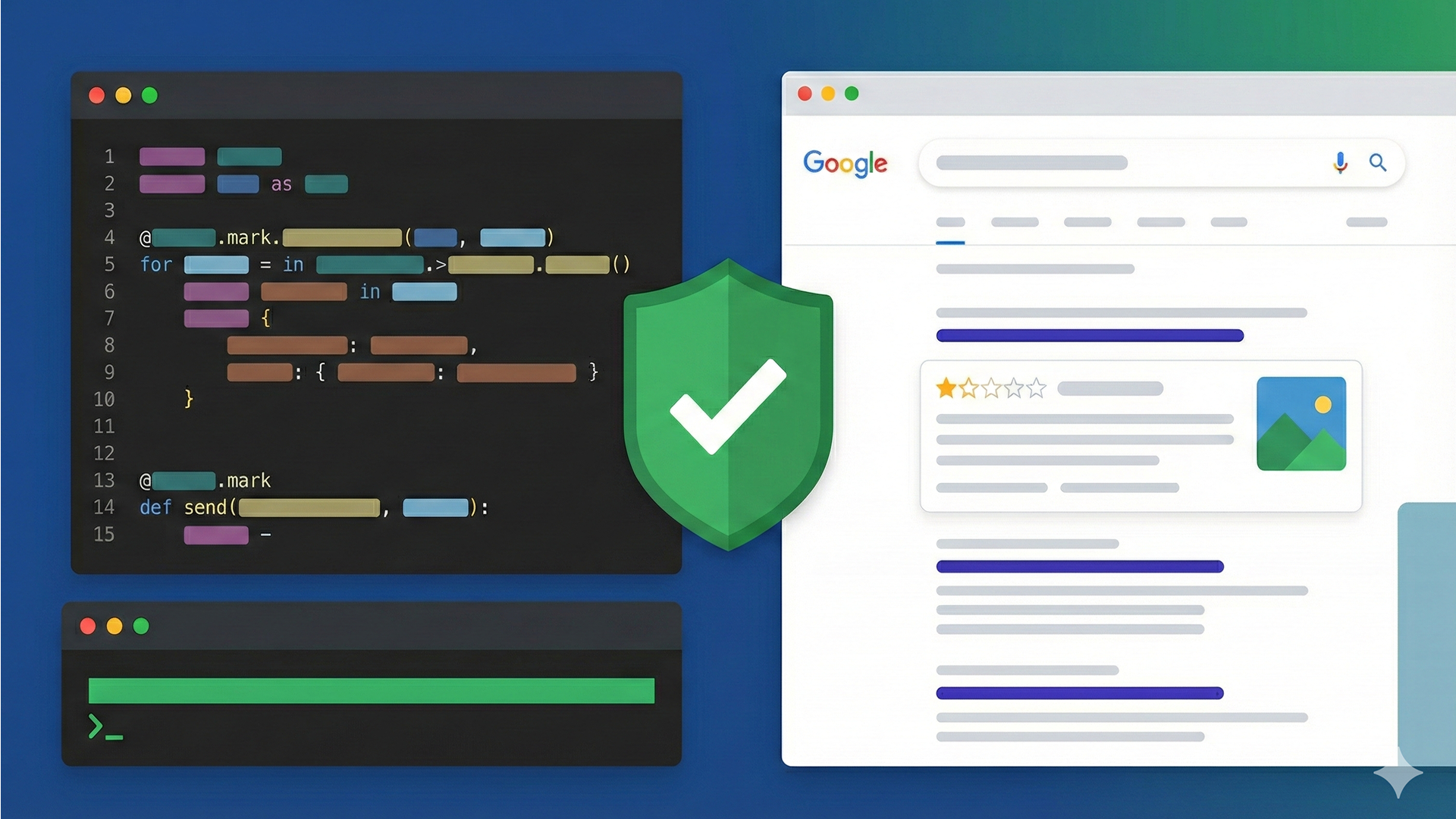


The Chunking Dilemma: Fixed-Size vs. Semantic Splitting in SEO

The Chunking Dilemma: Fixed-Size vs. Semantic Splitting in SEO
For the modern SEO Lead, the battleground has shifted. It is no longer just about keywords on a page or even “user intent” in the abstract. It is about engineering your content for the intricate parsing layers of Large Language Models (LLMs). Before an AI like Google’s Gemini or a custom RAG (Retrieval-Augmented Generation) system ever generates an answer, it must first “read” and index your content.
This process is mechanical, brutal, and entirely dependent on your Chunking Strategy.
The fundamental unit of this machine ingestion process is the chunk. How your content is split into these chunks determines whether your insights are retrieved as a coherent whole or as fragmented, meaningless noise. This is the Chunking Dilemma: the clash between computationally cheap fixed-size splitting and complex, context-aware semantic splitting.
The Mechanics of Machine Reading: The Pre-Generation Phase
Before an LLM can generate a response, a retrieval system must first find the relevant information. This is the “R” in Retrieval-Augmented Generation.
Here is the complex technical reality: Embedding models have finite context windows. You cannot feed a 50-page technical whitepaper into an embedding model like OpenAI’s text-embedding-3 as a single unit. If you try, the text exceeding the token limit is truncated and deleted before it is vectorized.
To solve this, we must break documents down into smaller, manageable pieces chunks. Each chunk is converted into a vector embedding and stored in a vector database.
Crucial Insight: Retrieval happens at the chunk level, not the document level. When a user asks a question, the system compares the query vector to the vectors of your chunks. If a chunk is poorly constructed, then containing half an idea or a mix of unrelated topics, its vector embedding will be “noisy.” The system won’t retrieve it, and the LLM will never see that information.
The Old Guard: The Brute Force of Fixed-Size Chunking
The most straightforward approach is fixed-size chunking. This method ignores the content and structure of your text entirely. It is a script that slices documents into uniform segments based on a predefined token or character count (e.g., every 500 tokens).
To mitigate the disaster of splitting a sentence in half, engineers often add an “overlap”—for example, a 50-token window shared between consecutive chunks.
- The Engineering Reality: It is fast, predictable, and cheap to scale.
- The SEO Consequence: It is a contextual nightmare. Imagine cutting a textbook every 200 words, regardless of whether you are in the middle of a paragraph, a code block, or a definition.

Why does it fail SEO:
- Context Fragmentation: A header like ## How to Configure the API might end up in one chunk, while the actual configuration steps land in the next. Neither chunk on its own answers the user’s intent.
- Noise Injection: A chunk might capture the tail end of one topic and the beginning of another, resulting in a diluted embedding that matches neither topic precisely.
The Technical Hook: Recursive Splitting & Why Formatting is Your API
Semantic chunking attempts to solve this by splitting text based on meaning. However, pure AI-driven semantic chunking (detecting topic shifts via embeddings) is computationally expensive.
The industry standard “middle ground” used in frameworks like LangChain is Recursive Character Text Splitting. This is where your formatting choices determine your fate.
This method isn’t full-blown AI. It is a heuristic that respects the natural structure of text by trying a list of separators in order of semantic importance:
- Double Newlines (\n\n): It first tries to split by paragraph breaks. This is the ideal scenario, keeping ideas intact.
- Single Newlines (\n): If a paragraph is too big, it splits by lines.
- Sentence Endings (., ?): If that fails, it cuts by sentences.
Characters: As a last resort, it cuts by character count (the fixed-size fallback).
The Argument: Bad Formatting Breaks Logical Chunks
This is the critical junction for the Dev/SEO Lead. Your content formatting is the input signal for this recursive process.
If you write a 1,000-word wall of text with no paragraph breaks, you force the splitter to skip step 1 and 2. It must fall back to splitting by sentences or arbitrary characters, destroying the logical flow of your argument.
If you fail to use proper semantic HTML—like using bold text instead of an <h3> tag—you deprive “HTML-aware” chunkers of the signals they need to understand hierarchy.
The engineering consequence of lazy formatting is a fallback to dumb splitting.
- A well-formatted article: A paragraph explaining a complex concept is ~200 words. It ends with a double newline. The recursive splitter sees this, recognizes it fits within the 500-token limit, and treats it as one semantically whole chunk. Its embedding is precise. It gets retrieved.
A poorly formatted article: That same concept is buried in a massive block of text. The splitter cuts it in the middle of a crucial sentence to stay under the limit. You now have two broken chunks. The AI misses the context, and your content is invisible for that query.
The Solution: Optimise for the Parsing Layer
The dilemma is that while semantic splitting is “better,” it’s often too slow for real-time applications. Therefore, most systems rely on recursive splitting. Your job is to engineer your content so it survives.
Actionable Engineering Strategy for SEO:
- Semantic HTML is Non-Negotiable: Use tags (<h1> through <h6>, <p>, <ul>, <table>) for their intended purpose. This provides the strict “breakpoints” recursive splitters look for.
- The “One Idea = One Paragraph” Rule: Write clearly. Aim for paragraphs that are roughly 150-300 words. This natural size plays perfectly into the hands of standard chunk settings, ensuring your ideas remain intact.
- Hard Breaks for Code: Don’t bury code snippets inside paragraphs; isolate them with preformatted text tags to ensure they are chunked separately or cleanly.
In the era of AI search, formatting is no longer just about visual aesthetics. It is a technical instruction set for machines. By understanding the mechanics of splitting, you ensure your content is ingested, indexed, and retrieved exactly as you intended.
Frequently Asked Questions
- Which SEO tools offer fixed-size and semantic splitting features for content optimization?
Tools like Surfer SEO, Clearscope, MarketMuse, and Frase offer both fixed-size and semantic-based content analysis and splitting features.
- Can I automate fixed-size and semantic splitting in popular SEO platforms?
Yes. Most advanced SEO platforms let you automate both splitting methods through built-in editors, AI suggestions, or automated content audits.
- How do enterprise SEO services handle fixed-size and semantic splitting strategies?
Enterprise SEO teams use a mix of AI tools, keyword clustering, and custom workflows to split content based on topic relevance, search intent, and performance goals.
- How to choose between fixed-size and semantic splitting when using SEO content analysis tools?
Use fixed-size splitting for structure and consistency, and semantic splitting when accuracy, topic relevance, and search intent are more important.