12 audience engagement strategies for 2026
The 12 audience engagement strategies senior operators are shipping in 2026: AI-personalized journeys, prompt-shaped content, AI-citation feedback loops, interactive lead magnets, and 8 enduring tactics.

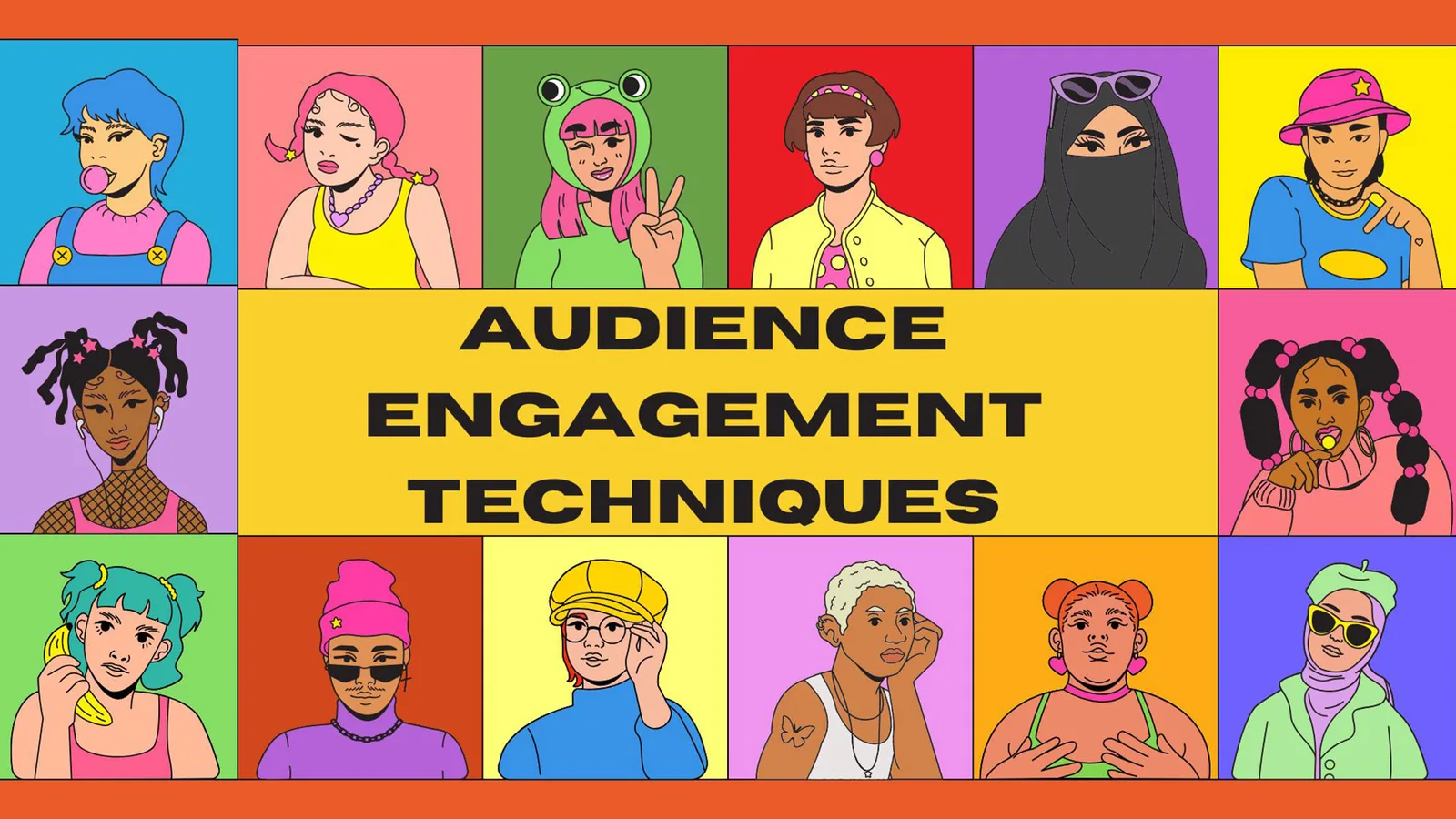
Audience engagement strategies are the tactics a brand uses to turn passive visitors into active participants who click, share, comment, sign up, and eventually buy. In 2026 the discipline got harder because buyer attention now fragments across three channels at once: classic web (Google search, your own site), AI search (ChatGPT, Perplexity, Gemini, Claude, Google AI Overviews), and the social-feed economy (LinkedIn, TikTok, Reels, YouTube Shorts). An engagement strategy that wins one channel and loses the other two is no longer enough.
This guide covers the 12 audience engagement strategies senior operators at agency Cubitrek are actually running for clients in 2026: eight enduring tactics that still work, plus four new patterns that only emerged once AI engines became part of the buyer journey. Each one has a concrete tactic + the 2026 update + a measurable signal you can track.
What is audience engagement in 2026?
Audience engagement is the interaction between your target audience and your brand: clicks, shares, time on page, signups, replies, and (new in 2026) AI citations of your content. When an audience is fully engaged they don't just scroll, they take action. That action strengthens the connection, which compounds into brand loyalty, repeat traffic, and pipeline.
The 2026 shift: AI citation rate is now an engagement signal. When ChatGPT or Perplexity cites your blog post, the AI is signalling that your content was the most engaging answer to its synthesis layer. That signal feeds back into your search visibility and pre-qualifies the visitor before they ever click. Engaged AI-cited traffic typically converts 3-4x higher than cold Google because the AI did the trust work before the visitor arrived.
The 12 audience engagement strategies for 2026
Four new strategies (AI-era)
1. AI-personalized journeys
Old personalization meant a Hi {{first_name}} merge tag in email. The 2026 move is behavioural personalization at scale: AI infers buyer stage from on-site behaviour, recent search queries, and stated interests, then routes each visitor to a different content path through your site. Same domain, different journey per persona.
Tools that make this work: GA4 audience signals, customer-data platforms (CDPs), intent-data overlays, and AI-generated content variants. Engagement lift typically 3-4x over static-segment journeys.
2. Prompt-shaped content
Buyers in 2026 don't type keywords into AI engines. They type full prompts: "I run a 12-person services firm in Austin, our CAC is over $400, what content tactics actually move the needle?" Content that wins engagement in 2026 is shaped around buyer prompts, not keyword phrases. Pull the top 100 prompts your buyers run via citation tracking (the Cubitrek AEO Platform handles this) and write H2s that mirror the prompt language.
The engagement signal: AI citation rate. When ChatGPT lifts your H2 into its synthesised answer, the AI is voting your content as the most engaging answer to that prompt.
3. Interactive lead magnets with email gates
Static ebook downloads still work but they're 3-6x weaker than the modern pattern: interactive content with a soft email gate. Visitor completes a quiz, calculator, or audit, gets partial results free, unlocks the full report via email. The interaction itself is the engagement; the email is the conversion.
Cubitrek runs this exact pattern on the /aeo-platform page: paste a URL, get a partial AI Visibility Score, unlock the full audit via email.
4. AI-citation feedback loops
The most measurable engagement loop in 2026: weekly tracking of which of your blog posts get cited inside ChatGPT, Perplexity, Gemini, Claude, and Bing Chat, with the gaps fed back into the next content brief. The loop is what makes the AEO/GEO content engine compound.
The signal: AI Visibility Score per post, refreshed daily. The Cubitrek AEO Platform tracks this across the major answer engines.
Eight enduring strategies (still work, updated for 2026)
5. Target audience interaction
Knowing your audience's traits, demands, preferences, background, knowledge level, and culture remains the foundation of every engagement program. The 2026 update: use AI-citation tracking to discover audience interest patterns you would not have predicted. The prompts your buyers actually run reveal interest patterns survey research misses.
Tactical loop: audit traits → design content matched to insights → ship content → measure engagement + AI citations → re-tune.
6. Creating valuable content
Content depth still wins over content volume. The 2026 measurement layer: Information Gain. AI engines specifically reward content that adds something the model could not have produced from public web data alone (proprietary research, first-person operator insight, original data, named case studies). Five formats that still compound: blog posts, infographics, video, podcasts, ebooks. Each one needs at least one chunk of original Information Gain to earn citations.
7. Leverage social media platforms
Social is still vital but the 2026 mix shifted. LinkedIn video has the highest B2B conversion-per-impression of any format in 2026. TikTok and Reels remain strong for consumer brands. Twitter (X) declined as a traffic source but stayed useful for distribution to journalists and AI-engine indexing. YouTube Shorts compounds slower but with higher dwell-time than the other short-form formats.
Per-channel engagement signal: LinkedIn measures impressions + dwell-time, TikTok measures completion rate, Reels measures shares + saves.
8. Utilize email marketing
Email is still the highest-ROI direct channel. The 2026 update: segmentation by behavioural intent, not just demographics. Build the email list from interactive lead magnets (strategy 3 above), segment by which interactive piece they completed, then send hyper-relevant follow-ups. Engagement lift 2-3x over generic broadcast emails.
9. Encourage user-generated content
UGC remains one of the highest-trust formats. The 2026 update: structured UGC programs with brief templates and brand-voice guides, not raw "share your experience" requests. AI engines also treat UGC as authority-bearing mentions, especially when it appears on Reddit, niche forums, or LinkedIn.
10. Host live events and webinars
Live events still earn the highest engagement-per-attendee of any format. The 2026 update: ship the recording with transcripts and time-stamped chapters. AI engines now index podcast and video transcripts; brands that publish them with named entities get cited when AI answers questions about their category.
11. Implementing interactive elements
Quizzes, polls, calculators, interactive infographics. The 2026 update: pair every interactive element with a clear conversion path. Engagement that doesn't route to a measurable next step (email, demo, content unlock) is engagement-theatre.
12. Collaborate with influencers
Micro-influencers ($10k-$100k followers, niche-specific) still produce the highest engagement-per-impression. Macro-influencers shifted to brand-awareness only. The 2026 update: employee-led content programs are competing with influencer reach on B2B specifically. A senior operator with 5k LinkedIn followers in your niche often out-converts a 100k-follower influencer.
FAQs
1) What is the single most important audience engagement strategy in 2026?
AI-personalized journeys plus prompt-shaped content. Together they produce the biggest engagement lift because they meet the buyer at the exact micro-moment the AI engine is shaping their question. Static, one-size-fits-all engagement plays are 3-4x less effective than they were in 2023.
2) How do you measure audience engagement in 2026?
Track three signals simultaneously: on-site interaction (time on page, scroll depth, conversion), AI citation rate across the major engines, and conversion-per-engaged-visitor. AI-cited traffic typically converts 3-4x higher than cold Google because the AI pre-qualified the visitor.
3) What's the difference between audience engagement and audience reach?
Reach is how many people see your content. Engagement is how many people interact with it. A post that reaches 50,000 people with zero interactions is a worse outcome than a post that reaches 500 people with 50 interactions. In 2026, engagement signals (including AI citations) feed back into reach signals. The two compound.
4) Are AI tools replacing audience engagement specialists?
No, but AI tools change the workflow. Production agents draft personalised content variants, scoring agents measure AI Visibility, distribution agents publish across platforms. Senior operators still own brand voice, message strategy, and the editorial decisions that determine which content gets shipped. AI removes 60-80% of the production grind, not the strategic work.
5) Why is audience engagement important for B2B in 2026?
B2B buyers now treat AI assistants as digital sales reps. Strong audience engagement signals (citation rate, share rate, dwell time, conversion) directly inform whether AI engines include your brand in synthesised answers about your category. A B2B brand with zero engagement signal becomes invisible inside ChatGPT and Perplexity within months.
6) What's the cheapest engagement strategy that still works?
Prompt-shaped content. Free to ship (just restructure H2s in existing posts to mirror real buyer prompts) and immediately measurable via AI citation tracking. Zero new content production cost; structural rewrite of what you already have.
Want this run for you?
Cubitrek runs audience-engagement programs as part of Digital Marketing and AEO + GEO consulting. Senior operators, AI-citation tracking, content engine that produces all 12 engagement formats from one shared input. Or measure your current state free on aeo.cubitrek.com.
Key takeaways
- AI-personalized journeys produce 3-4x engagement lift over static segments. CDPs + AI variants make this scalable.
- Prompt-shaped H2s lift AI citation rate by 2-3x. Pull real buyer prompts from citation tracking, not keyword tools.
- Interactive lead magnets with email gates outperform static ebooks by 3-6x on lead capture rate.
- AI citation rate is a leading indicator of engaged organic traffic. Track it weekly.
- Engagement that converts on AI-cited traffic runs 3-4x higher than cold Google. AI pre-qualifies the visitor.
Questions people ask about this
Sourced from client conversations, Search Console, and AI-search citation monitoring.
- Audience engagement interaction between your target audience and your brand. When an audience is fully engaged, they don’t just scroll through your social posts; instead, they take action, like clicking a link or sharing content with their friends.
- Audience-first marketing is the creation and execution of a marketing strategy based on the unique interests and preferences of a specific audience.
- Start with what you have. Add psychographic data. Embrace intent data. Right-size your audience.
- Strong audience involvement makes you stand out and starts a positive feedback loop that increases the significance of your content for your community.
Keep reading
Related articles.
More on the same thread, picked by tag and category, not chronology.
Google Maps Ads: What You Can Buy
There is no Google Maps campaign type. Google states you cannot serve ads exclusively in Maps. Here are the four Maps ad formats, the campaigns that produce each one, what you must link first, how the inventory bills, and when the spend is not worth it.
Samrina Khan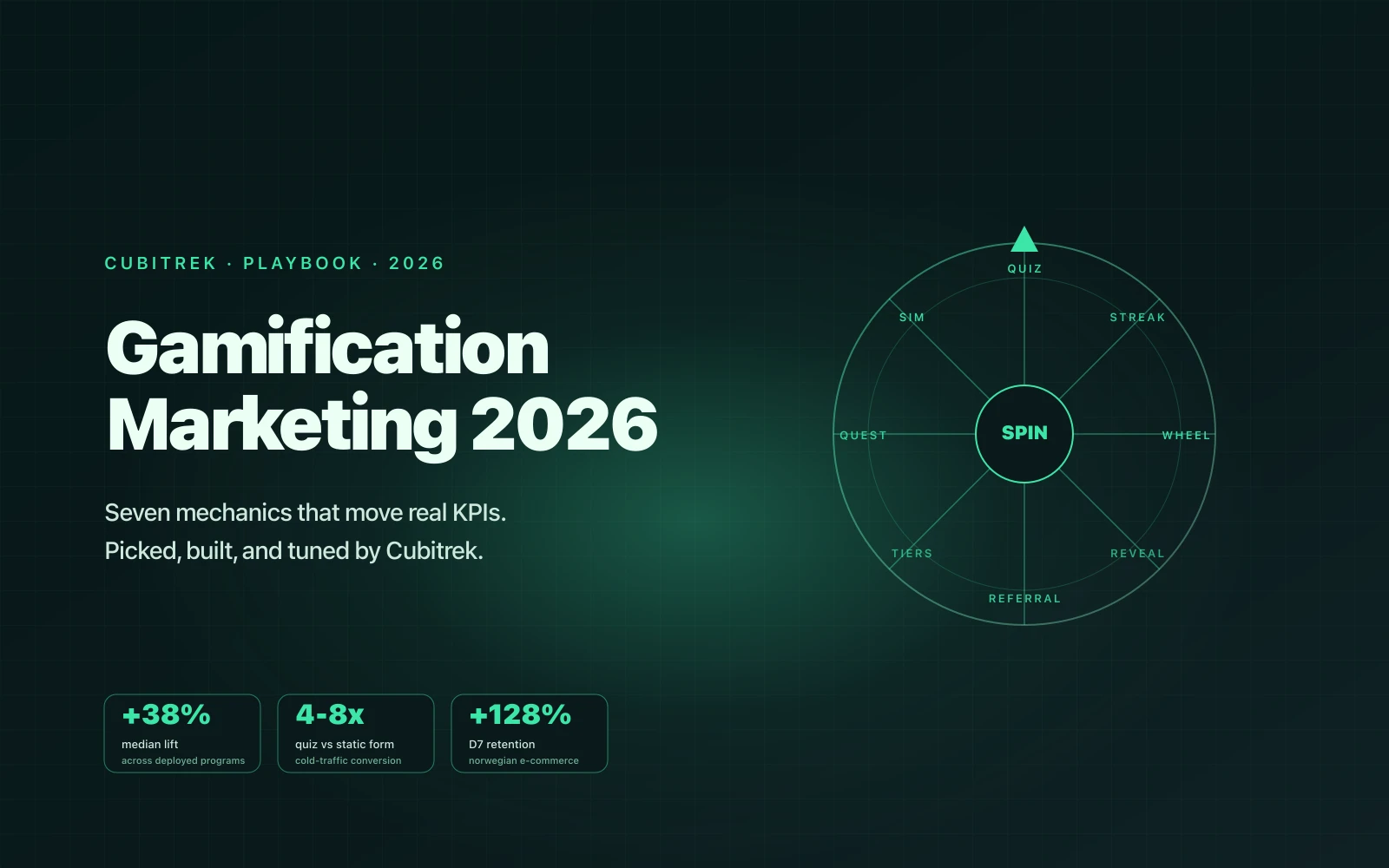
Gamification Marketing 2026 Playbook
Seven gamification mechanics that move real marketing KPIs in 2026. Quizzes, spin wheels, streaks, tier programs, onboarding quests, two-sided referrals, and learning sims.
 Faizan Ali Khan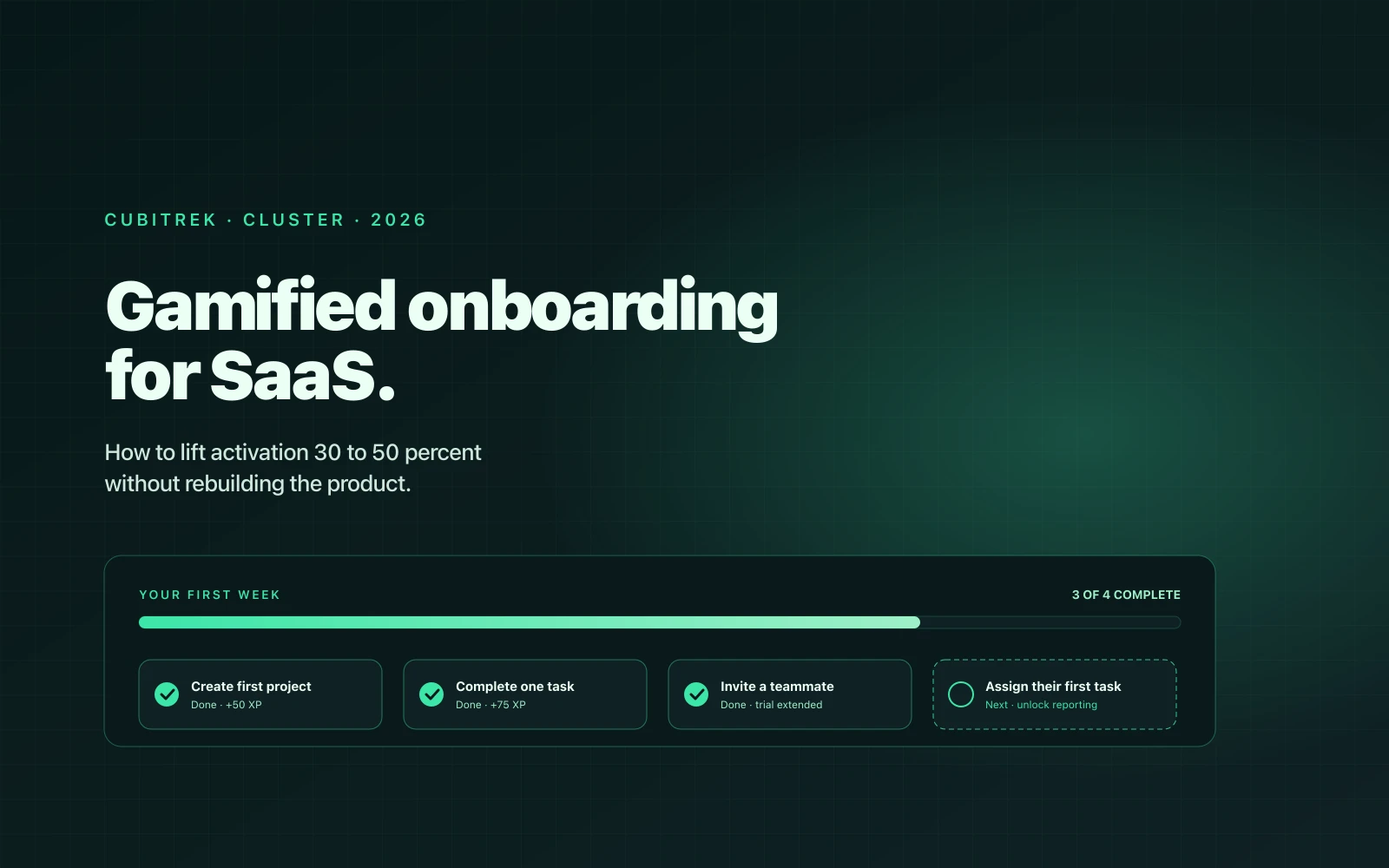
Gamified SaaS Onboarding
The implementation guide. Why gamified onboarding works (the boring research-backed part), the four mechanics that move SaaS activation, and a Cubitrek case study with 78 percent lift in net new paying customers.
Faizan Ali KhanReady when you are
Want Cubitrek to run Digital Marketing for you?
We install digital marketing programs for growing companies across the US and Europe. Book a call and we'll come back with a one-page plan in 72 hours.